Nepal Is Drowning in a Crisis It Barely Helped Create

Nepal Is Drowning in a Crisis It Barely Helped Create
Nepal Is Drowning in a Crisis It Barely Helped Create
Nepal’s devastating floods reveal the brutal injustice of climate change: a country that barely caused the crisis is now being forced to live through its consequences.
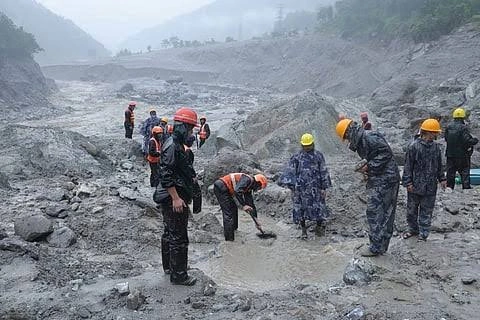
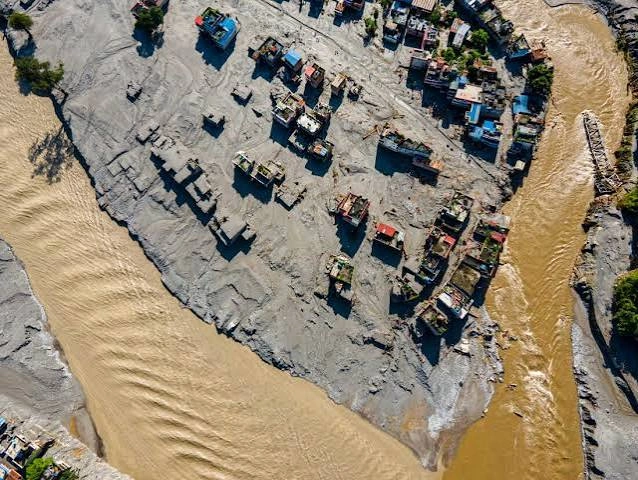
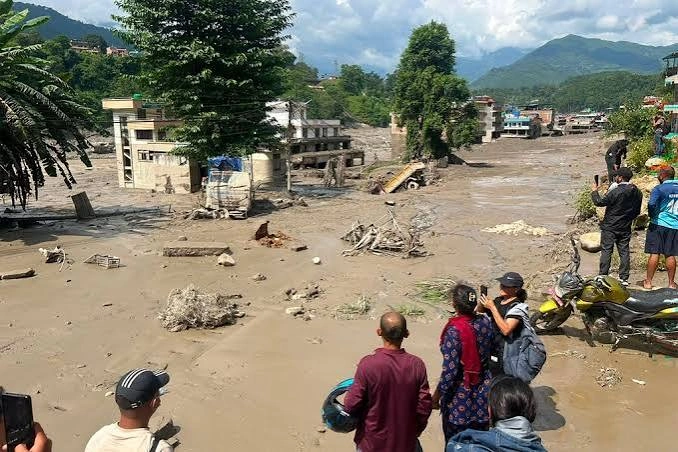
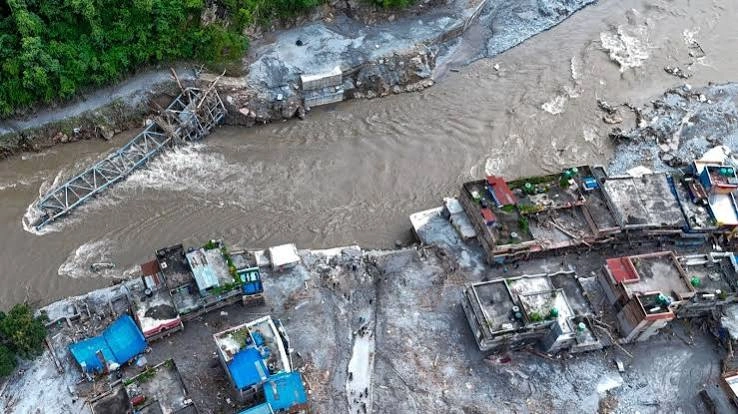
For a moment, the disaster in Nepal on 26th August looked like the aftermath of major seismic activity. Then scientists realised that something even more terrifying had happened high in the Himalayas: a vast mass of ice and rock had collapsed so hard that it sent shockwaves through valleys, setting loose a chain reaction that sent water, mud and debris through narrow valleys and into communities below. The rupture was powerful enough to register on monitoring systems as an earthquake. Downstream, roads disappeared, bridges were smashed, and entire settlements were swallowed by the force of the flood.
The immediate question is what caused such devastation. The more uncomfortable question is who should be blamed for creating the conditions in which it became possible. Because Nepal is now grieving a catastrophe that exposes one of climate change's most grotesque inequalities: the people standing closest to its consequences are often those who did the least to create it.
It Started With a Mountain Falling
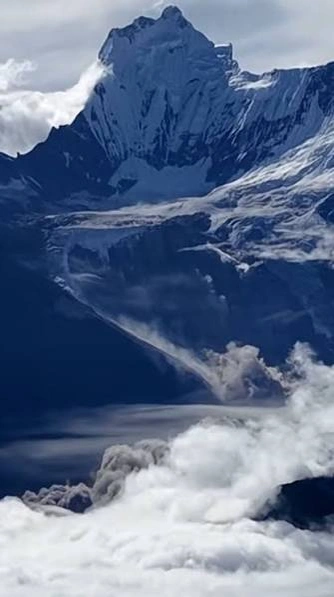
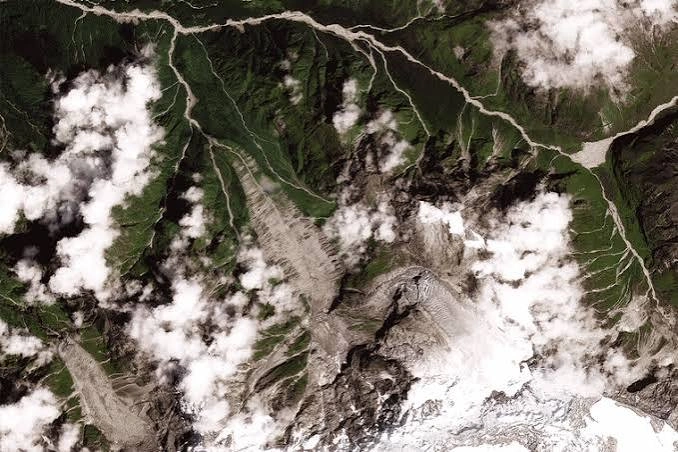
The mechanics of the catastrophe matter because “flood” barely captures what happened. Satellite imagery showed a huge section of glacier detaching high in the mountains. As the mass of ice and rock plunged into the valley, it gathered further material and unleashed enormous energy. The resulting flow moved through the Himalayan landscape before building up and breaking through the waterways below.
The New Yorker reported that the flood tore through the Trishuli and Bhotekoshi river systems along the Nepal-China border. Infrastructure failed. Telecommunications broke down. People were stranded in an already difficult landscape. A newly formed lake upstream created fears of further flooding even as rescue operations were underway. Nature, of course, has always been capable of violence.
The Himalayas Are Being Changed From Far Away
Climate change does not need to be physically present in Nepal to transform Nepal. NPR's reporting on Himalayan glaciers explains the brutal geography of this problem. Rising temperatures are melting mountain glaciers, leaving behind lakes held back by natural barriers of rock and ice. Those barriers can become unstable, placing communities downstream at increasing risk. Nepal has become one of the places where scientists are racing to understand which lakes are dangerous before they become disasters.
The wider Himalayan region is warming rapidly, changing ice, water and the stability of high mountain environments. The recent collapse was a specific physical event, but climate change is raising the background risk by reshaping the mountains themselves.
It wasn't climate change that pushed a single block of ice with a human hand. Instead, humanity has altered the planetary conditions under which mountains now exist. And Nepalis dwelling on the margins had to pay the price.
Nepal Didn't Cause This
One of the most devastating facts about this disaster is political rather than geological. Nepal contributes a negligible share of global emissions, yet it sits downstream from some of the fastest-warming glacial systems on Earth. The country is confronting consequences produced by a global system in which the atmosphere does not care where carbon is emitted, even though the geography of suffering is profoundly unequal.
This is where the phrase “natural disaster” begins to feel insufficient. The collapse itself may have been natural. The vulnerability surrounding it is shaped by politics, development and a warming climate produced largely elsewhere.
A person living beside a Himalayan river does not get to choose which industrial economy filled the atmosphere decades earlier. But they may be the person whose house disappears when the glacier above them becomes unstable. That is the obscene arithmetic of climate change.
The Country Is Also Paying for Geography
Nepal's tragedy cannot be separated from its political circumstances, as I laid out. The New Yorker describes a country already accustomed to upheaval, with poverty, inequality and political instability shaping its ability to respond to repeated crises. A country dependent on tourism now faces another costly period of reconstruction. One Nepalese parliamentarian warned that the disaster could set the country back by at least a decade.
The same flood would not mean the same thing everywhere. It meets whatever infrastructure, political institutions and inequalities already exist. When bridges disappear in a remote mountain region, rescue itself becomes more difficult. When communications fail, people can become unreachable. When a country is already economically vulnerable, rebuilding becomes another catastrophe measured in years.
So Who Is Really to Blame?
The easy answer would be climate change. But climate change is not a person, a country or a corporation. It is the name we give to the consequences of decisions that have accumulated across borders and generations.
That is why Nepal's disaster should make us uncomfortable.
The country did not simply suffer an unfortunate act of nature. It suffered inside a planetary system whose benefits and consequences have been distributed grotesquely unevenly. The people most responsible for warming the atmosphere are not necessarily the people watching a river carry away their relatives. The New Yorker describes Nepalis as alternating between disasters they cause themselves and disasters that arrive from elsewhere. That distinction may be the most devastating thing about these floods.
The story of why Nepal's mountains are becoming more dangerous does not begin there. The risks are rising everywhere, and it won't be long before this begins everywhere else.

Login to comment.
No thots yet. Be the first to share your thoughts!