No Kings Protests Rock U.S. Cities Over Trump Policies

No Kings Protests Rock U.S. Cities Over Trump Policies
Thousands rally nationwide against Trump’s Iran war and hardline immigration policies in the third No Kings wave, echoing earlier massive mobilizations.
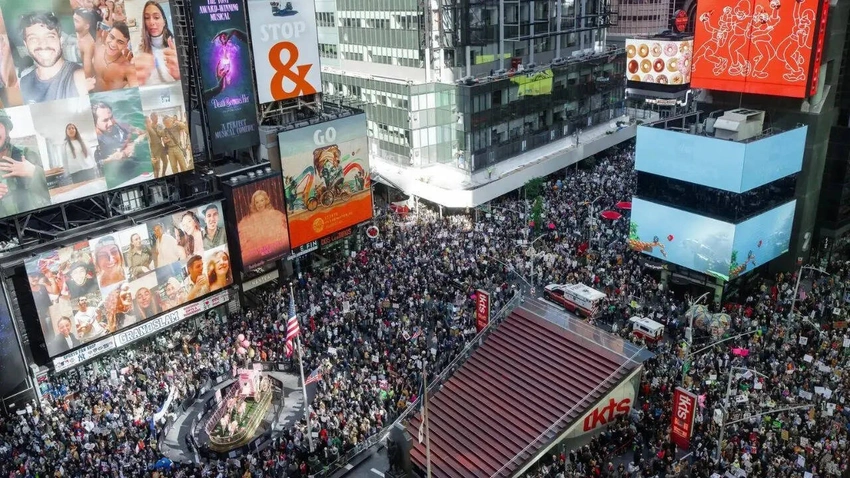
Thousands of people took to city streets across the United States on March 28, 2026, in the third wave of the No Kings rallies. Protesters voiced opposition to President Trump’s immigration enforcement push, his stance on Iran, and other domestic hardline policies. The organizers say more than 3,200 events were planned in all 50 states, underscoring a broad call for change.
Past mobilizations have drawn massive crowds, with organizers reporting between 4 million and 6 million participants across roughly 2,100 sites for the first wave and about 7 million participants in the second wave across over 2,700 cities, according to a crowdsourced analysis cited by data journalists. The March demonstrations come as critics frame the bombardment of Iran by the U.S. and Israel as a flashpoint, intensifying calls for restraint and accountability.
Washington, D.C., featured large crowds near the Memorial Bridge, while Minnesota became a notable flashpoint with a major rally in St Paul on the state Capitol lawn. Some participants displayed banners honoring those fatally shot by federal authorities, including references to Renee Good and Alex Pretti. An upside-down U.S. flag—traditionally a symbol of distress—was seen in several gatherings, signaling deep concerns about civil rights and government policy.
The protests unfolded largely peacefully, though reports of clashes in a few locations surfaced as organizers pressed for peaceful demonstrations and nonviolent action. Republican leaders dismissed the marches as politically motivated, while the No Kings movement—launched on Trump’s birthday, June 14 of the previous year—continues to rally supporters and critics alike.
High-profile figures amplified the visibility of the protests, with celebrities like Robert De Niro joining events in New York, lending star power to the movement and drawing wider media attention.
