SabrinaWood: A New Pop Royalty at Coachella

SabrinaWood: A New Pop Royalty at Coachella
SabrinaWood: A New Pop Royalty at Coachella
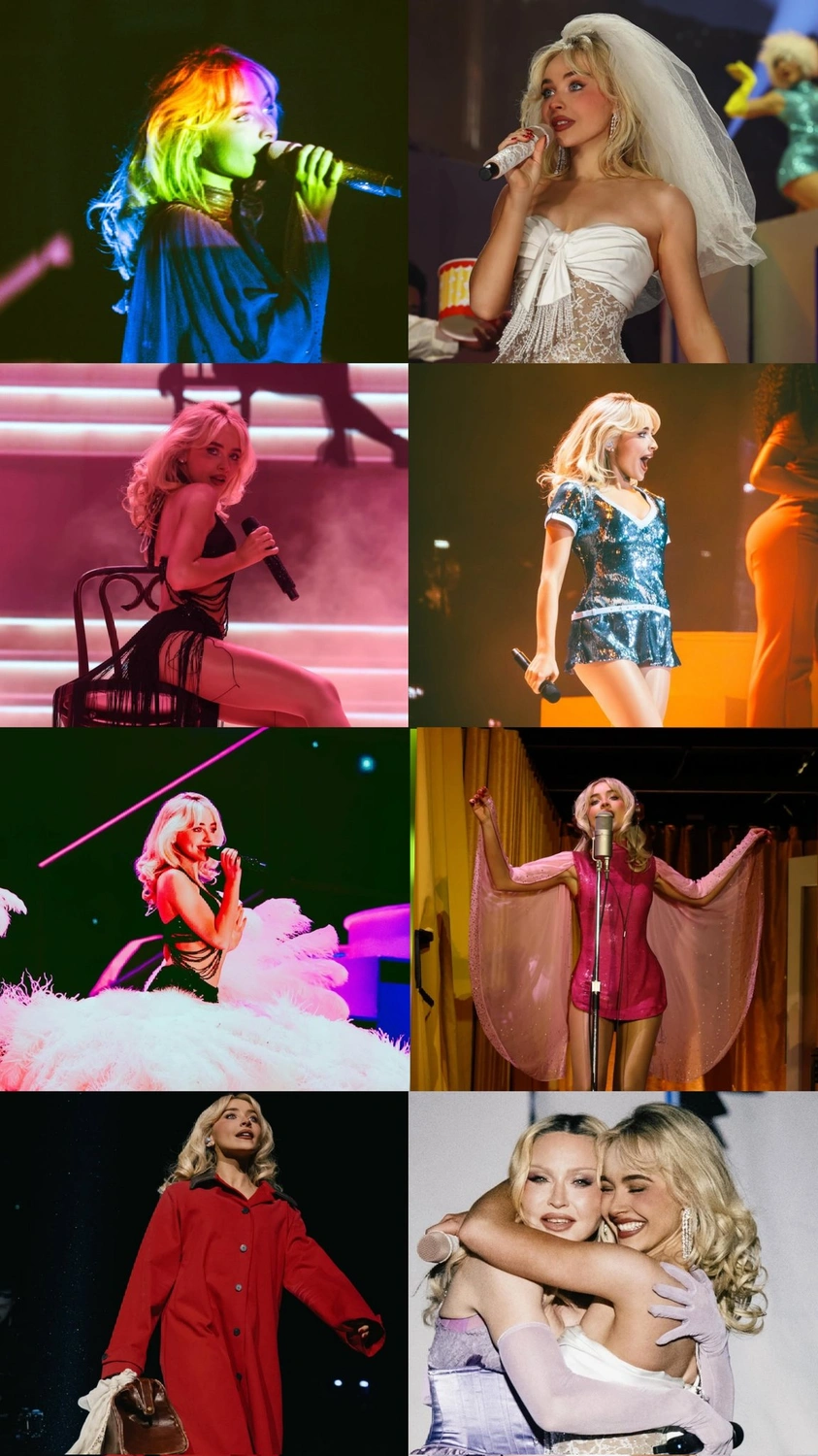
Sabrina Carpenter headlines Coachella 2026 with an ambitious five-act set that aims to transform her image. Madonna’s surprise cameo underscores a turning point in her career.
When Sabrina Carpenter first appeared at Coachella Valley Music Festival in 2024, she left with a promise: she would return as a headliner. Two years later, she did exactly that. The arc feels almost too narratively neat, like a pop-industrial bildungsroman staged under desert lights. Yet the 2026 performance was less about arrival and more about transformation.
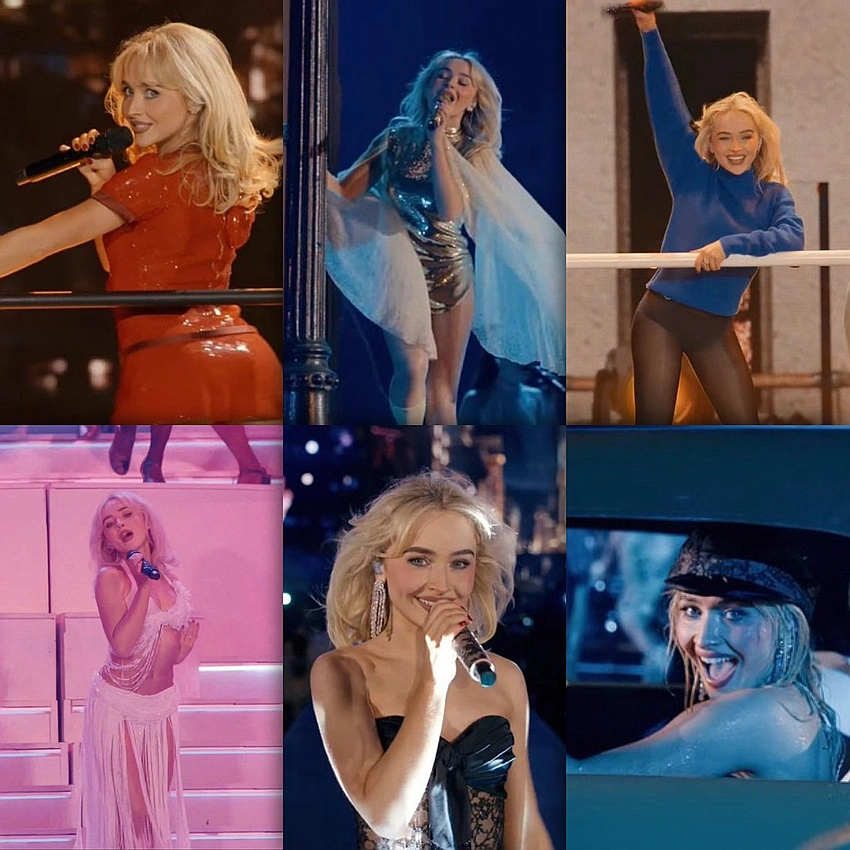
Her set, widely described as ambitious and theatrical, unfolded as a five-act spectacle she had reportedly been planning for months, signalling a decisive shift from rising act to cultural architect of her own image.
The Guests: Pop Lineage in Real Time
The most telling aspect of the performance was not just its scale, but its guests. Surprise appearances at Coachella are nothing new, but here they carried a different weight.
When Madonna appeared, it did not feel like a gimmick. It felt like a symbolic gesture, a passing of energy if not quite a passing of the crown. Madonna’s presence, brief but potent, was the cherry on top of an already maximal set. More importantly, it located Carpenter within a lineage of female pop performers who have consistently reshaped the boundaries of the genre.
Alongside this, appearances by figures such as Will Ferrell and Susan Sarandon added an unexpected theatrical dimension. These cameos blurred the boundaries between concert, film set, and live performance, reinforcing the sense that Carpenter is drawing from a broader cultural archive than music alone.
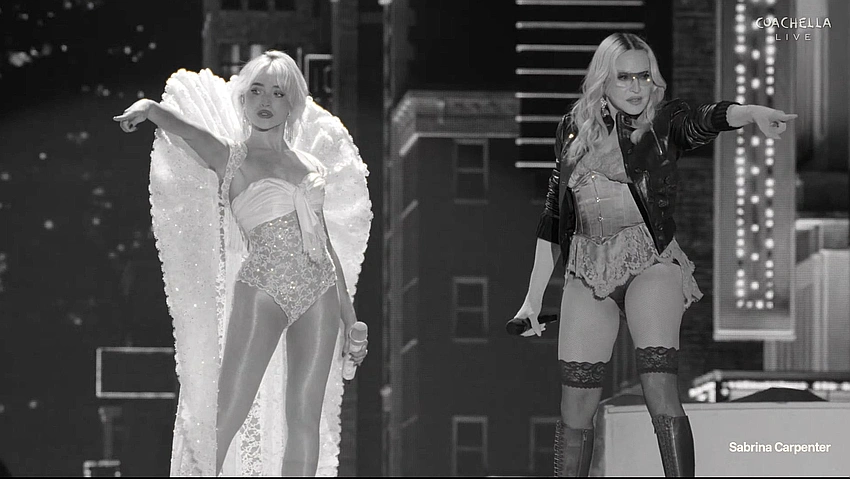
Such collaborations matter. They signal not only industry validation but also a kind of cultural permeability. Carpenter’s stage becomes a meeting point for music, cinema, and celebrity culture, suggesting a mode of pop stardom that is expansive rather than contained.
Homage and Influence
The performance was saturated with references. Old Hollywood glamour, stylised interludes, and visual motifs evoked a cinematic past that continues to shape contemporary pop aesthetics.
There were clear echoes of Britney Spears in the theatrical structuring of the set, particularly in its commitment to spectacle as narrative. At the same time, the choreography and visual polish recalled the precision of Taylor Swift, especially her landmark festival performances that redefined what a headlining set could achieve.
Beyond music, the set seemed to draw from classic Hollywood musicals and melodrama. The costuming, transitions, and staging hinted at a visual language indebted to mid-century cinema, even as it was filtered through a distinctly contemporary sensibility. This interplay between past and present is crucial. It positions Carpenter not as an imitator, but as someone actively curating her influences.
Pop Spectacle and Control
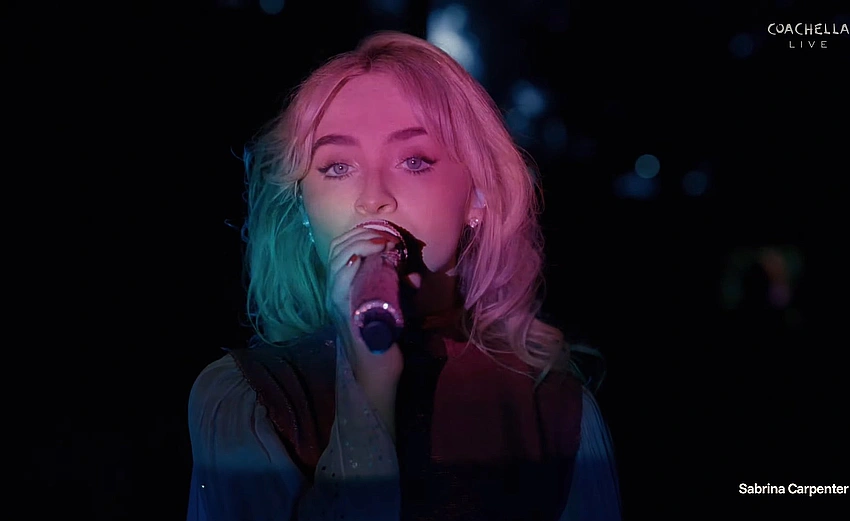
What distinguishes this performance is not simply its references, but the control with which they are deployed. Carpenter’s set was tightly choreographed, yet it retained a sense of spontaneity, particularly in its interaction with guest performers and audience response.
Songs like Espresso anchored the set in recognisable pop territory, but the surrounding spectacle elevated them into something closer to performance art. The body, the voice, and the visual field worked in tandem, creating a layered experience that exceeded the sum of its parts.
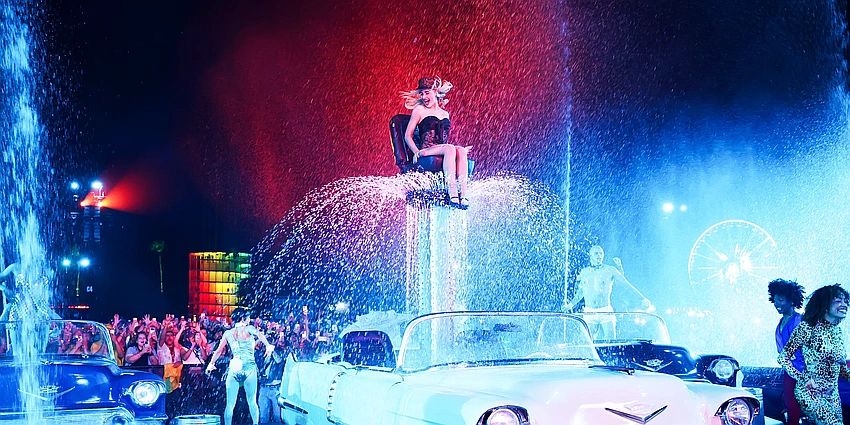
This is where Carpenter’s evolution becomes most visible. Earlier in her career, her performances often leaned on charm and relatability. Here, those qualities remain, but they are subsumed within a larger framework of control and intentionality.
Risk, Excess, and the Edge of Greatness
The set was not without its excesses. At times, the layering of elements, celebrity appearances, narrative interludes, threatened to overwhelm the musical core. Yet this excess is precisely what marks the performance as significant.
Great pop performances often operate at the edge of coherence. They risk too much, attempt too much, and in doing so, occasionally falter. Carpenter’s willingness to embrace this risk places her within a tradition of artists who understand that spectacle is not about perfection, but about impact.
Beyond “Princess”: Towards Pop Canon
It is tempting to describe Carpenter as a “pop princess”, a term that signals both admiration and a certain incompleteness. But the Coachella performance complicates this label.
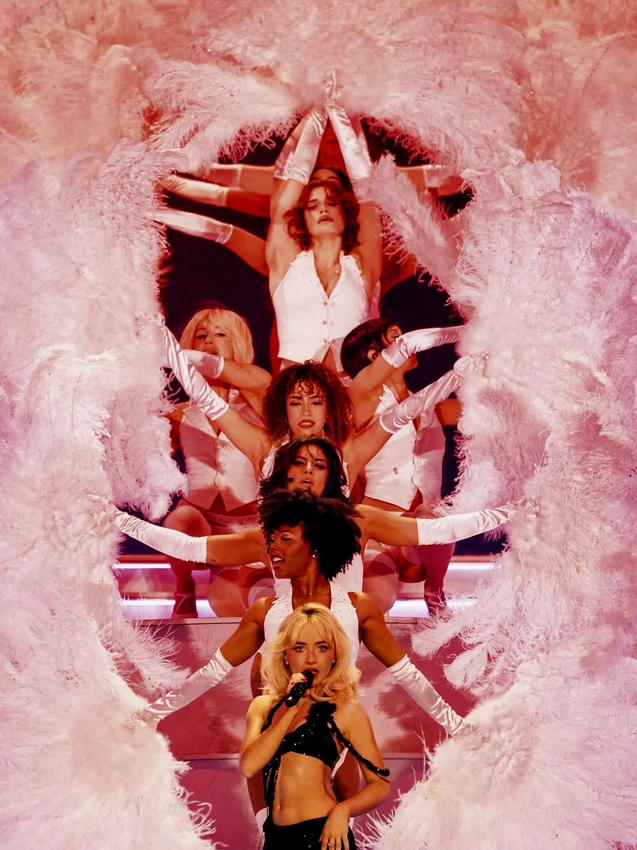
What we are witnessing is not simply the refinement of a rising star, but the early stages of canon formation. Carpenter is beginning to articulate a vision of pop that is both self-aware and unapologetically grand. She is not merely participating in the genre. She is attempting to reshape it.
The presence of Madonna underscores this point. It situates Carpenter within a historical continuum, while also suggesting that the next phase of pop will be defined by artists who are willing to synthesise multiple traditions into something distinctly their own.
The Beginning of a Legacy
Coachella has always been a stage for transformation. For Sabrina Carpenter, it marked a shift from promise to inevitability.
This was not about constructing “SabrinaWood” as a concept. It was about demonstrating that she has the range, ambition, and cultural awareness to become one of the defining pop artists of her generation.
The guests, the references, the spectacle, and above all, the control, all point in the same direction. Carpenter is no longer on the cusp of greatness. She is moving towards it with a clarity that is difficult to ignore.
If this performance is any indication, the question is no longer whether she will become one of the greats. It is how soon.
#SabrinaCarpenter #Coachella2026 #Madonna #LiveMusic #FestivalNews
