Myanmar junta chief elected president, cementing military grip

Myanmar junta chief elected president, cementing military grip
Min Aung Hlaing's presidential victory formalises the army's grip on Myanmar's politics as fighting persists across the country.
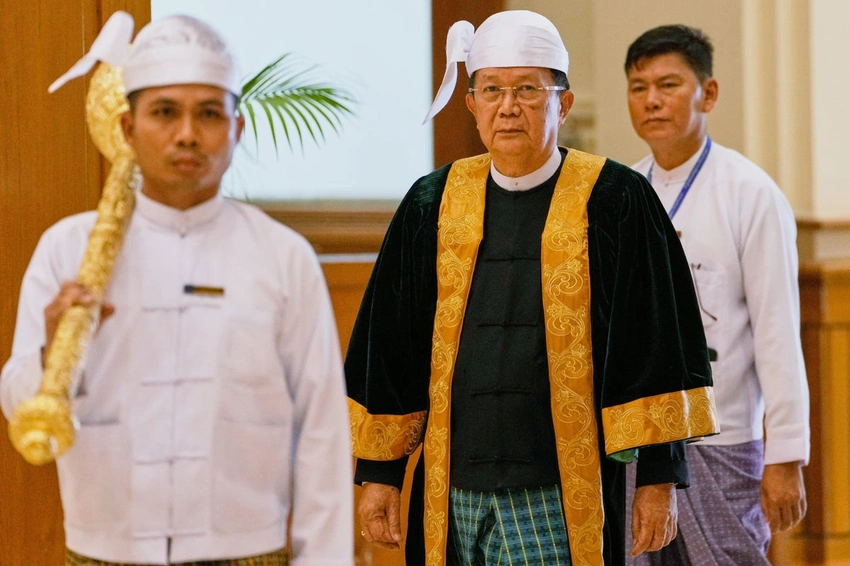
Min Aung Hlaing, the junta chief who led the coup against Aung San Suu Kyi’s elected government, has been elected president after winning a parliamentary vote in Naypyitaw. He secured 429 of 584 votes in a two-chamber parliament where the military and its allies hold the vast majority. The parliamentary outcome formalises the army’s grip on power and consolidates a transition that critics say is designed to keep the army in charge under a civilian veneer.
The vote took place in the newly renovated parliament building in the capital, which was damaged in last year’s earthquake. In a live count, Aung Lin Dwe, the speaker, declared Hlaing’s victory as the threshold was easily surpassed. China was among the first countries to offer congratulations, saying Beijing remains a friend to Myanmar and eyes a shared future.
The transition follows a December-January election won by an army-backed party, a result criticized by Western governments as not free or fair. Analysts describe the move as a strategic step to ensure the military’s influence endures across the security, economy, and governance spheres, even as a façade of civilian government is presented to the world.
Despite the ceremonial nature of a president, many observers warn that real power remains anchored in the generals and their allies, with fighting continuing in multiple regions and civilians bearing the cost. The international community has urged restraint and pressed for dialogue, but the path to peace remains unclear.
