US-Iran Conflict Escalates: Strikes, Blockades, & Regional Attacks Shake West Asia

US-Iran Conflict Escalates: Strikes, Blockades, & Regional Attacks Shake West Asia
Tensions surge in West Asia as US strikes Iran for seventh night, enforcing naval blockades. Iran retaliates, attacking Kuwait and disrupting shipping. Get the full story!
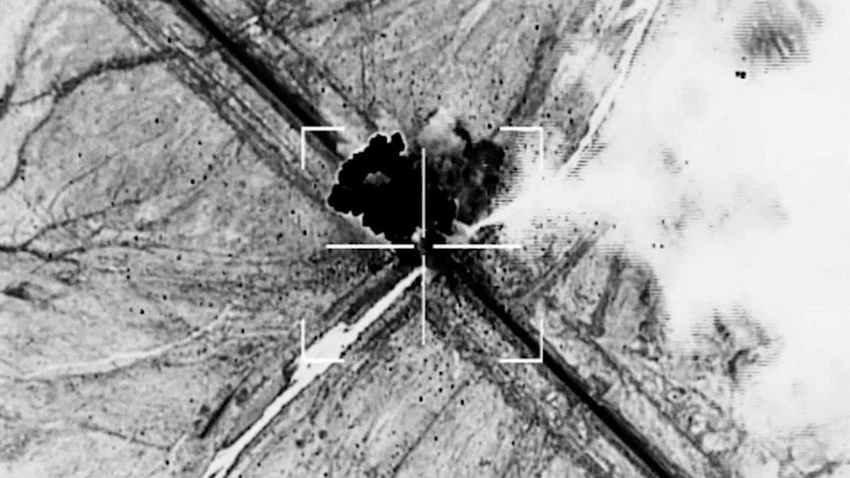
The delicate truce between the United States and Iran appears to be unraveling rapidly as the U.S. military confirmed its seventh consecutive night of strikes against Iran, intensifying a conflict that has already disrupted vital shipping lanes and impacted regional stability. U.S. Central Command (CENTCOM) announced early Saturday that its latest operations, concluding Friday evening, targeted "military logistics infrastructure, underground weapons storage, and maritime capabilities" within Iran.
CENTCOM reiterated its commitment to holding Iran accountable under the Commander in Chief's directives, emphasizing the enforcement of a naval blockade against Iranian ports. The military also reported intercepting several vessels in recent days, redirecting four commercial ships, disabling one, and boarding another to ensure compliance with the blockade. This ongoing escalation follows an interim agreement last month, which aimed to reopen the strategically important Strait of Hormuz and de-escalate the conflict that began in late February.
However, Iran's Revolutionary Guard Corps (IRGC) quickly countered, stating via IRNA News Agency that it had blocked four vessels attempting to navigate the Strait of Hormuz under U.S. protection. The IRGC Navy Command described a "coordinated missile and drone operation" that successfully "halted and immobilized" these ships at sea, signaling a direct challenge to the U.S. naval presence.
The regional impact of the escalating tensions is also clear, with Kuwait reporting direct attacks. Its air defenses were activated to respond to "hostile drone threats." The Kuwait News Agency confirmed an Iranian attack on a critical power and water distillation station, which sparked a fire but fortunately caused no casualties. This marks the second such attack on Kuwait's water facilities in two days, raising significant concerns given the arid nation's heavy reliance on desalination for nearly 90% of its drinking water.
The renewed implementation of hostilities, just weeks after a fragile ceasefire, underscores the deep-seated friction between the U.S. and Iran, threatening broader instability in West Asia and impacting global energy and trade routes. Both sides accuse the other of provoking the latest round of aggression, with no immediate signs of de-escalation.
