Artemis II Lifts Off: NASA's Four-Astronaut Moon Mission

Artemis II Lifts Off: NASA's Four-Astronaut Moon Mission
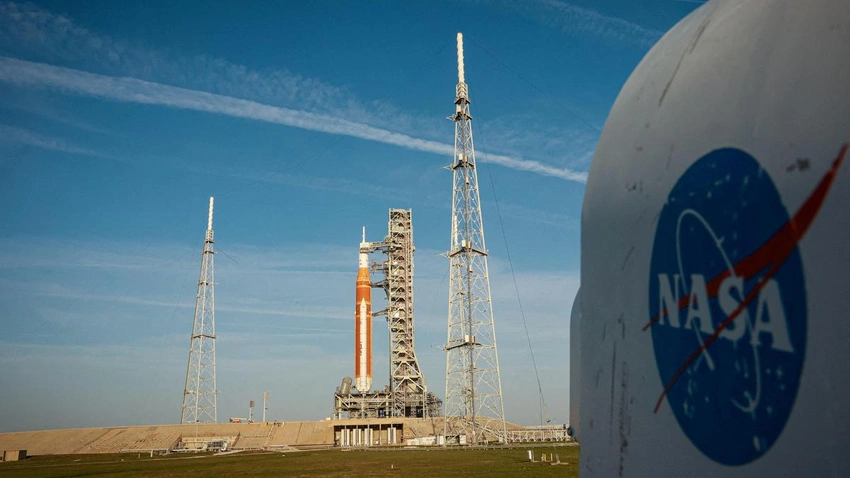
NASA's Artemis II crewed launch marks the first crewed flight of the Space Launch System, kicking off a historic voyage toward the Moon.
NASA's Artemis II mission marks a major milestone as a four-astronaut crew prepares to board the Space Launch System, NASA's powerful new rocket, for a flyby of the Moon. The launch is centered at Kennedy Space Center in Cape Canaveral, a site chosen to test essential systems, life support, and operational procedures ahead of future lunar landings. This mission sets the stage for a new era of crewed exploration beyond low Earth orbit and is watched closely by space agencies and enthusiasts around the world.
The crew will orbit the Moon, testing the SLS and associated spacecraft on a high-stakes orbital mission that could inform subsequent Artemis III and Artemis IV flights. Among the crew is Christina Koch, who is poised to become the first woman astronaut to travel beyond the Moon, joining veteran astronauts and newcomers to push past familiar frontiers. The mission’s success rests on a delicate coordination of propulsion, navigation, communications, and life-support systems, all of which will be scrutinized in real time as the spacecraft completes its lunar trajectory.
NASA has redesigned key elements of Artemis II, including a space suit system engineered for better safety and performance. The outer layer is fire-resistant, the thermal management system is improved to keep astronauts cool and dry, and the helmet, boots, and gloves have been upgraded for comfort, safety, and even touch-screen compatibility. These suit advances aim to provide better protection and mobility during a long-duration mission in the harsh environment of deep space.
The mission will be livestreamed by NASA, with live conversations featuring the crew to give audiences direct access to their experiences, challenges, and discoveries during the lunar veterans’ journey. The public will have a front-row seat to a historic test that could redefine how humans approach exploration beyond Earth’s orbit.
In a broader context, officials say if Artemis II and Artemis III proceed as planned and Artemis IV lifts off on time, the timeline for returning humans to the Moon could accelerate, potentially placing U.S. crews on the lunar surface sooner than some competing missions. A lighter, faster, and safer approach to lunar exploration could become the new normal if this mission proves successful.
Human-interest moments also punctuate the mission’s coverage. A campus encounter involving a fan and Christina Koch highlighted the human connections that accompany such an ambitious endeavor, reminding audiences that behind every milestone there are people inspired by the dream of space exploration.
Ultimately, Artemis II represents a bold leap in spaceflight technology and international curiosity, signaling a new chapter in humanity’s push to explore beyond Earth and deepen our understanding of the Moon and the solar system.
