Tamannaah Exposes Industry Gaze: What Female Stars REALLY Face

Tamannaah Exposes Industry Gaze: What Female Stars REALLY Face
Tamannaah Bhatia shares her candid thoughts on glamour, dance numbers, and how female actors navigate industry perceptions. It’s about more than just entertainment.
In the glitzy world of cinema, the spotlight often brings with it an undeniable, scrutinizing gaze. While conversations around representation and objectification are gaining traction, it's refreshing to hear female actors openly discussing how they navigate these industry norms.
Recently, Tamannaah Bhatia offered a compelling perspective on what it means to be a glamorous woman on screen, particularly in the context of electrifying dance numbers that often capture the public's imagination.
For many, 'item numbers' have been synonymous with a certain kind of objectification, crafted primarily for a specific audience. However, Tamannaah challenges this perception, framing them as 'party songs' - a space for celebration and pure entertainment. She draws an insightful parallel, citing the enduring popularity of tracks like 'Chammak Challo', 'Shiela Ki Jawani', or 'Kamli'. “You remember these songs that these wonderful women have done.
They look like goddesses, they move like goddesses.
They are just beauty personified,” she observes, referring to stars like Kareena Kapoor and Katrina Kaif.
What's striking is her emphasis on the celebratory aspect. She notes how these songs transcend age groups at family weddings and gatherings, turning into universal dance anthems. “I have seen everyone, from elderly uncles to grandmoms to kids to everyone just dancing on them. It's a party number, it's a dance number.
So for me, that's how I look at this space,” she explains, distinctly refusing to categorize them as mere 'items'. This reframing is crucial; it shifts the narrative from passive object to active participant, from being watched to inviting joy .
Beyond the performance, Tamannaah delves into her personal relationship with glamour, asserting its innate quality. “For me, glamour is very innate. I wake up wanting to feel glamorous. It's not something that I am doing just for the camera because now I am just like… This is a part of me.
I can't get rid of it,” she shares.
This powerful statement underscores a sense of agency, suggesting that her on-screen dazzle isn't just a costume for consumption but an authentic extension of her self. It's a way to “channel it,” she says, transforming what could be seen as external pressure into a form of self-expression and enjoyment.
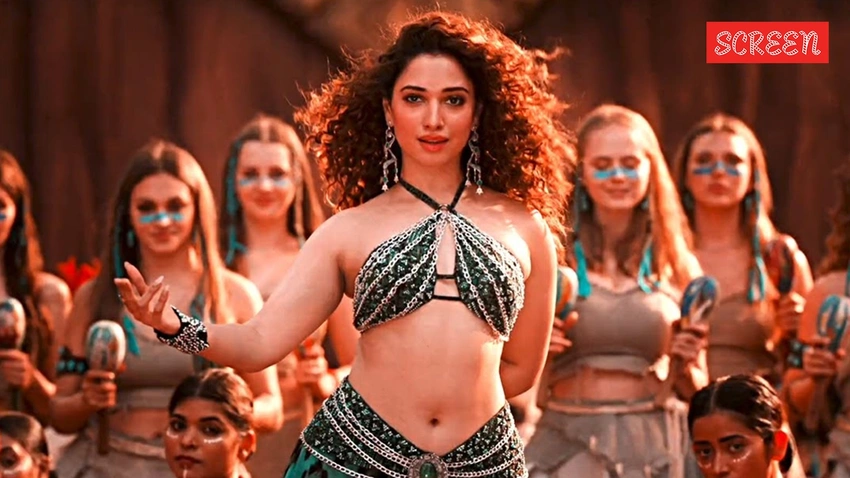
It's not all effortless sparkle, either. Tamannaah highlights the rigorous effort behind these performances, citing her work on 'Aaj Ki Raat' for Stree 2 , where she embodied the character of Shama, or her portrayal in 'Ghafoor' from The Ba * ds of Bollywood , envisioning her character as a woman at an after-party.
These details reveal a deliberate, character-driven approach to dance - not just as generic moves, but as an integral part of storytelling and persona development. This thoughtful engagement further separates her interpretation from the often reductive lens of the male gaze.
In an industry where female stars are frequently subjected to intense scrutiny, Tamannaah’s candid reflections offer a valuable insight: glamour and dance can be powerful tools of self-expression and universal celebration, rather than solely fodder for objectification. Her perspective encourages a re-evaluation of how these performances are perceived, shifting the focus back to artistry, hard work, and genuine enjoyment.
