Heathrow's Third Runway: Climate Advisers Demand Green Fuel Pledges

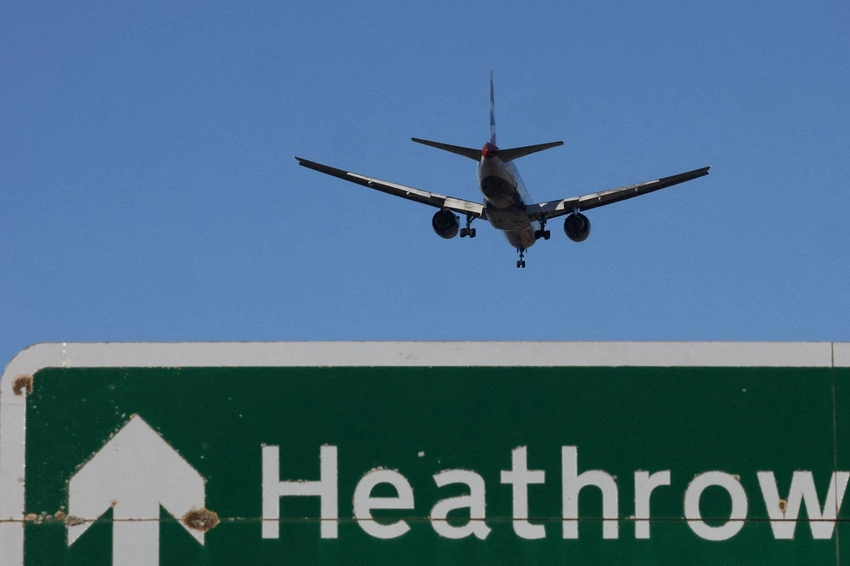
Heathrow's Third Runway: Climate Advisers Demand Green Fuel Pledges
UK climate experts say Heathrow's expansion depends on strict emission cuts & greener fuels. Will your next flight cost more? Dive into the future of air travel!
The proposed third runway at Heathrow Airport should only receive approval if the aviation industry makes a firm commitment to drastically reduce carbon dioxide emissions. This is the strong recommendation from the Climate Change Committee (CCC), an independent body established under the UK’s Climate Change Act.
The CCC's report states that the expansion would only be justifiable if airlines embrace greener fuels and if the industry bears the costs of decarbonisation, which could involve significant investment in sustainable aviation fuel (SAF) and advanced carbon removal technologies. The committee suggests that the government should mandate these payments from the industry.
While these solutions offer a pathway to cleaner aviation, the report highlights a potential downside for travelers: increased ticket prices.
By 2050, a return trip to Alicante could see an increase of around £150, while a journey to New York might jump by approximately £400. This translates to about six to nine pence per mile, similar to the fuel duty currently applied to petrol and diesel.
A major concern raised is the uncertainty surrounding the mass-scale deployment of sustainable aviation fuel and engineered carbon removal technologies within the tight net-zero timeline. Although the government has shown intent to invest in these areas, the CCC stresses that much more action is needed to ensure long-term viability and widespread use.
The context for these recommendations is stark: aviation emissions have more than doubled since 1990, in contrast to other economic sectors which have halved their emissions. Heathrow currently accounts for roughly half of Britain's aviation emissions, and the CCC warns that even without the third runway, current policies won't achieve emission reductions by 2050.
The full impact of the expansion could consume 6.9 percent of the UK's remaining carbon budget by 2050, making net-zero targets harder to reach.
In response, a Heathrow spokesperson emphasized that the airport's expansion should not be a choice between economic growth and climate goals, but rather an achievement of both. They noted that existing solutions are available and pledged to collaborate with the government and the aviation sector to scale up proven technologies and explore how existing carbon taxes paid by passengers can fund decarbonisation efforts.
Heathrow believes that with the right policies, a growing aviation sector can deliver significant economic and social value while accelerating decarbonisation.
The Department for Transport (DfT) echoed this sentiment, stating that any expansion proposal must align with net-zero targets.
The DfT highlighted investments of £219 million in sustainable aviation fuel production and £43 million in cleaner technologies.
They also pointed to the potential economic benefits of expansion, estimated at £40 billion and up to 60,000 local jobs, assuring that the CCC's advice, along with all public consultations, will be carefully considered.
#HeathrowExpansion #ClimateAction #SustainableAviation #NetZeroUK
