Robot wins Beijing half-marathon in 50:26, beats human record

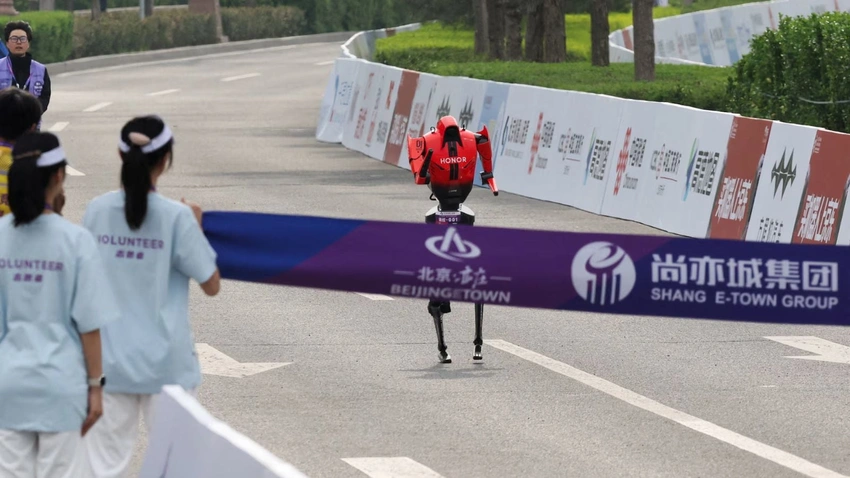
Robot wins Beijing half-marathon in 50:26, beats human record
Humanoid robot Lightning clocks 50:26 to win Beijing's half-marathon, surpassing the human world record and underscoring rapid strides in robotics.
Lightning, a humanoid robot developed by Honor, crossed the Beijing finish line in 50 minutes and 26 seconds, smashing the previous robot record of 2 hours and 40 minutes. The human world record stands at 57 minutes and 20 seconds, held by Uganda's Jacob Kiplimo since March. The event drew more than 100 Chinese-made robots competing on parallel tracks, with around 40% racing autonomously and the rest remotely controlled, according to organisers.
Lightning's performance highlights accelerating advances in AI and robotics, as teams push the boundaries of speed, balance and endurance in controlled race conditions. Built to blend mobility with precision, the robot's run in Beijing showcased how automation is moving from factory floors to high-profile, public demonstrations.
The race also served as a barometer for domestic tech talent. Honor, a Chinese smartphone maker, developed Lightning to test autonomous navigation and robotics software in a demanding, real-world setting. Last year’s fastest robot finished in two hours and 40 minutes, making this year's result a dramatic leap forward and a talking point among researchers and enthusiasts alike.
Held on Sunday, 19 April, the Beijing event drew spectators and media attention as a clear signal that humanoid robotics are entering new competitive arenas beyond labs. While the achievement raises questions about the future of sport and automated athletes, supporters say it accelerates innovation with potential benefits in medicine, logistics and disaster response.
