Helter Skelter and Our Culture's Obsession with Beauty


Helter Skelter and Our Culture's Obsession with Beauty
Helter Skelter and Our Culture's Obsession with Beauty
A sharp take on Helter Skelter, Mika Ninagawa’s manga adaptation. The film frames beauty as labor, capital, and a perilous performance that corrodes identity—and society's gaze.
There is something deeply unsettling about Helter Skelter. Not because it is a psychological horror film, but because it never feels entirely fictional. Beneath Mika Ninagawa's dazzling colours, extravagant fashion shoots and surreal visual excess lies a familiar anxiety. Beauty, in this world, is not a gift. It is labour. It is capital. It is something that must be constantly maintained until the body eventually gives way.
Adapted from Kyoko Okazaki's acclaimed manga, Helter Skelter follows Lilico, Japan's most famous model, whose flawless appearance is the result of full body cosmetic surgery. As the procedures begin to fail, so does the carefully constructed identity that depends upon them. The film is often discussed as a critique of celebrity culture, but what makes it enduring is that it is really about all of us. It asks why beauty has become something we consume, fear and endlessly pursue.

Beauty as a Product
The world of Helter Skelter is saturated with advertisements, magazine covers and television appearances. Lilico is everywhere, yet she belongs to no one, not even herself. Her body has become a commercial object whose value depends on its ability to remain desirable.
This reflects a broader feature of consumer culture. Beauty is rarely presented as something innate. Instead, it is marketed as a project requiring continuous investment through skincare, cosmetics, surgery, fashion and wellness. The ideal body is never achieved because its unattainability is precisely what keeps industries profitable.
Lilico does not simply fear ageing. She fears becoming economically obsolete. Once another, younger face appears, her entire identity begins to collapse. Her crisis is therefore not just personal but structural. A market that depends on novelty inevitably turns yesterday's perfection into today's irrelevance.
The Violence Hidden Behind Perfection
One of the most disturbing aspects of the film is its insistence that perfection is physically painful. Lilico's body deteriorates beneath the glamorous exterior. Wounds refuse to heal, scars emerge, and every attempt to preserve beauty accelerates her destruction.
The horror works because it exposes something contemporary beauty culture often conceals. Every polished image has a hidden infrastructure of discipline. Dieting, cosmetic procedures, digital editing and relentless self-surveillance rarely appear in the final photograph. The audience sees only effortless perfection.

In this sense, Helter Skelter resembles body horror. The body becomes unstable precisely because society demands that it appear stable. The more Lilico attempts to erase signs of human vulnerability, the more violently those vulnerabilities return.
Looking and Being Looked At
What fascinated me most was not Lilico herself but the people surrounding her. Everyone watches her. Fans admire her. Companies sell her image. Journalists chase scandals. The public consumes both her success and her eventual collapse with equal enthusiasm.
This dynamic recalls the politics of spectatorship. Celebrity culture encourages us to believe that famous people exist to be looked at, evaluated and discussed. Their bodies become public property. The same audience that celebrates impossible beauty often delights when that beauty begins to fail.
Social media has only intensified this relationship. Platforms encourage constant comparison, while algorithms reward faces and bodies that conform to increasingly narrow aesthetic ideals. Images circulate faster than ever, but they also disappear faster, demanding constant reinvention. Lilico's anxiety therefore feels surprisingly contemporary despite the film predating TikTok and today's influencer economy.

The Fantasy of the Perfect Self
Perhaps the greatest illusion exposed by Helter Skelter is that changing the body can produce a stable identity.
Lilico believes perfection will guarantee security, admiration and happiness. Instead, each alteration creates new insecurities. The more flawless she becomes, the more terrified she is of losing that status. Beauty ceases to be pleasurable because it becomes something that requires permanent defence.
This speaks to a wider cultural fantasy. Self improvement is frequently presented as limitless. There is always another treatment, another product, another trend promising confidence. Yet the finish line continually shifts. Satisfaction remains deferred because dissatisfaction keeps consumption alive.
The tragedy of Lilico is therefore not vanity alone. It is her belief that there exists a final version of herself that can never be threatened.
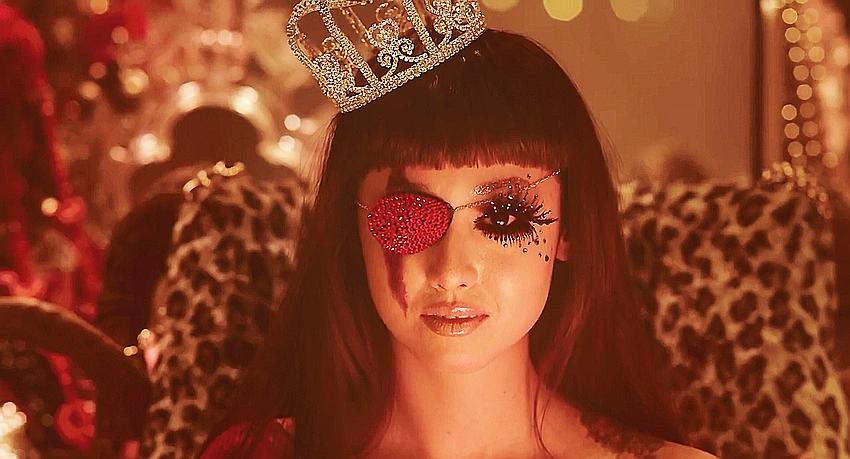
Although Helter Skelter emerged from Japan's fashion industry, its critique extends far beyond one culture. It anticipates a world where filters alter faces instantly, cosmetic procedures become increasingly normalised, and visibility itself functions as currency.
The film refuses to condemn beauty outright. Instead, it questions the systems that transform appearance into value. It asks why youth is rewarded while ageing is treated as failure. It asks why women's bodies become public investments. Most importantly, it asks why we continue participating in a system that harms both those being watched and those doing the watching.
More than a decade after its release, Helter Skelter feels less like a cautionary tale than a mirror. It reminds us that beauty becomes dangerous when it stops being one aspect of identity and begins defining a person's worth. In that sense, Lilico's collapse is not simply the downfall of one celebrity. It is the inevitable consequence of a culture that mistakes appearance for value and perfection for humanity.
#HelterSkelter #BeautyLabor #JapanCinema #MangaAdaptation #FilmCritique
