Swiss Glaciers Vanishing Fast! 😱 Heatwave Melts Winter's Snow by Monday

Swiss Glaciers Vanishing Fast! 😱 Heatwave Melts Winter's Snow by Monday
Switzerland's glaciers are melting at an alarming rate, with winter's snow vanishing weeks early due to Europe's intense heatwave. Discover the urgent climate crisis impacting vital rivers!
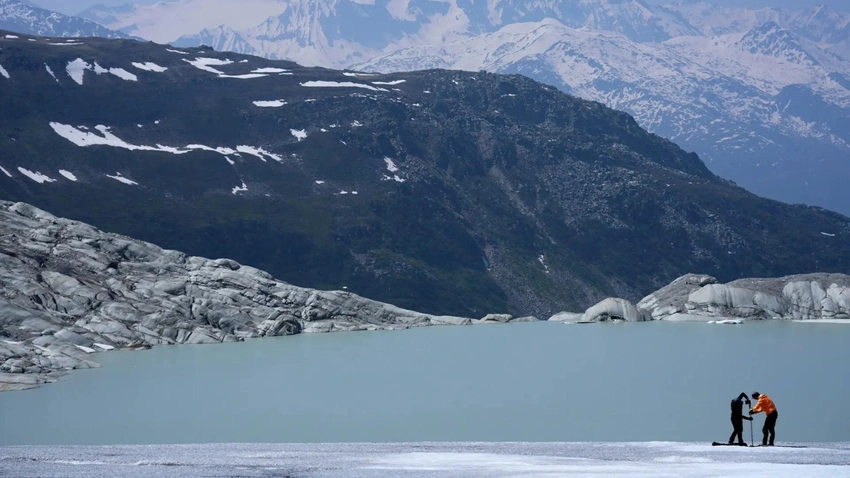
Swiss glaciers are currently facing an unprecedented crisis, with an "enormous" amount of ice and snow rapidly melting away due to the intense heatwave sweeping across Europe. Experts from Glacier Monitoring in Switzerland (Glamos) warn that the entire accumulation of snow and ice from last winter on Switzerland’s glaciers is expected to vanish by Monday.
This early disappearance marks the "glacier loss day," a critical tipping point where all winter snow has melted, and any further reduction directly impacts the glacier's ice mass. This year's arrival of glacier loss day is alarmingly the second earliest on record, closely following 2022's date of June 26. The grim acceleration is fueled by the current relentless heatwave, compounded by an earlier heatwave in May, both occurring after a winter season with notably poor snowfall.
Matthias Huss, head of the Glamos network, expressed deep concern, stating, "We’re just seeing enormous ablation, ice melt rates and snow melt rates all over the Alps." He highlighted the severity of the situation by adding, "We are three months too early compared to a healthy state." Historically, the tipping point has, on average, been reached in mid-August this century, underscoring the staggering rate at which these natural wonders are shrinking. Huss himself observed a meter of ice melting from the Rhone Glacier in just ten days during a recent visit.
The rapid retreat of these glaciers carries significant implications far beyond the picturesque Alpine landscapes. Much of the water feeding major European rivers like the Rhine and the Rhone originates from these very glaciers. Continued melting at this pace not only threatens water supplies but also foretells a future where, by 2100, only remnants of these majestic ice formations may remain. This escalating crisis serves as a stark reminder of the profound and accelerating impact of the climate crisis on our planet.
