A 70-Hour Nebula Photo Proves Slow Science Still Matters

A 70-Hour Nebula Photo Proves Slow Science Still Matters
In an era of instant AI art and endless doomscrolling, one photographer spent 70 hours capturing a delicate blue nebula in Orion. Here is why slow science and dedicated astrophotography matter more than ever.
The Magic of Taking Your Time
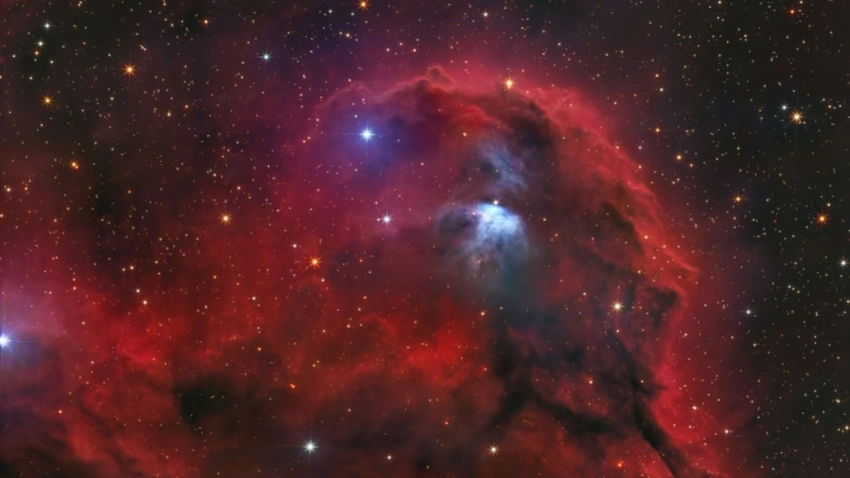
We live in a world where artificial intelligence can generate a photorealistic galaxy in about three seconds. You type a prompt, you hit enter, and boom. You have the universe at your fingertips. But recently, astrophotographer Emil Andronic did something radically different. He spent nearly 70 hours meticulously capturing a delicate blue reflection nebula glowing beautifully inside the red clouds of Orion's Head.
Seventy hours. Let that sink in for a moment.
In our current era of endless scrolling and instant gratification, spending almost three full days of exposure time on a single image feels like an act of rebellion. It is a perfect example of slow science, and it is exactly what our social media feeds desperately need right now.
Why Slow Science Wins
When you look at Andronic's image of the Orion constellation, you are not just looking at pretty colors. You are looking at dedication, patience, and a deep connection to the cosmos. Here are a few reasons why this approach still captures our collective imagination:
- Authenticity beats automation: AI art is impressive, but it lacks the human struggle. Knowing someone froze in the dark, tweaking telescope mounts and aligning camera sensors, adds a layer of awe that algorithms simply cannot replicate.
- It forces us to pause: When you scroll past a photo that took 70 hours to create, you subconsciously slow down. It demands respect. It asks you to stop and really look at the glowing dust of the universe.
- It teaches us perspective: Space is incredibly vast and slow moving. Capturing it properly requires us to match its pace.
A Cosmic Reminder
Social media platforms are often criticized for shortening our attention spans. We consume content like fast food. But astrophotography serves as a gourmet meal for the mind. It proves that there is still an appetite for deliberate, painstaking work.
We need more creators willing to play the long game. We need more people looking up at the night sky, gathering photons one by one, and reminding the rest of us that the best things in the universe take time. The next time you see a stunning space photo on your feed, take a breath. Think about the countless hours spent behind the lens. The universe is not in a rush, and maybe we should not be either.
