Prateek Yadav to divorce Aparna, calls her a 'family destroyer' online

Prateek Yadav to divorce Aparna, calls her a 'family destroyer' online
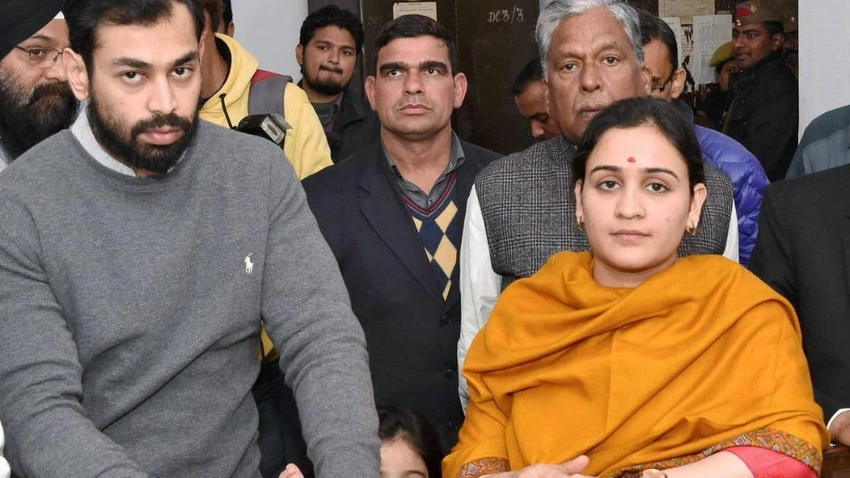
Prateek Yadav posts on Instagram alleging Aparna Yadav wrecks family ties and is driven by fame, signaling a planned divorce amid UP political tensions.
A family dispute within a high-profile political family has spilled into the social feed. Prateek Yadav, the son of Mulayam Singh Yadav and sibling to Akhilesh Yadav, announced on his verified Instagram account that he is going to divorce his wife Aparna Yadav as soon as possible. He described Aparna as a 'selfish woman' who has destroyed his family ties and accused her of chasing fame and influence. He also stated that his mental health has taken a hit due to the situation, and he claimed Aparna does not seem to care about his well-being.
Aparna Yadav is a BJP leader who currently serves as the chairperson of the Uttar Pradesh State Commission for Women. She switched to the BJP in March 2022 after previously contesting elections on an SP ticket from Lucknow's Cantt seat in 2017. Her political role has added a public dimension to what is described as a personal matter by some, while others view it as a potential flashpoint in UP political dynamics.
As of now, neither the Samajwadi Party nor the Bharatiya Janata Party has issued a formal reaction to the divorce claim. The family history is well-known: Aparna is Mulayam Singh Yadav’s son from his earlier political era, and Akhilesh Yadav currently leads the SP. The posts hint at a rift that could have wider implications for the circle around UP politics, given Aparna’s public profile and her role with the state women’s commission.
Prateek has also alleged that the situation impacted his relationship with his mother, and he suggested that he may pursue legal avenues to formalize the separation soon. The unfolding drama arrives at a time when political families in Uttar Pradesh often face scrutiny over personal matters and how they intersect with party narratives. Observers note that the next steps—both personal and legal—will likely attract attention far beyond the private sphere.
The case underscores how personal grievances can become public affairs in a political landscape where family ties are deeply intertwined with party loyalty and public service. Whether this remains a family matter or evolves into a broader political debate remains to be seen, but for now, the focus is on a televised-era split within a storied political family.
