Myanmar's final election phase ends with military poised to control government

Myanmar's final election phase ends with military poised to control government
As voting wraps up in a three-stage process, critics say the polls legitimize military rule amid exclusions and restricted participation.
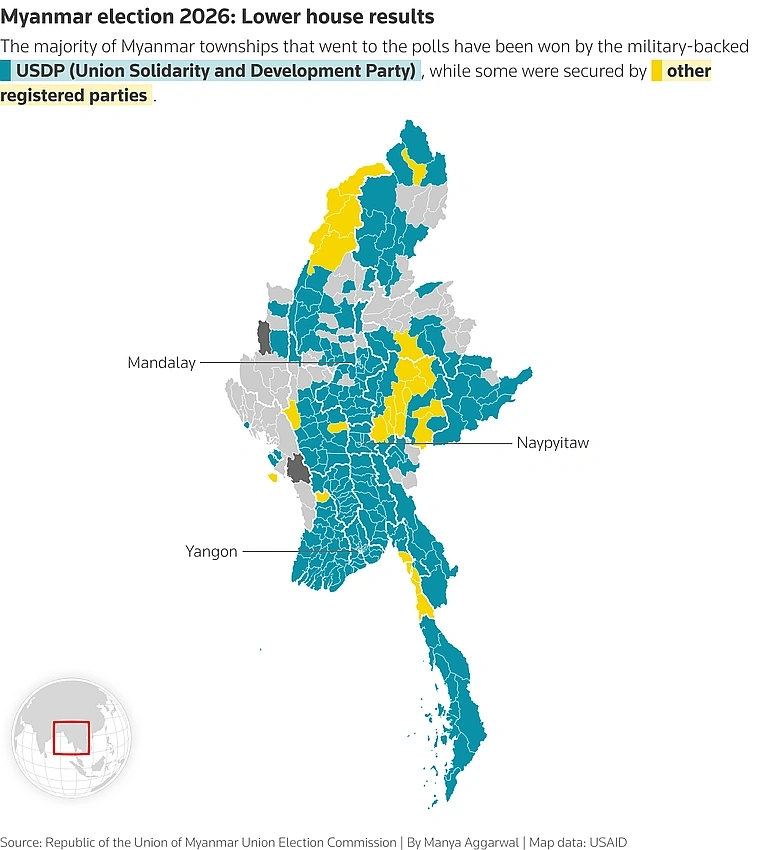
Voting began on Sunday in Myanmar in the final round of a three-stage general election, capping a monthlong process that critics say is designed to legitimize the military’s grip on power after the 2021 takeover. The army-backed Union Solidarity and Development Party has already dominated most seats in the earlier rounds, and a large portion of the parliament remains under military influence due to a constitutional provision guaranteeing the armed forces a substantial voice. The outcome is widely seen as consolidating military control as the country enters a new parliamentary session.
Observers and critics argue the election was held under tight restrictions on free speech and public criticism, with many areas deemed unsafe and voting not held in more than a fifth of the country’s townships. They say the process undercuts any claim to a free or fair vote and serves to provide a veneer of legitimacy for a government that seized power in 2021. The country remains deeply polarized, with ongoing conflicts and displacements complicating any effort toward national reconciliation.
Senior General Min Aung Hlaing, who currently heads the military government, is widely expected to assume the presidency when the new Parliament convenes. Analysts caution that the combination of reserved seats for the military and the party’s widening influence could constrain future policy choices and keep the military in a dominant position for years to come. Critics also point to a lack of external observers: ASEAN members have indicated they will not certify the results, and Western governments have questioned the election’s inclusivity and transparency.
In villages across the country, the third phase proceeded amid security concerns and sporadic violence, underscoring the controversial nature of the process. International reaction has been restrained, with governments calling for restraint and inclusion while avoiding formal endorsement of the results. As Myanmar moves toward a new parliamentary session, many residents and observers are left to weigh the implications for democracy, stability, and the prospects for genuine reform.
