Delhi-HP Police Stand-Off Triggers Political Row Over IYC Arrests

Delhi-HP Police Stand-Off Triggers Political Row Over IYC Arrests
Inter-state police clash over IYC workers' arrest sparks a political row, as Himachal's government calls out Delhi Police for overreach.
The standoff between Delhi and Himachal Pradesh police over the arrest of IYC workers has ignited a political row in the hill state. Himachal Pradesh Chief Minister Sukhvinder Singh Sukhu called Delhi Police’s actions an attempt to undermine the sovereignty of the state, highlighting the tensions that flared when cross-border policing ran afoul of inter-state protocols.
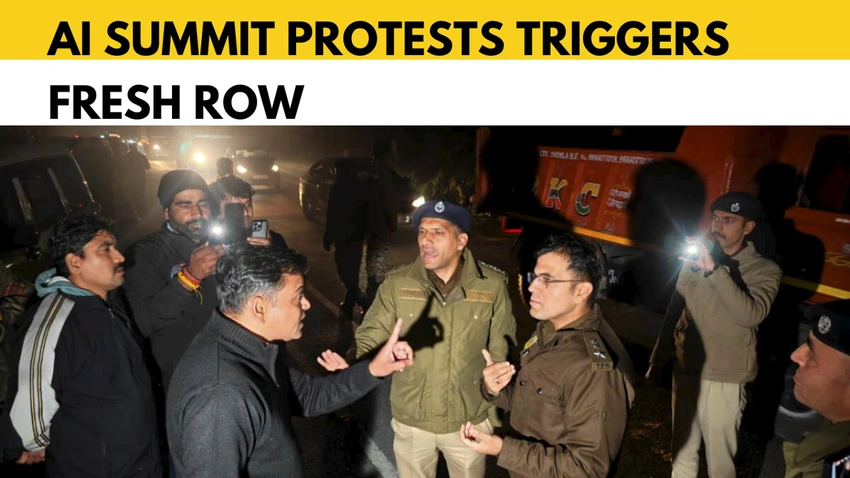
According to reports, Delhi Police had moved in at Rohru early on Wednesday and arrested three youths—Saurav Singh, Arbaaz Khan, and Siddharth Avdhoot—who are said to be from Uttar Pradesh and Madhya Pradesh. In a swift counter-move, Himachal Pradesh Police intercepted the Delhi Police team at Dharampur in Solan district, detaining them along with the accused. Shimla Police then allegedly seized a Delhi Police vehicle, and the standoff intensified as authorities argued over legality and procedure.
The Delhi Police team reportedly argued that the action stemmed from standard inter-state arrest protocols, but the Himachal Pradesh authorities maintained that transit remands and jurisdiction had not been properly observed. The accused were produced in a Shimla court around 1 a.m. for hearings related to transit remand, and a decision granted by the court allowed their further movement toward Delhi. The episode has since become a focal point for political debate, with opposition voices criticizing what they see as heavy-handed tactics, while supporters argue for strict adherence to the law and inter-state cooperation.
As the legal process unfolds, officials say they will continue to pursue the case within the bounds of the law, emphasizing the need for clear protocol in inter-state arrests to avoid fuel for political manipulation. The incident has underscored the sensitivity of policing in a border region and the importance of maintaining federal coordination without compromising state sovereignty.
