Authenticity vs. AI: Can 'Real' Experience Survive the Digital Age?

Authenticity vs. AI: Can 'Real' Experience Survive the Digital Age?
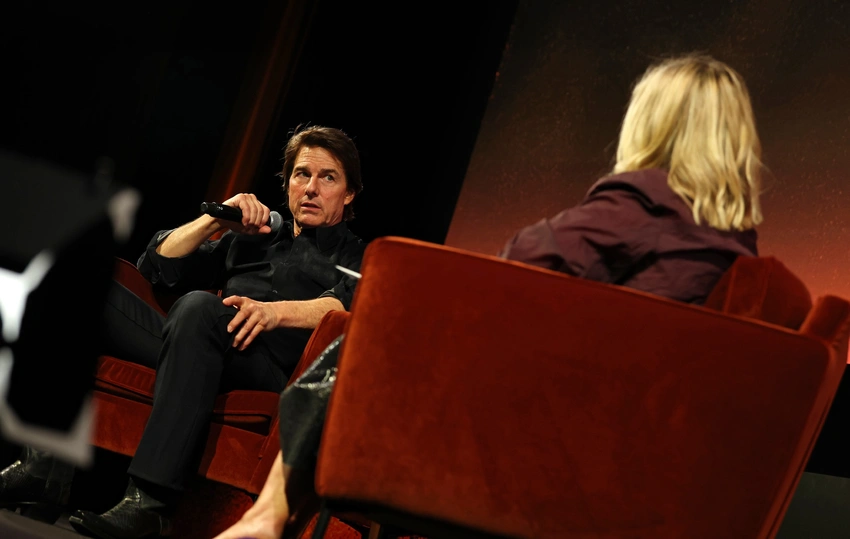
Hollywood is buzzing about AI, but will it replace human creativity? Tom Cruise weighs in, insisting people crave 'real things' in an evolving industry.
The buzz around artificial intelligence in Hollywood isn't just about cutting-edge tech, it's about the very soul of storytelling. We’re constantly asking: Can the magic of human creativity and authentic experience survive in an age where algorithms can generate entire worlds?
Take Tom Cruise, for instance. He's known for pushing the boundaries of practical effects and performing his own jaw-dropping stunts. He recently chimed in on the AI debate, and his take is incredibly insightful: “You know, it is coming and it's going to happen,” Cruise acknowledged.
But he quickly followed up with a crucial point: “But people want to see real things.”
This sentiment from a star who famously battles an advanced AI called The Entity in his latest films isn't just a philosophical stance; it's a reflection of a core human desire. In an increasingly digital world, the demand for tangible, verifiable authenticity seems to be growing, not shrinking.
Hollywood Divided: To Embrace or Resist?
The industry is, predictably, split. On one side, we have vocal critics like Backrooms director Kane Parsons and Guillermo Del Toro, who warn about the perils of unchecked AI. Even a figure like Pope Leo XIV has reportedly condemned its use in certain contexts.
On the other side, influential voices such as Martin Scorsese, Neill Blomkamp, Brad Pitt, and Jodie Foster have either endorsed AI or integrated it into their upcoming projects. They see it as a tool, an evolution, something to be harnessed rather than feared. It's a classic innovator's dilemma.
Then there are those who fall somewhere in the middle, or perhaps, on the side of resignation. Star Wars creator George Lucas, for example, admitted there's “nothing you can do about” AI's rise. But this fatalism didn't sit well with everyone; SAG-AFTRA president Sean Astin urged Lucas and others to “speak carefully” about the technology, highlighting the real concerns of workers in the industry.
The Human Element Remains Key
The discussions aren't purely theoretical. We've seen glimpses of AI's current limitations, like the much-discussed incident where the AI “actor” Tilly Norwood appeared to short-circuit during a live interview, randomly speaking Cantonese. It's a stark reminder that while AI can mimic, it still struggles with the nuances of true, unpredictable human interaction and creative expression.
Cruise's emphasis on 'real things' resonates deeply.
It's about the sweat, the risk, the raw emotion that only a human can bring. It's why audiences flock to see him leap from cliffs or pilot jets himself, rather than relying solely on CGI.
The experience of seeing something genuinely achieved is irreplaceable.
What Does 'Real' Mean for the Future?
So, as AI continues its inevitable march, the question isn't whether it will exist, but how we integrate it without losing the essence of what makes art and entertainment truly compelling. Can it be a collaborator, enhancing human creativity, rather than replacing it?
The debate isn't just about technology; it's about preserving the human touch that makes stories timeless.
It's about reminding ourselves why we started watching in the first place: for connection, for wonder, for something profoundly real .
