AI or Instinct? Why Human Touch Still Rules the Trading Floor

AI or Instinct? Why Human Touch Still Rules the Trading Floor
Forget full automation! Daniel Schlaepfer's new book argues why human judgment, intuition, and ethical oversight are irreplaceable in today's high-stakes financial markets. Discover the future of trading!
The financial world is buzzing with talk of algorithms and high-frequency trading (HFT) dominating market movements. It's easy to get swept up in the narrative that machines are taking over, making human traders obsolete. But hold on a second, is that the full picture?
A compelling new perspective suggests otherwise, arguing that despite the incredible advancements in AI, the human element remains not just valuable, but absolutely vital for the health and integrity of our financial markets.
This isn't just a sentimental plea for the good old days.
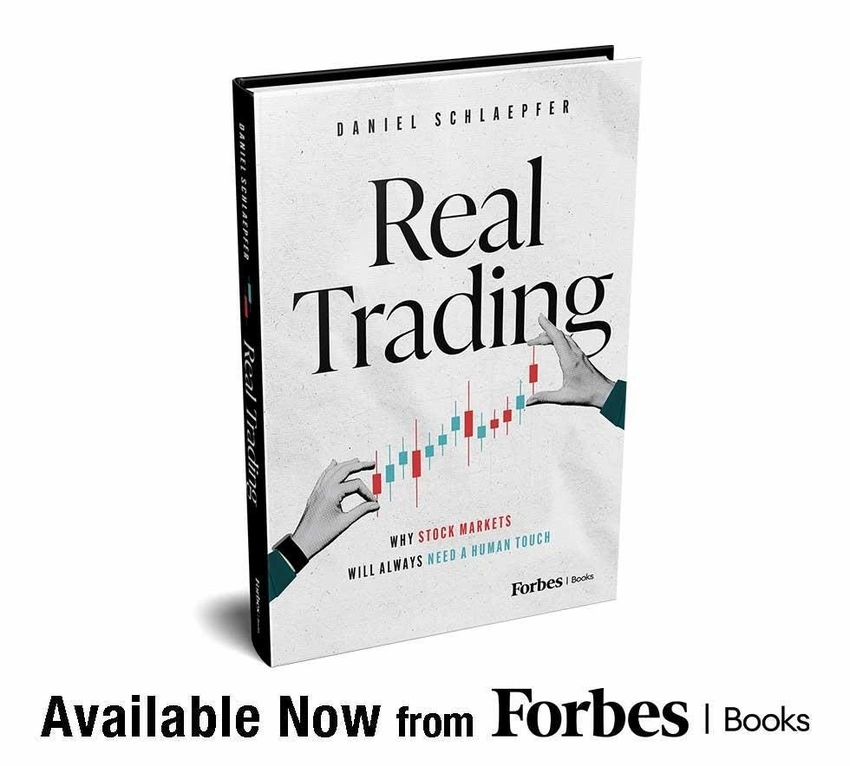
Daniel Schlaepfer, the founder of Select Vantage, Inc., lays out a powerful case in his new book, Real Trading: Why Stock Markets Will Always Need a Human Touch , published by Forbes Books. He challenges the widespread belief that markets can operate optimally, or even safely, without human involvement.
Schlaepfer's core argument is simple yet profound: while technology can enhance efficiency, it can never fully replace the nuanced judgment, ethical framework, and intuitive understanding that only humans possess.
Think about it: when algorithms trade at lightning speed, they often operate within pre-defined parameters. But what happens when unforeseen events, unprecedented market conditions, or subtle shifts in sentiment occur? This is where human judgment shines.
Schlaepfer contends that human insight is critical for interpreting complex information, managing amorphous risks, and providing crucial liquidity when automated systems might falter or exacerbate volatility. The promise of full automation, while alluring, often overlooks the risks it introduces, such as reduced transparency and the potential for unintended consequences to ripple through the system unchecked.
The book highlights how human traders contribute to market stability and foster trust. It's a human that ultimately sets the rules, identifies ethical boundaries, and understands the broader societal and economic implications of financial decisions. Machines are tools; they execute instructions.
Humans, however, provide the strategic vision and the critical moral compass necessary to navigate the intricate landscape of global finance.
Schlaepfer's vision isn't about rejecting technology; it's about a smarter integration.
His “Human Insight Model” advocates for combining human expertise with modern analytical tools. This approach recognizes that AI can process vast amounts of data and identify patterns far beyond human capability.
But it also asserts that interpreting those patterns, making strategic decisions based on incomplete or qualitative information, and exercising discretion in crisis situations, are uniquely human strengths.
In an era where every sector is grappling with the rise of artificial intelligence, the trading world faces a pivotal choice. Do we chase the dream of pure automation, risking an opaque and potentially fragile system?
Or do we, as Schlaepfer urges, recognize and actively preserve the invaluable human touch?
The future of financial markets, he suggests, depends on finding that intelligent balance, one where technology serves human wisdom, not replaces it. The goal isn't to pit AI against humans, but to forge a symbiotic relationship where each contributes its best, ensuring markets remain robust, fair, and ultimately, human-centric. This conversation is more crucial than ever as we move further into the age of intelligent machines.
