Beyond the Bechdel Test: Why On-Screen Male Friendships Save Women's Sanity

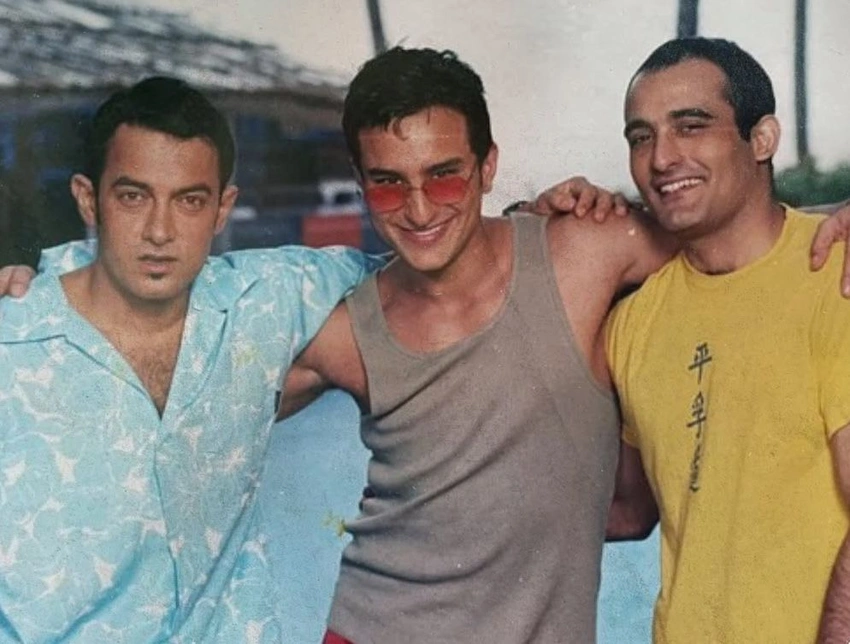
Beyond the Bechdel Test: Why On-Screen Male Friendships Save Women's Sanity
Ever wonder why your partner relies on you for *everything* emotional? It’s not just you. The lack of male friendships on screen reflects a real-life crisis impacting women.
A few months ago, my phone flashed with a name I hardly recognised. It was a college acquaintance I hadn't heard from in eight years. “My girlfriend is away with her friends for the weekend,” he confided, “and I just wanted to talk to my own people.” I hadn't realised I was one of his people. That conversation, starting with polite niceties, quickly became an outpouring of raw honesty: family pressure, relationship hopes, career anxiety.
This isn't an isolated incident. It highlights a growing, concerning trend: men increasingly lack robust emotional support networks beyond their romantic partners. When men on screen are consistently written as isolated, angry, or solely defined by romantic dependence, it doesn't just mirror: it reinforces: a dangerous real-life pattern.
The Silent Burden of Emotional Outsourcing
For many women, this translates into a hidden burden, often called ‘emotional outsourcing.’ Clinical therapist Bevin DeMuth notes,
It really does trend this way in the data we see… It’s very common for men to rely on their partner for emotional support, creating a model that is often called ‘romantic partner or bust.’
What happens when that romantic partner is unavailable? Feelings that have been bottled up for a long time travel toward whoever is available, even a woman he barely knows.
Consider Yash Gazula, a 35-year-old software engineer in New York. While he sees his male friends often, he instinctively turns to his girlfriend when something's bothering him. For relationship trouble, he confides in female friends. “I don't think I get the same validation or comfort from my guy friends.
Women are more empathetic, ask questions, show compassion.
Obviously, that's more comforting than 'do you want a beer?'”
Where Have All the Deep Conversations Gone?
Loneliness is a routine diagnosis of modern life. We've replaced deep conversations with scrolling, in-person connection with follow requests. The number of words we speak per day has declined by about 20% in one generation, with the sharpest decrease affecting those below the age of 25.
While men and women utter the same number of words daily, where they spend those words, and with whom, differs greatly.
The media we consume plays a vital role. Just as the Bechdel Test brought crucial attention to female representation in film, we need to apply a similar lens to male friendships. When women on screen have more friends than ever before, but men are often depicted as emotionally self-contained or primarily reliant on a love interest, it subtly normalises this lack of male-to-male emotional support.
Why it Matters for Everyone
It's about fostering healthier men and more balanced relationships.
Strong, emotionally diverse male friendships are a lifeline, offering different perspectives, shared experiences, and a crucial space for vulnerability. Without them, the romantic partner becomes the primary - and sometimes only - source of emotional release, leading to burnout, resentment, and an unhealthy codependency.
It's time we demand richer, more complex portrayals of male friendship on screen. By showing men supporting each other, navigating emotional challenges together, and building robust platonic bonds, we can inspire a shift in real-life dynamics. For the sake of men's well-being and women's emotional load, it's a narrative change long overdue.
