2026 Solar Eclipse: India Misses Out, Europe Takes Center Stage!

2026 Solar Eclipse: India Misses Out, Europe Takes Center Stage!
Get ready for the 2026 solar eclipse on August 12! Discover where it will be visible, the different types, and why India won't see this celestial spectacle. Mark your calendars!
A spectacular celestial event awaits on August 12, 2026, as a solar eclipse is set to captivate sky-gazers across various parts of the globe. While many regions are anticipating this rare astronomical display, some will have a front-row seat to its full glory, while others, unfortunately, will miss out.
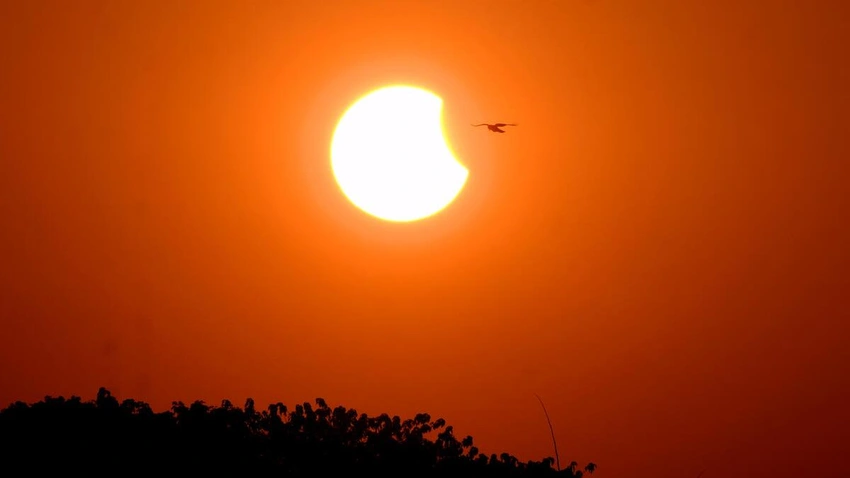
So, what exactly is a solar eclipse? It's a breathtaking alignment where the Sun, Moon, and Earth line up perfectly. The Moon passes directly between the Sun and Earth, casting a shadow on our planet and temporarily blocking some, or all, of the Sun's fiery light. There are a few types: a total solar eclipse, where the Moon completely covers the Sun, turning day into a brief twilight; a partial eclipse, where only a portion of the Sun is obscured; and an annular solar eclipse, famously known as the “Ring of Fire,” where the Moon is too far to fully cover the Sun, leaving a bright ring of sunlight visible.
For those wondering about the timing, the eclipse will commence at 15:34 GMT on August 12, 2026. If you're in India, this translates to approximately 9:04 PM IST. The Moon's shadow is expected to cover the Sun for up to two minutes and eighteen seconds during its peak.
Unfortunately, for residents in India, the 2026 solar eclipse will not be visible. Given the timing, the celestial event will occur during the night hours across the subcontinent, meaning Indians will miss out on witnessing this particular spectacle.
However, it's great news for Europe! Mainland Europe is poised to experience a total solar eclipse for the first time since 1999, with a significant portion of Spain falling directly within the path of totality. This will lead to complete darkness during daylight hours in those regions. Beyond Spain, Western Europe, parts of northwestern Africa, and even some areas of the U.S. will be treated to a partial solar eclipse. NASA is expected to provide live coverage of the event, ensuring that those not in the direct path can still experience the wonder.
This event also ties into ongoing scientific endeavors. Data from missions like India's Aditya-L1 continues to provide crucial insights into understanding our Sun's atmosphere and its energy budget, helping scientists unlock more mysteries of our star.
