PM Modi’s Education Reforms Credited as India Climbs Higher in QS Rankings 2026

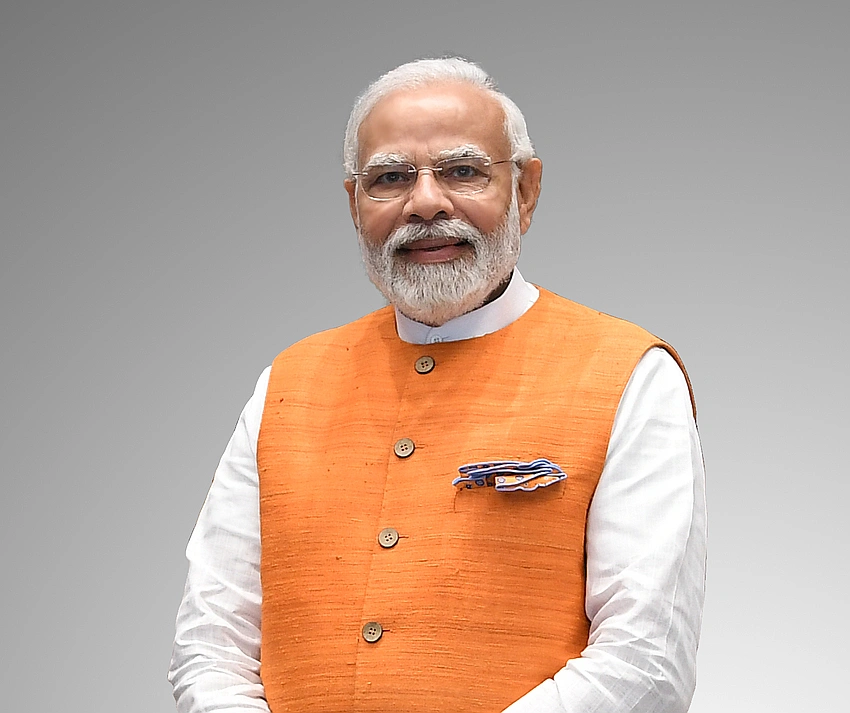
PM Modi’s Education Reforms Credited as India Climbs Higher in QS Rankings 2026
India celebrates its strongest QS World University Rankings 2026 showing, with 54 institutions on the list — a testament to NEP reforms and a broader push in higher education.
54 Indian universities made the global list in the QS World University Rankings 2026, marking India's best-ever performance, according to academicians and education experts. Compared to just 11 institutions in 2014 and 46 institutions last year, this represents a significant increase.
As a result, India now has the fourth-highest number of universities in the world, behind only the United States, the United Kingdom, and China. This indicates the country's increasing influence in higher education worldwide.
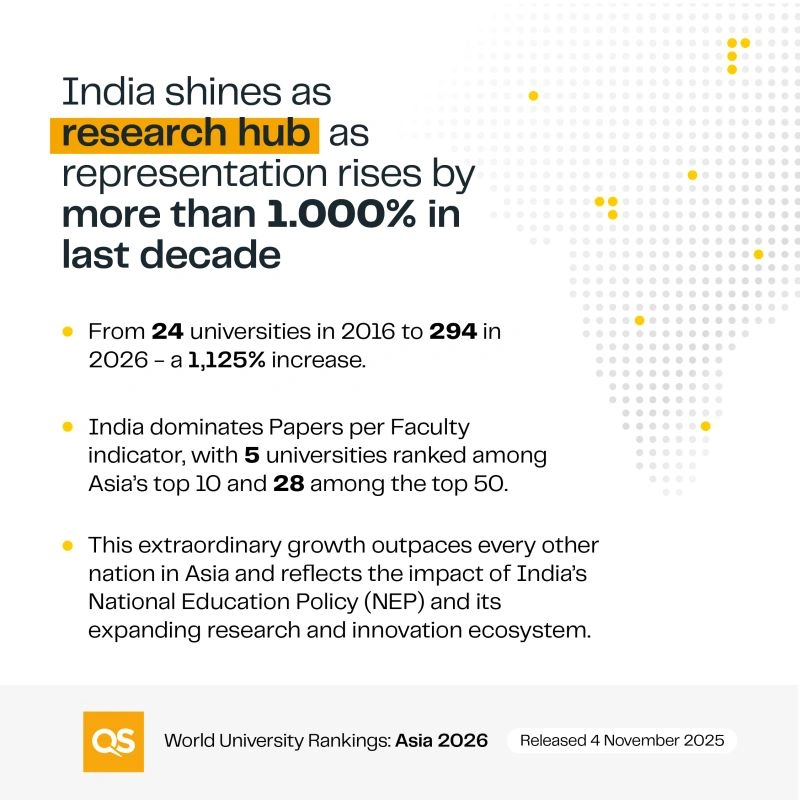
On social media, Prime Minister Narendra Modi and Union Education Minister Dharmendra Pradhan congratulated the educational institutions on their accomplishment. Scholars and experts in education credited the government's emphasis on educational reforms, particularly those outlined in the National Education Policy (NEP) 2020, for this outstanding performance.
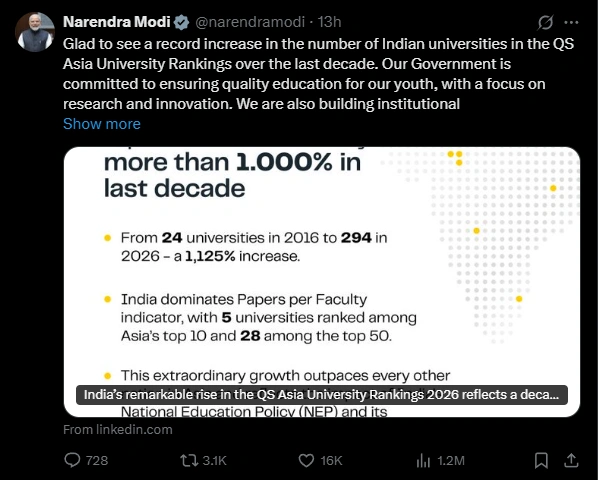
“The QS World University 2026 Rankings bring great news for our education sector. Our Government is committed to furthering research and innovation ecosystems for the benefit of India’s youth,” said PM Modi in his post on the platform X.
Satnam Singh Sindhu, founder chancellor of Chandigarh University, posted on X,
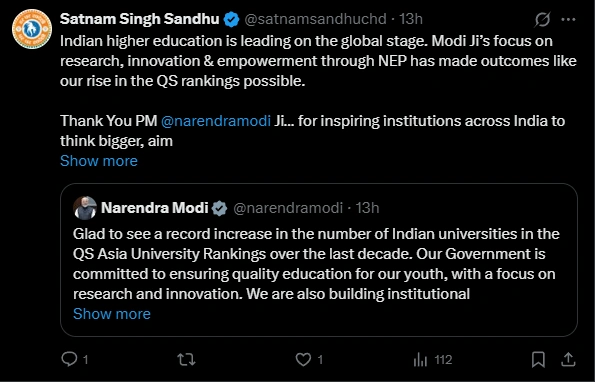
Indian higher education is leading on the global stage. Modi Ji’s focus on research, innovation & empowerment through NEP has made outcomes like our rise in the QS rankings possible. Thank You PM @narendramodi Ji… for inspiring institutions across India to think bigger, aim higher and transform education for the future,” he said.
This year, the Indian Institute of Technology (IIT) Delhi has risen from 150th to 123rd place, making it the top-ranked Indian university. IIT Delhi's Planning and Ranking Cell head, Professor Vivek Bhuva, described it as a major advancement. IIT Madras rose from 227th to 180th place, making its first appearance in the top 200, while IIT Bombay is ranked 129th.
IIT Madras Director Dr. V. Kamakoti gave the NEP credit for its improved international reputation.
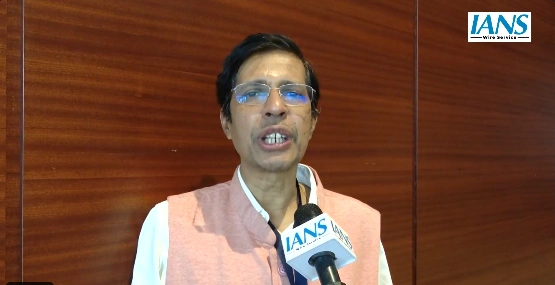
“With global collaborations, Indian institutions are ready for even greater success,” he said.
Dr Ashwin Fernandes, Executive Director of QS Asia, said,
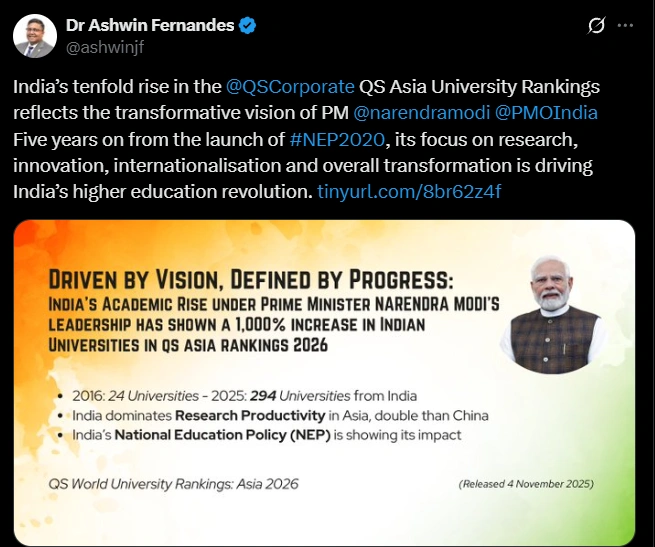
“India’s tenfold rise in the @QSCorporate QS Asia University Rankings reflects the transformative vision of PM @narendramodi @PMOIndia. Five years on from the launch of #NEP2020, its focus on research, innovation, internationalisation and overall transformation is driving India’s higher education revolution..”
India’s impressive performance in the QS World University Rankings 2026 isn’t just a number on a global chart; it’s a symbol of transformation. For decades, Indian education was respected for its rigor but criticized for being outdated, exam-driven, and disconnected from real-world needs. Seeing Indian institutions now rise in global standings feels like the beginning of a long-awaited academic revolution.
#QS2026, #IndiaEducation, #HigherEducation, #NEP2020, #EducationReform
