The EV Race: Why America Is Losing & What It Means for Our Future

The EV Race: Why America Is Losing & What It Means for Our Future
The global EV transition isn't just about cars; it's about energy infrastructure. The U.S. is losing ground, impacting future economies while nations like China and Canada pull ahead.
The global electric vehicle (EV) transition isn't just about the cars we drive; it's fundamentally about merging our automotive and energy infrastructures. We're at an S-curve inflection point, and frankly, some nations are winning this race, while others are falling dangerously behind. It's about shaping the advanced power grids that will underpin tomorrow's economies.
Consider the reality: in 2025, electric vehicles accounted for nearly a quarter of all new cars sold worldwide. Yet, in the U.S. during that same year, new EV sales dropped to just under 10%.
This stark contrast highlights a critical issue.
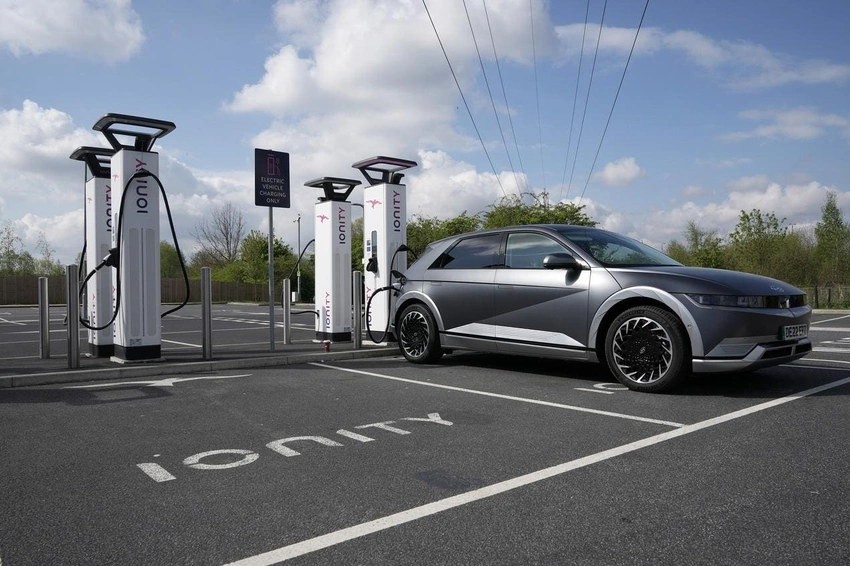
While the world barrels ahead, the U.S. struggles with a severe infrastructure deficit. Inadequate charging networks, often slow and sparse, are a major roadblock compared to, say, China's extensive ultra-fast charging ecosystem. High EV costs further exacerbate the problem, particularly with tariffs blocking more affordable models from global leaders like BYD and the expiration of key federal tax credits.
Adding to the instability are inconsistent government policies, which inevitably deter the long-term investments needed to build a robust EV future.
But it's not all doom and gloom globally. Other nations are making shrewd moves. Canada, for instance, has embraced a more open market for affordable Chinese EVs, rapidly accelerating adoption and even attracting manufacturing opportunities.
This strategic divergence allows them to gain invaluable experience in integrating EVs with advanced grid infrastructure: a crucial step for future economic competitiveness.
The implications for the U.S. are profound. We're not just losing the EV race; we're falling behind in developing the software-driven power grid that will be the backbone of our future. Significant EV adoption naturally catalyzes investment in a more sophisticated and resilient infrastructure, orchestrating distributed grid assets like electric vehicles.
When our traditional automotive and energy industries collide in this unprecedented way, the nation that can seamlessly integrate them will hold a significant economic advantage.
The International Energy Agency forecasts global EV sales will reach 23 million.
Missing out on this integration means missing out on the critical experience needed to compete.
It's time for a wake-up call. Without a concerted effort to invest in comprehensive, fast-charging infrastructure, stabilize policies, and consider broader market access, the U.S. risks becoming an automotive and energy backwater in the coming decades. The future is electric, and it's built on infrastructure.
