Integrating Drone Intelligence with Tactical Awareness Systems: Old vs. New

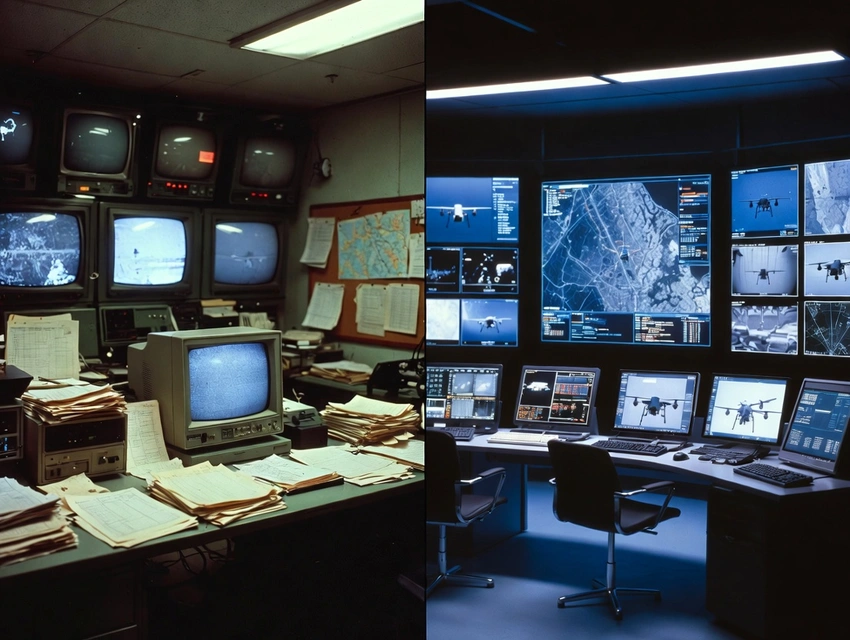
Integrating Drone Intelligence with Tactical Awareness Systems: Old vs. New
In the modern era of defense, security, and operational decision‑making, there is no question that drone intelligence has reshaped how individuals and organizations see the world around them. From analyzing terrain to detecting threats, unmanned aerial systems (UAS) provide a bird’s‑eye view that was once only possible with manned aircraft. But simply having the raw data from drones is only half the story. For that data to be truly useful, it must be integrated with a broader tactical situational awareness system 🔗, a framework that helps commanders, analysts, and operators turn streams of incoming information into actionable insights.
In this article, we explore how integration has evolved from older systems that relied on manual interpretation and slower data feeds to cutting‑edge solutions that combine real‑time analytics, artificial intelligence (AI), and networked sensors. We evaluate the technological shifts, the operational benefits, the challenges that remain, and the future trajectory of combining unmanned platforms with intelligent awareness systems.
Understanding the Core Concepts
Before comparing old vs. new approaches, it’s essential to define the two key ideas driving this discussion:
What is a Tactical Situational Awareness System?
A tactical situational awareness system is a technology or combination of technologies that collects, analyzes, and presents operational data to users in a way that enhances understanding of a dynamic environment. These systems often display maps, alerts, sensor feeds, and other data layers so that decision‑makers can anticipate developments, coordinate assets, and respond effectively.
A good explanation of situational awareness, including how it supports military and emergency operations, is available on the Maris‑Tech blog here: tactical situational awareness system.
What is New Drone Tech?
The drone landscape has changed rapidly over the past decade. New drone tech refers to the latest capabilities and innovations in unmanned aircraft, sensors, control systems, and related software tools. This includes improvements in autonomy, endurance, payloads, AI‑enabled perception, and secure communications. If you’re interested in current trends, Maris‑Tech also offers an overview here: 🔗new drone tech 🔗.
The Old Paradigm: Manual Integration and Isolated Systems
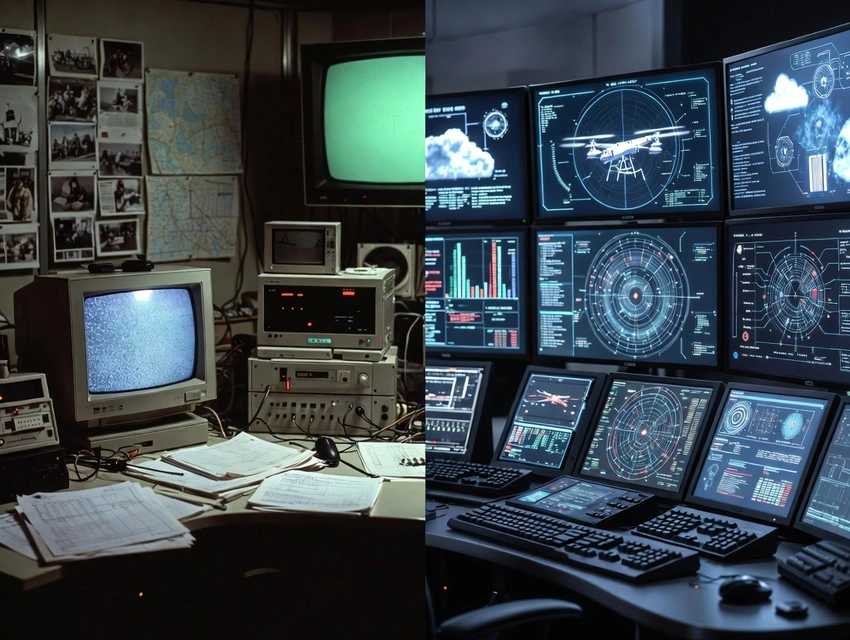
In the early days of drone operations, particularly for military and security uses, two major limitations constrained how intelligence was used:
1. Siloed Data Streams
Each drone mission produced sensor data such as imagery, video, or radar returns, but there was no easy way to fuse that information with other operational data. Analysts might receive mission reports on paper or in spreadsheets, while commanders tracked assets on separate systems.
This meant:
- Information delays: Field operators had to return data physically or broadcast over limited communications channels.
- Manual interpretation: Most data analysis, including image review, was done by human experts rather than automated systems.
- Lack of integration: Sensor feeds from drones were not digitally integrated with other sources such as ground sensors, satellite data, or communications logs.
A good historical perspective on early drone use and limitations is available in the archives of early UAS deployments. For example, in the 1990s, drones were often used to scout enemy positions, but their imagery was interpreted hours later rather than instantly shared.
2. Limited Communications and Data Sharing
Older drones typically had short‑range communication links enough to relay basic telemetry and occasional snapshots, but not full motion video or sensor fusion data. This limited the capacity of leadership and support personnel to see a comprehensive picture in real time.
Because of these communication constraints, drone operators often had to relay information verbally or through separate systems that weren’t connected to a central awareness platform.
3. Human‑Intensive Analysis
Early drone operations were heavily dependent on analysts and intelligence officers to make sense of incoming data. They would:
- Review hours of footage manually
- Generate reports in text format
- Call commanders with verbal updates
This process was slow, vulnerable to human error, and not scalable during high‑tempo operations.
The New Paradigm: Real‑Time Fusion and AI‑Assisted Decision Making
Today’s approach to integrating drone intelligence with tactical systems is fundamentally different. New technologies have transformed how data is captured, processed, and disseminated.
1. Real‑Time Data Streams
Advances in communication technologies, including 4G/5G networks, satellite links, and secure mesh networks, allow drones to stream video and sensor data in real time to command centers and cloud servers.
This continuous flow enables:
- Instant visualization of operational environments
- Faster response to emerging threats
- Simultaneous sharing among multiple teams
For instance, police departments, disaster response units, and defense forces now use real‑time video feeds from drones to make on‑the‑spot decisions rather than waiting to return to base.
2. Sensor Fusion and Data Layering
Modern tactical awareness platforms can ingest data from numerous sources, such as drones, satellites, ground sensors, biometric systems, logistics feeds, and overlay them into a coherent picture. This is often referred to as sensor fusion.
Benefits include:
- More context around drone imagery (e.g., cross‑referencing GPS signals with camera views)
- Reduction of information overload through AI filtering
- Enhanced decision‑support tools for commanders
Large tech companies and defense contractors regularly publish research on how sensor fusion contributes to unified operational pictures (UOP). For example, the U.S. Department of Defense’s Joint All‑Domain Command and Control 🔗 (JADC2) initiative emphasizes data fusion across domains.
3. AI and Machine Learning for Automated Decisions
Artificial intelligence is one of the most significant differentiators between old and new approaches. Whereas early systems required humans to identify objects manually, AI can now:
- Detect and classify targets in video feeds
- Track movement patterns over time
- Predict likely human actions based on behavior models
This doesn’t replace human judgment, but it dramatically accelerates processing and reduces operator fatigue. Research from MIT Technology Review and Stanford’s AI Lab illustrates how machine learning enhances perception in complex environments.
4. Cloud‑Based Command and Control
A major innovation is the use of cloud computing to host tactical awareness platforms. Data captured by drones can be uploaded, processed, and stored in cloud environments, enabling:
- Ubiquitous access by authorized users
- Scalable storage for large datasets
- Integration with AI toolchains for real‑time analytics
This contrasts sharply with older systems that relied on local servers or even physical media for data exchange.
5. Autonomous Mission Planning
The latest drones with onboard intelligence can adjust their flight plans dynamically based on emerging data. For example:
- Following moving targets automatically
- Avoiding obstacles using onboard sensors
- Responding to voice commands or natural language prompts
These autonomous features reduce the cognitive burden on operators and allow drones to act semi‑independently while still feeding into tactical awareness platforms.
Practical Use Cases: Old vs. New
Law Enforcement Operations
Old Approach
In a hostage or standoff scenario, officers might deploy a drone to scout rooftops or building layouts. The drone’s operator would view video on a small portable monitor. After the flight, the footage would be reviewed by a team and discussed before operational decisions were made.
New Approach
A real‑time feed from drones goes into a tactical awareness dashboard accessible to:
- On‑scene commanders
- SWAT operators
- Dispatch and support teams
AI may highlight windows of interest or heat signatures of humans, improving reaction time. Teams across locations see the same updated operational picture simultaneously.
Disaster Response and Humanitarian Aid
Old Approach
In events like earthquakes or floods, drones would capture imagery the day after deployment. Analysts would later produce maps showing damaged infrastructure.
New Approach
With modern integration:
- Drones immediately stream imagery to a central dashboard.
- AI quickly identifies blocked roads or unstable structures.
- Aid agencies overlay infrastructure maps with drone data to plan supply routes.
High‑quality external reporting on disaster response drones from United Nations Office for the Coordination of Humanitarian Affairs 🔗 (OCHA) highlights how real‑time data improves planning.
Military Intelligence and Reconnaissance
Old Approach
Military planners would review UAS flight logs and imagery at headquarters, creating text reports over hours or days.
New Approach
Now, drone feeds can integrate directly with a tactical situational awareness system that displays a holistic battlefield view, incorporating satellite, radar, and ground‑sensor data seamlessly.
This integration supports faster decision cycles, reduces friendly fire risk, and improves coordination among units.
Academic and defense‑industry reports (e.g., RAND Corporation studies) analyze these capabilities in modern military contexts.
Challenges with Modern Integration
Despite massive improvements, implementing new integrated systems is not without challenges.
1. Data Security and Privacy
Higher bandwidth and cloud reliance increase risks of unauthorized access or exploitation. Organizations must design robust encryption, identity management, and compliance frameworks. Cybersecurity standards from sources like NIST and ISO provide guidance.
2. Interoperability
Different vendors produce drones, sensors, and software platforms. Ensuring all components speak a common language (data formats, protocols) requires careful standardization. Initiatives such as the Open Geospatial Consortium (OGC) promote open standards for spatial data sharing.
3. Training and Human Factors
Operators need not just technical skills to fly drones, but also to interpret complex dashboards and AI outputs. Training programs and simulation environments help bridge this gap, but organizational adoption often lags behind technological capability.
4. Ethical and Legal Considerations
Deploying drones, especially in civilian areas, raises questions about privacy, data retention, and legal authority. Government agencies must balance operational benefits with respect for individual rights and laws.
Future Trends and Emerging Technologies
The integration of drone intelligence with tactical systems will continue evolving. Some notable directions include:
Edge Computing
Instead of sending all data to the cloud, processing can happen onboard or near field units to reduce latency. This supports faster decision loops.
Swarm Operations
Multiple drones acting as a coordinated group can cover much larger areas. AI becomes critical for managing behavior and interpreting swarm data efficiently.
Augmented Reality (AR) Interfaces
Integrating tactical data into AR devices such as heads‑up displays (HUDs) for commanders helps users visualize information without switching screens.
Autonomous Decision Support
AI systems will not just identify objects but also suggest optimal responses based on historical and contextual data a leap beyond basic detection.
Conclusion
Integration of drone intelligence with tactical situational awareness systems has transformed operational capability across military, law enforcement, humanitarian, and commercial domains. The old paradigm constrained by siloed systems, manual analysis, and limited communications has given way to real‑time, AI‑enhanced, networked environments that drive faster and more informed decisions.
As technology continues to mature, challenges remain in areas such as security, interoperability, and ethical use. However, the trajectory is clear: systems that provide seamless integration, intelligent interpretation, and predictive insights will define future readiness and adaptability.
For readers keen on exploring these themes further, the links shared earlier including insights on tactical situational awareness systems and the latest new drone tech offer detailed and practical perspectives.
