Global Markets Shaky: Asian Shares Drop Amid Bond Pressure & Inflation Fears!

Global Markets Shaky: Asian Shares Drop Amid Bond Pressure & Inflation Fears!
Asian stock markets are down, and oil prices are slipping as bond market pressure builds ahead of a crucial Jackson Hole meeting. Inflation worries persist—what does this mean for your money?
Asian shares experienced a significant downturn on Monday, with oil prices also slipping, as global investors grapple with mounting bond market pressure and persistent inflation concerns. This comes at the start of a critical week culminating in a meeting of top U.S. economic officials in Jackson Hole. Across Asia, market performance was largely negative.
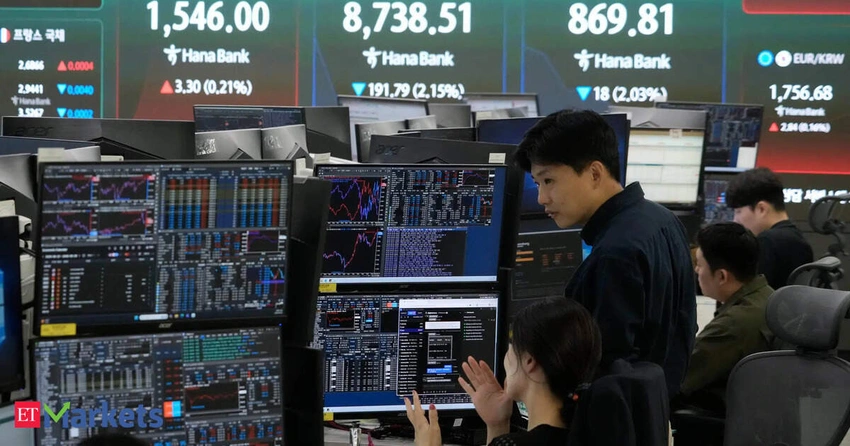
Tokyo's Nikkei 225 fell 0.5%, while South Korea's Kospi lost a substantial 3.5%.
Hong Kong's Hang Seng declined 2.1%, and the Shanghai Composite index gave up 0.7%.
Australia's S&P/ASX 200 was an exception, gaining 0.5%, bucking the regional trend.
Taiwan's Taiex also saw a 0.5% drop. A key focus for investors this week will be Wednesday's release of the U.S. personal consumption expenditures (PCE) report for July. This report is the Federal Reserve's preferred measure of inflation, and much like the consumer price index, it has consistently shown U.S. consumer inflation stubbornly above the 3% mark.
The Fed has been struggling to bring inflation back to its target rate of 2%, a goal it nearly achieved in early 2025 before inflation began to creep higher. The resurgence in inflation was attributed to several factors, including a wide range of tariffs imposed globally by the U.S., which started impacting prices.
Inflation then leaped higher in early 2026 following the Iran war, which severely curtailed global oil shipments from the crucial Strait of Hormuz, driving energy costs up. The bond market has been a particular area of concern. Last week, rising bond yields prompted an unusual intervention by the U.S.
Treasury Department. This development raised the specter of higher borrowing costs, which could significantly weigh on consumer spending, a vital component of economic health.
It also sparked fears that investors might be reconsidering their willingness to finance the seemingly endless flow of government borrowing.
Despite efforts by Treasury Secretary Scott Bessent, who announced that the government would double its buybacks of longer-term bonds, the relief in the bond markets was temporary. This measure was intended to bring down the 10-year Treasury yield and subsequently lower mortgage rates. However, the 10-year yield rose back to 4.73% on Friday, matching its highest point in over a year, and remained at 4.71% early Monday.
The 30-year Treasury yield, also targeted by the Fed's bond repurchases, similarly increased and is now nearing its highest level since 2007. #GlobalEconomy #MarketWatch #InflationCrisis #JacksonHoleMeeting
