Is Your Smart Ring Just a High-Tech Horoscope?

Is Your Smart Ring Just a High-Tech Horoscope?
We spend thousands on biometric rings to tell us we're tired. But is 'optimizing' our stress levels actually making us more stressed? Let's talk about the new age of data obsession.
Remember when we used to wake up and just know if we felt tired? Those days are gone. Now, we check an app. If the ring says my sleep efficiency was 85 percent, I am allowed to have a good day. If it says my stress peaked at 2 PM, I spend the rest of my afternoon wondering why. We have entered an era where biometric data has become the new astrology. Instead of checking our horoscopes to see if Mercury is in retrograde, we are checking our heart rate variability scores to see if we are allowed to go for a run.
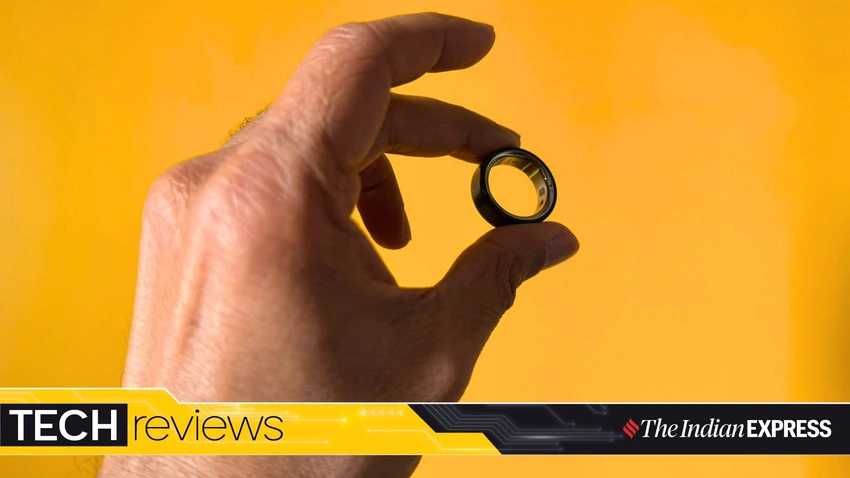
Smart rings are the latest trend in this obsession. For the price of nearly 28,900 rupees, these discreet gadgets promise actionable insights. They track every heartbeat, every toss and turn, and every minor spike in temperature. On paper, it sounds like the ultimate tool for health. In reality, it often feels like we are just paying for a digital mirror that tells us what we already know, while making us infinitely more anxious about the things we cannot control.
The Optimization Trap
Are we actually getting healthier? Or are we just becoming obsessed with optimizing our lives? There is a fine line between awareness and obsession. When you start worrying about your stress score during a relaxing dinner because you know the glass of wine will ruin your sleep stats, you have to ask yourself who is in charge. The data should serve us, but lately, it feels like we are serving the data.
Living by the Graph
We are chasing a perfect baseline that might not even exist. Human bodies are messy, unpredictable, and non-linear. They do not always fit into a clean graph on a smartphone screen. While tracking tools can highlight real issues, they can also trap us in a loop of constant self-surveillance. Consider these points:
- The Cost of Entry: Is a 30k investment necessary to listen to your body?
- The Stress of Tracking: Does seeing a high stress score actually increase your cortisol?
- The Intuition Gap: We are losing the ability to feel our own health without a sensor.
We are so busy looking at the metrics of our lives that we might be forgetting how to actually live them. High-tech wearables are great for data, but they should not replace the simple act of listening to your own skin and bones. Sometimes, the best health insight is the one you feel, not the one you read on a screen.
