Paul Thomas Anderson: A director people don’t just watch, but follow

Paul Thomas Anderson: A director people don’t just watch, but follow
Paul Thomas Anderson: A director people don’t just watch, but follow
Examine how Paul Thomas Anderson builds a dedicated following by shaping scarce output, intricate narratives, and persistent debate, turning each film into an evolving, communal experience.
There is a particular kind of filmmaker whose audience does not behave like an audience at all. They behave like initiates. The films are not simply consumed but revisited, decoded, argued over. Paul Thomas Anderson belongs firmly to this category. His cinema has produced not just admirers but something closer to a cult following, sustained by obsession, scarcity, and the persistent sense that each film demands more than it gives at first glance.
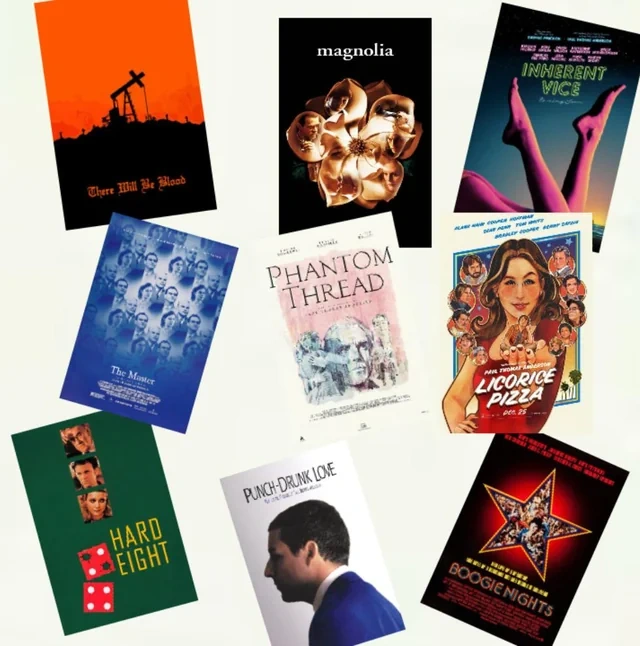
Part of this has to do with output. Anderson’s filmography is relatively small, which paradoxically intensifies engagement. A limited body of work invites repeated viewing and close reading, making each release feel like an event rather than content. What emerges is a cinephile culture that treats his films less as standalone texts and more as a continuous, evolving project.
The auteur as myth
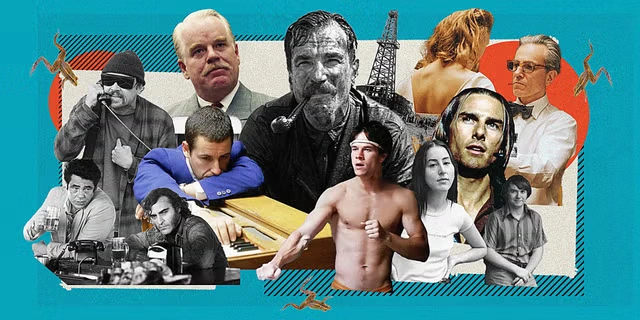
The idea of Anderson as an auteur is central to this cult. He writes his own films, maintains unusual creative control, and demonstrates a consistency of style that invites interpretation across works. This is not merely a matter of branding. His films exhibit recognisable formal signatures: long tracking shots, textured cinematography, and an almost tactile relationship to film stock itself.
Yet what solidifies the cult is not style alone but the myth that surrounds it. Anderson appears as a figure who resists industrial logic. His films are neither easily marketable nor comfortably aligned with mainstream narrative expectations. They sit, instead, in a space of deliberate difficulty. Even when they gesture towards familiar genres, whether melodrama, romance, or historical epic, they refuse to resolve cleanly.
Recurring worlds and damaged men
To follow Anderson is to recognise patterns. His cinema repeatedly returns to certain thematic constellations: fractured families, loneliness, surrogate relationships, and the lingering damage of the past. His protagonists are often men in crisis, emotionally stunted, searching for authority figures or attempting to become them.
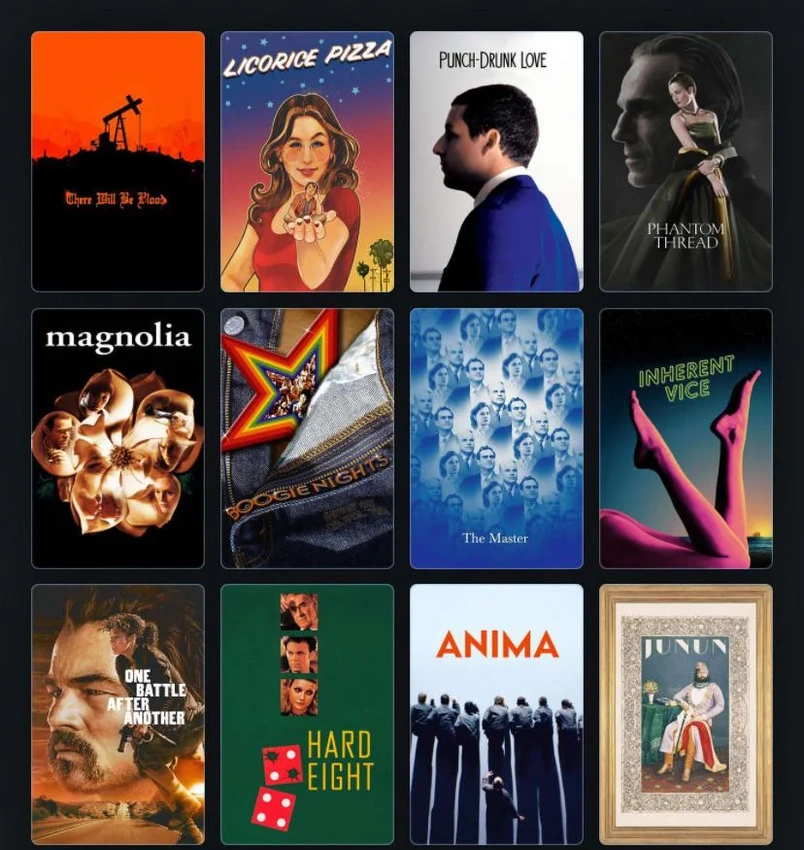
There is something almost novelistic about this recurrence. Characters across films begin to feel like variations on a shared psychological template. The lonely oil baron in There Will Be Blood, the unstable drifter in The Master, the awkward romantic in Punch-Drunk Love. They are not the same character, but they seem to inhabit the same moral universe.
For viewers, this creates a sense of coherence that encourages deeper investment. The films begin to speak to one another. Watching becomes an act of comparison, of tracing motifs, of identifying echoes.
Between spectacle and intimacy
One of the more striking features of Anderson’s work is its oscillation between scale and intimacy. His films can move from sprawling ensemble narratives to tightly focused character studies, often within the same career trajectory.
Early works such as Boogie Nights and Magnolia are expansive, filled with intersecting lives and kinetic energy. Later films narrow their focus, becoming more austere, more psychologically intense. This shift is not a break but a refinement. It suggests a filmmaker increasingly interested in interiority rather than spectacle.

Yet even at their most intimate, the films retain a sense of formal ambition. Anderson’s camera is rarely passive. It moves, observes, intrudes. Long takes and fluid tracking shots create a feeling of immersion, as though the viewer is being drawn into the emotional space of the characters rather than simply watching from a distance.
Difficulty as devotion
Cult cinema often thrives on difficulty, and Anderson’s films are no exception. They resist easy interpretation, often blending sincerity with irony in ways that destabilise the viewer. Emotional registers shift abruptly. Moments of absurdity coexist with profound despair.
This ambiguity demands labour from the audience. Meaning is not delivered but constructed. The result is a viewing experience that feels participatory. One does not simply watch a Paul Thomas Anderson film. One works through it.
Over time, this labour becomes part of the pleasure. The films reward rewatching not because they conceal a single hidden truth, but because they remain open. Each viewing produces a slightly different reading.

The anti-Hollywood Hollywood figure
Another aspect of Anderson’s cult status lies in his uneasy relationship with Hollywood itself. His films are firmly rooted in American settings and concerns, yet they stand apart from mainstream studio conventions. They are too idiosyncratic, too tonally unstable, too uninterested in conventional resolution.
This position has consequences. Despite critical acclaim, Anderson has famously struggled for major institutional recognition. That absence of validation does not diminish his reputation. If anything, it intensifies it. The lack of awards becomes part of the mythology, reinforcing the idea of an artist operating beyond the limits of official taste.
Why the cult endures
Ultimately, the cult of Paul Thomas Anderson is sustained by a combination of factors: formal distinctiveness, thematic coherence, and a persistent resistance to simplification. His films do not offer comfort. They offer texture, contradiction, and an unsettling kind of beauty.
There is also the matter of time. Anderson’s work evolves. Each film feels like a departure as much as a continuation. This unpredictability ensures that the cult remains active rather than nostalgic. It is always waiting for the next text, the next variation, the next disruption.
To be part of this audience is to accept uncertainty as a condition of engagement. The films do not resolve, and neither does the fascination.
#PaulThomasAnderson #CinephileCult #AuteurTheory #FilmCriticism #MovieCulture
