Rock Legend's Swiftie 'Psyop' Tee Sparks Epic Fandom Showdown

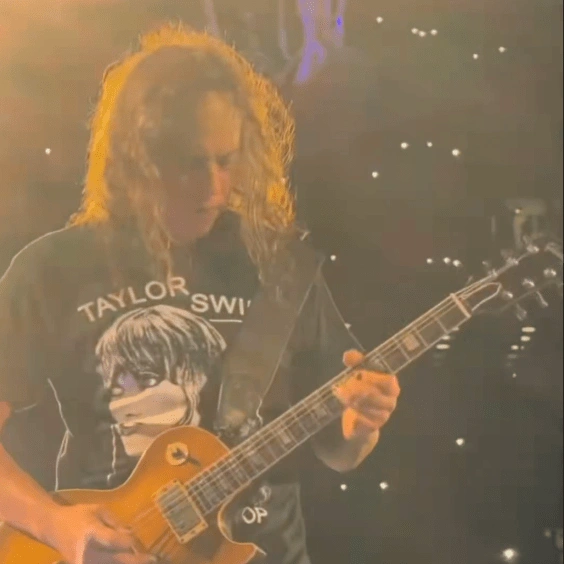
Rock Legend's Swiftie 'Psyop' Tee Sparks Epic Fandom Showdown
A legendary rock guitarist wore a controversial tee claiming Taylor Swift is a 'CIA psyop.' The internet exploded, pitting two massive fanbases against each other. What does this epic clash say about music, fandom, and o
When Fandoms Collide: The Swifties vs. Metallica Debate
In the digital arena of popular culture, few spectacles are as captivating or chaotic as a full-blown fan war. Recently, the internet witnessed an unexpected clash that perfectly encapsulates this phenomenon: a legendary guitarist from an iconic metal band sported a T-shirt declaring "Taylor Swift Is a CIA Psyop," igniting a fiery reaction from one of the most formidable fanbases on the planet. This wasn't just a casual fashion statement; it was a spark that set off a fascinating debate about music, loyalty, and the power of online communities.
The incident itself is almost cinematic in its simplicity: a veteran rocker, known for shredding guitars and shaping the sound of an entire genre, takes to the stage in a shirt bearing a tongue-in-cheek conspiracy theory. What followed was swift and predictable. Swifties, known for their unwavering devotion and highly organized digital presence, took to social media to defend their idol. For them, it wasn't just a joke; it was a perceived slight against the artist they passionately support.
This confrontation is more than just a passing celebrity spat; it's a microcosm of modern fandom dynamics. Swifties are not merely fans; they are a community, a force. Their collective power has influenced everything from album sales to political discourse. A perceived attack on Taylor Swift is an attack on them. This isn't unique to them, of course; dedicated fanbases across all genres exhibit similar protective instincts. But the scale and speed of the Swiftie response offer a stark reminder of how quickly online sentiment can mobilize.
One has to wonder about the intent behind the "CIA psyop" shirt. Was it a genuine, if outlandish, political statement? A cynical dig at mainstream pop? Or perhaps, most likely, an attempt at humor, a playful jab designed to provoke a reaction? In the age of viral content, even a sarcastic t-shirt can take on a life of its own, stripped of context and amplified by algorithms. The line between irony and genuine offense often blurs, especially when dealing with passionate communities.
This incident also highlights the enduring, if sometimes artificial, divide between different music genres and their respective cultures. Metal and pop, historically, have often been viewed as antithetical. One is perceived as raw, rebellious, and underground; the other, polished, mainstream, and commercial. While many music lovers appreciate both, the tribalism of fandom can still lead to these kinds of showdowns. Is this just a new chapter in the age-old rock vs. pop debate, or something more?
Ultimately, this minor skirmish serves as a compelling case study in the power and pitfalls of online engagement. It shows how a simple statement can escalate, how humor can be misinterpreted, and how intensely protective fanbases can be. It's a reminder that in the interconnected world, even the most legendary figures aren't immune to the collective might of millions of devoted fans. Whether you're a headbanger or a pop enthusiast, one thing is clear: the internet ensures that when fandoms collide, everyone gets a front-row seat to the spectacle.
