Space Debris Alert! SpaceX Rocket Stage Slams Into Moon at 8,700 kmph

Space Debris Alert! SpaceX Rocket Stage Slams Into Moon at 8,700 kmph
A four-tonne SpaceX rocket stage, after drifting for over a year, has reportedly crashed into the Moon at an incredible 8,700 kmph! Astronomers are tracking the aftermath. Find out what this means for our lunar neighbor.
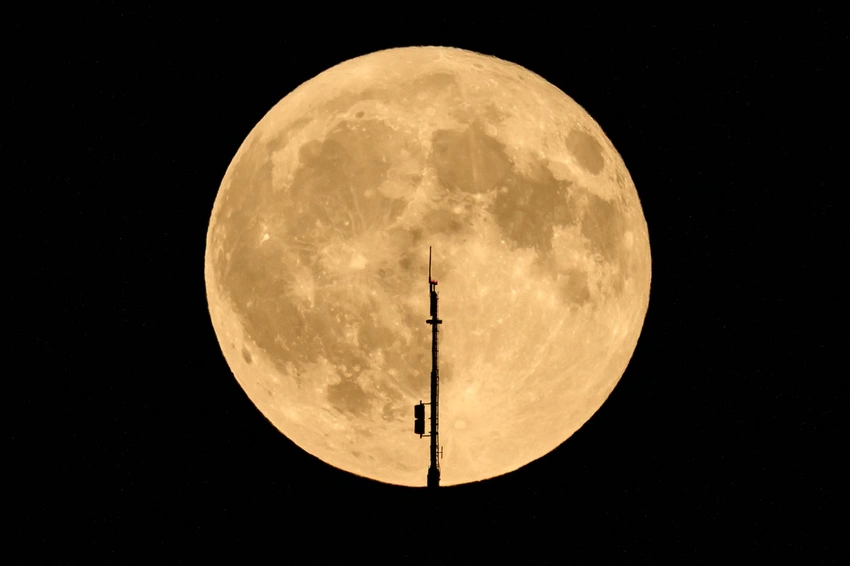
The celestial stage was set for an unusual event over the weekend as a four-tonne piece of a SpaceX Falcon 9 rocket reportedly slammed into the Moon. This cosmic collision, occurring at an astounding speed of 8,700 kilometers per hour, marks the end of a year-long journey for the rocket's second stage, which had been drifting through space since its launch.
Astronomers, who had been diligently tracking the trajectory of the spent rocket stage, are now awaiting official verification of the impact. The crash site is believed to be near the Moon's visible edge, making immediate observation from Earth a challenging task. However, the event is expected to carve out a significant crater, estimated to be roughly 18 meters wide and 4 meters deep, sending lunar dust and rock fragments scattering across the surface. While this might sound dramatic, experts confirm there is absolutely no threat posed to Earth.
The object in question was the second stage of a Falcon 9 rocket, which was originally used to launch a Firefly Aerospace lunar lander mission. Unlike most rocket stages that either burn up in Earth's atmosphere or splash down in the ocean after deployment, this particular stage remained in space. It had provided the necessary thrust to propel the lander towards the Moon, exhausting its fuel and becoming unsteerable in the process. Over time, the subtle forces of solar activity and lunar gravity gradually nudged its orbit onto a collision course with our natural satellite.
NASA plans to closely examine images of the impact site, comparing the lunar surface before and after the collision. This study aims to provide valuable insights into how celestial bodies impacting the Moon can alter its geological features. While an unexpected event, this isn't entirely without precedent; a Chinese rocket stage similarly hit the Moon in 2022, and NASA itself has intentionally crashed rocket components onto the lunar surface in the past to study seismic effects and ejecta.
