India's AI Promise Meets Gen Z Skepticism on Climate and Trust

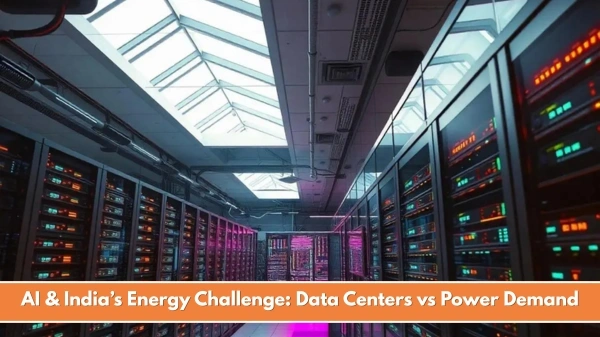
India's AI Promise Meets Gen Z Skepticism on Climate and Trust
As India pushes for AI growth, Gen Z questions its climate footprint, data-centre energy use, and the need for responsible rules.
I generated a few images using Gemini, ChatGPT and Claude. Clean lines. Good lighting. Slightly stylised. To me, they looked fine. For validation, I dropped them into our four-member family WhatsApp group — the informal civic square of the Indian household, where news, politics, jokes and judgments circulate with equal velocity. Technology has always unsettled before it settled. Neither children nor adults can fully predict its trajectory. My 13-year-old daughter responded instantly: “It looks ugly.” It wasn’t the aesthetic she objected to. It was the method. The images had been created by artificial intelligence (AI). She had read, she said, about the water consumption of data centres and the energy demands of training large models. Ironically, I had argued here last week that Big Tech must not be allowed to move its data centres to India. That was a public policy argument. My kid was thinking about our personal lives. Using AI casually, she concluded, was “irresponsible bruh.” It turns out many of her friends voice similar concerns. On asking around in different parts of the city, the refrain was familiar: AI is environmentally damaging. AI is ethically fraught. This sentiment is not uniquely Indian. An international survey published in The Lancet Planetary Health found that 59% of young people aged 16 to 25 described themselves as very or extremely worried about climate change. Separately, a 2025 global study by the University of Melbourne and KPMG, surveying respondents across 47 countries, found that while AI adoption is widespread, fewer than half of respondents said they were willing to trust AI systems fully. This is where a deep contradiction emerges. Priya Srinivasan, founder of Pomegranate Workshop, has spent nearly two decades working with children across grades. She has observed how young minds evolve alongside technology. She is not an alarmist. “There are no right or wrong answers here,”
