Solar on the Rooftops, Savings in the Ledger: Why CFOs Are Quietly Leading a Power Shift


Solar on the Rooftops, Savings in the Ledger: Why CFOs Are Quietly Leading a Power Shift
Companies are racing to rooftop solar to slash bills. CFOs love the math. We investigate the cost logic, the policy risks, and who wins next.
The rooftop is having a boardroom moment. From warehouses to data-heavy offices, finance chiefs are turning flat, sun-soaked space into a hedge against rising electricity costs. The pitch is simple. Lock in power at a known price. Cut peak bills. Reduce risk. And do it without flashy slogans. This is a numbers story.
The numbers are moving. Solar and battery projects made up roughly 84% of new U.S. power added in 2024, a marker of how quickly companies can now source clean power, even as residential rooftop slowed. That buildout is one reason corporate teams are more confident that hardware and installers will be available at scale.
But the “why now” is as much about pain as promise. Electricity demand is rising with AI, logistics and cooling loads. Private-equity energy investors say big tech and other power-hungry customers are locking in long-term supply, sometimes at premium prices, to shield themselves from volatility. When hyperscalers are willing to pay for certainty, everyone downstream pays attention.
CFOs like solar because it behaves like a capitalized fuel-cost cut. Upfront capex. Low, predictable opex. In a high-rate world, though, financing terms matter. Clean-power developers have stretched the length of power purchase agreements to make debt work, because a 2-percentage-point rate rise can push up a project’s levelized cost of energy far more than a gas plant. Longer contracts smooth cash flows and keep rooftop deals bankable.
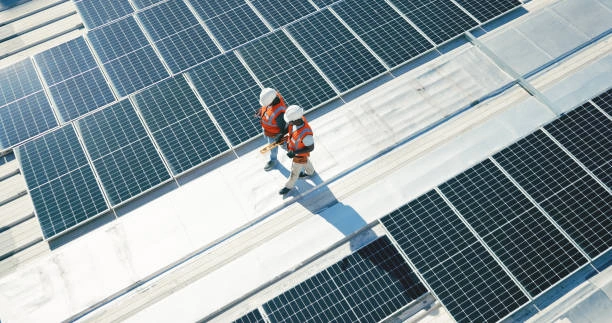
Still, headwinds are real. U.S. rooftop solar has hit turbulence. High rates and policy rollbacks have squeezed balance sheets at some installers. Analysts warn that weakened incentives and hostile politics darken the near-term outlook, even if the technology case holds. Bloomberg tallied a 32% drop in U.S. residential installations in 2024. That cools the halo around rooftop deals and can slow contractor pipelines that corporates also rely on.
Policy risk is now a line item in board decks. A Republican House bill moved to end key rooftop subsidies, and industry groups say that could set the market back. Companies planning portfolios of sites like distribution centers, retail roofs, low-rise offices are must model scenarios where incentives vanish mid-rollout. The result is more leases and service-style contracts that shift risk, and more use of batteries to boost returns via demand-charge cuts.
Globally, the backdrop is mixed but instructive. Asia’s solar build is cushioning fossil power demand; India’s surge in output this year underscores how quickly new capacity changes bills and emissions profiles. Vietnam’s move to buy surplus rooftop power from homes and offices shows regulators leaning on roofs to stabilize grids. For multinationals, those trends make the case that rooftop solar is now mainstream infrastructure, not a pilot project.
So why are CFOs, not just chief sustainability officers, pushing this?
Rooftop power cuts exposure to price spikes and transmission charges. That is attractive when data centers and electrified fleets strain local grids.
On-site generation reduces dependence on congested interconnections and long-dated queue positions that delay off-site projects.
Reputation as a bonus, not the driver. In an era of polarized policy, finance chiefs sell solar internally as cost control first, climate second. That framing survives election cycles.
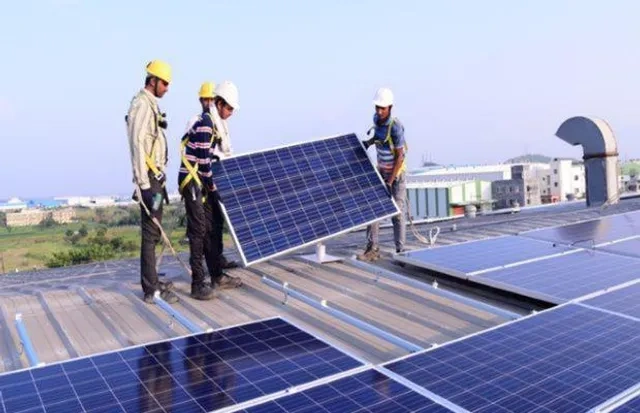
Rooftop solar is not a cure-all. Returns can be thin if sites have shaded roofs, weak structures, or short leases. Supply-chain frictions and trade actions can swing panel prices. And if subsidies are clawed back, some deals will miss hurdle rates. But even critics concede that a measured rollout prioritizing the best roofs, adding batteries where demand charges are high, and using flexible financing can still meet corporate return thresholds. The risk is less about technology and more about policy whiplash and interest rates.
What happens next?
If subsidies weaken in the U.S., expect more corporates to pivot to long-term fixed-price contracts and behind-the-meter batteries to salvage economics. In Asia, clearer rules that let firms sell surplus rooftop power, Vietnam is an early mover should speed adoption. And as investors chase premium contracts from AI-era customers, installers that can bundle rooftop, storage and maintenance into utility-style service agreements will win share. The finance function will remain in the driver’s seat because the edge is financial, not ideological.
#SolarPower, #BatteryStorage, #CleanEnergy, #EnergyCosts, #CorporateSustainability
