CJI: Judiciary Fights Digital Arrests & Economic Crime Proactively!

CJI: Judiciary Fights Digital Arrests & Economic Crime Proactively!
India's top judge, CJI Surya Kant, reveals how the judiciary is swiftly tackling new scams like "digital arrest" and ensuring justice in economic crimes, even stepping in when laws are misused. A proactive stance for a s
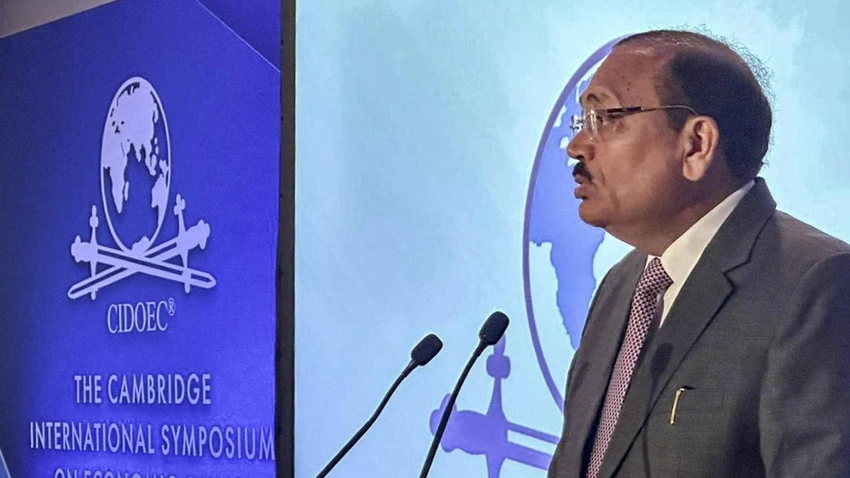
The Indian Judiciary is stepping up to combat emerging fraudulent schemes like 'digital arrest' without waiting for legislative action, according to Chief Justice of India (CJI) Surya Kant. He highlighted the Supreme Court's proactive role during his closing address at the 43rd International Symposium on Economic Crime in London.
The CJI specifically cited the court's suo motu (on its own motion) cognizance of the 'digital arrest' scam, where fraudsters impersonate police or judicial officials via video calls to deceive citizens. In response, the court has directed both the Union and State governments to thoroughly assess the extent of this issue and has called for the creation of a distinct criminal offense, complete with penalties that match the harm inflicted.
Justice Kant emphasized that this approach showcases a broader pattern: an Indian Judiciary that actively addresses new fraudulent activities rather than passively waiting for Parliament to intervene. He described India's modern response to economic crime as a sophisticated, layered framework built over decades, where legislation, institutions, and judicial principles each play a distinct, crucial role.
He referred to significant laws such as the Prevention of Money Laundering Act (PMLA), 2002, and the Fugitive Economic Offenders Act, 2018.
While acknowledging their importance, the CJI also noted that these mechanisms are not infallible.
He pointed out that numerous individuals have alleged misuse of the PMLA process by investigating authorities, including claims of arrests made without clear reasons and prolonged custody beyond what the facts justified. In such instances, the judiciary has consistently intervened to rectify the situation.
As an example of judicial oversight, Justice Kant mentioned the apex court's ruling that grounds for arrest must be provided to the accused in writing, not merely read aloud.
He also cited the recent 'Arvind Kejriwal versus Central Bureau of Investigation' case, where he authored the decision.
In that instance, the court upheld the legality of the arrest but nevertheless granted bail, adhering to the fundamental principle that prolonged pre-trial detention should not be transformed into punishment.

Login to comment.
No thots yet. Be the first to share your thoughts!