Iran's Guards Urge Revenge After Israel Kills Hezbollah Chief in Beirut

Iran's Guards Urge Revenge After Israel Kills Hezbollah Chief in Beirut
Iran's Revolutionary Guards vow retaliation after an Israeli strike kills Hezbollah's top commander Haytham Ali Tabatabai in Beirut, signaling a dangerous new phase.
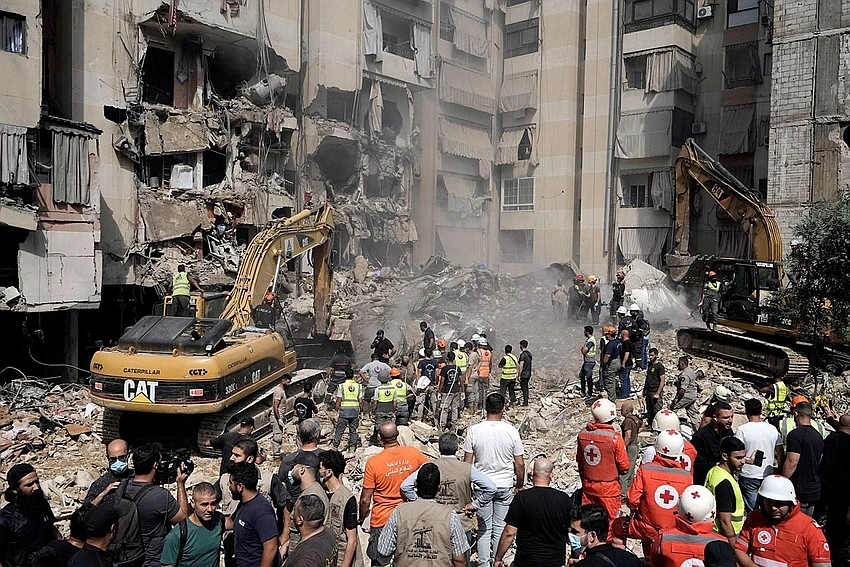
Beirut is again at the center of a volatile mix of regional rivalries after an Israeli strike targeted a residential block in the city’s southern suburbs, killing Hezbollah’s chief of staff, Haytham Ali Tabatabai, and leaving several others dead or wounded. Hezbollah confirmed his death, underscoring the severity of the blow to the group’s leadership as tensions along the Israel-Lebanon front remain on a knife-edge.
Tabatabai, described by analysts as a seasoned operator who oversaw Hezbollah’s activities in Syria and Yemen, had risen through the ranks amid a years-long effort to reform and stabilize the organization after earlier leadership losses. His removal signals a potentially transformative shift for Hezbollah’s military strategy and its ability to project power in multiple theaters. The strike, carried out in a densely populated area, also reignites fears about civilian casualties and the risk of a broader confrontation that could pull in regional and international powers with a stake in the region.
In response, the Iranian Revolutionary Guards issued a warning of revenge, framing the killing as part of a broader calculus against Israel and its allies. The message from Tehran is a reminder that outside powers have an outsized role in the conflict, complicating any immediate path to de-escalation. Iranian statements, coupled with Hezbollah’s pledge to retaliate, ensure that the incident will reverberate across borders and may intensify the already fragile ceasefire that has kept clashes at bay for months.
Lebanese authorities, along with regional observers, have urged restraint and urged all parties to avoid steps that could widen the fighting. The strike comes at a delicate moment, months after a ceasefire halted the most intense exchanges, and raises questions about the durability of any quiet in southern Lebanon. Analysts say the hit could lead to a tightening of Hezbollah’s security posture and possibly more limited, targeted operations, which in turn may provoke counterstrikes and a cycle of retaliation.
As the region watches for how allies respond, diplomats and officials in Beirut and beyond will be looking for signals about whether a larger escalation can be avoided. The incident tests not only the ceasefire but also the delicate balance of influence among Iran, its Lebanese ally, and Israel, whose military leadership has repeatedly emphasized the readiness to strike at high-value targets. The coming days are likely to reveal whether restraint, or renewed confrontation, will define the next phase of this long-running confrontation.
