IceCube Wins Nobel! Antarctic Observatory Unlocks Cosmic Secrets 🌠

IceCube Wins Nobel! Antarctic Observatory Unlocks Cosmic Secrets 🌠
Belgian-born U.S. physicist Francis Halzen wins 2026 Nobel Prize for IceCube! Discover how this Antarctic observatory is revealing the universe's highest-energy mysteries through elusive neutrinos. #NobelPhysics #IceCube
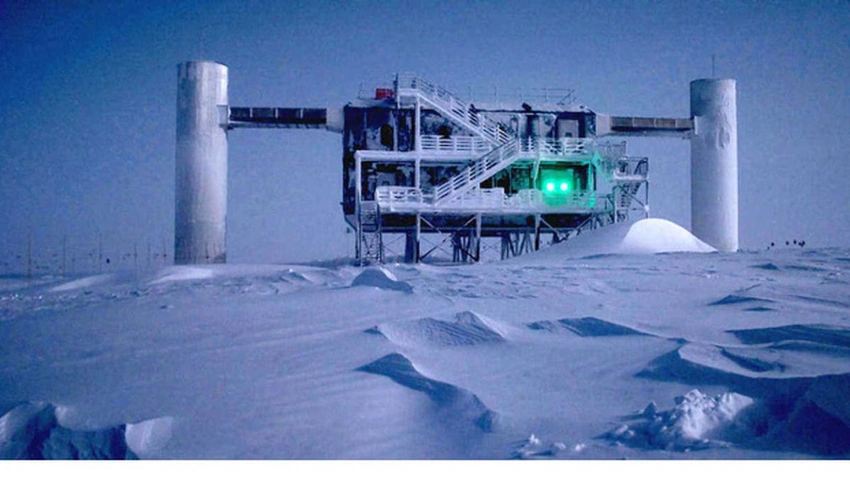
Belgian-born U.S. physicist Francis Halzen has been honored with the 2026 Nobel Prize in Physics for his pivotal role in building the IceCube Neutrino Observatory in Antarctica. This groundbreaking observatory acts as a unique telescope, devoid of traditional mirrors or lenses, peering into the universe's most energetic and mysterious phenomena.
Situated deep within the Antarctic ice, IceCube utilizes 5,000 sensors to detect high-energy neutrinos. These elusive subatomic particles are produced by extreme cosmic events, such as exploding stars and powerful jets from distant galaxies, carrying unparalleled information about the cosmos.
For decades, scientists have been puzzled by cosmic rays, energetic particles constantly bombarding Earth, whose origins were obscured by magnetic fields in space that deflect their paths. Neutrinos, however, have no electric charge, minimal mass, and travel in straight lines, making them perfect cosmic messengers.
The challenge lies in their nature: neutrinos rarely interact with matter.
Trillions pass through our bodies and the Earth every second without a trace.
This characteristic, while making them ideal for cosmic detective work, also makes them incredibly difficult to 'catch.' Halzen's genius, building on earlier ideas, was to propose using the vast volume of Antarctic ice as the detection medium.
When a high-energy neutrino rarely interacts with an ice molecule, it produces a tiny flash of light.
IceCube's sensors are designed to spot these fleeting illuminations.
The idea for such a detector dates back to the 1960s, with various attempts made, including one in the Pacific Ocean that proved too difficult to maintain.
Halzen, along with Thomas Stanev and Enrique Zas, revisited the concept, moving towards the use of ice.
After discussing with John Learned, the plan to use South Pole ice solidified, leading to the massive undertaking funded primarily by the U.S.
National Science Foundation.
After seven years of construction, enduring unsurprising delays for such a monumental project, IceCube reached its full operational capacity in 2011. Halzen is recognized not only for conceiving the idea but also for sustaining the collaborative effort of hundreds of scientists and engineers over decades, a feat reminiscent of Barry Barish's coordination of the LIGO gravitational-wave detectors that also earned a Nobel.
This pioneering work with IceCube has truly opened a new window into parts of the universe previously beyond our reach, allowing humanity to explore the origins of the most energetic particles known.
#Neutrinos #SpaceExploration #Astrophysics #NobelPhysics2026
