India's New Eye in the Sky: ISRO's EOS-05 to Revolutionize Earth Monitoring

India's New Eye in the Sky: ISRO's EOS-05 to Revolutionize Earth Monitoring
ISRO successfully launches EOS-05, India's first geosynchronous earth-imaging satellite. This strategic 'eye in the sky' will provide continuous monitoring for disaster relief, agriculture, and security.
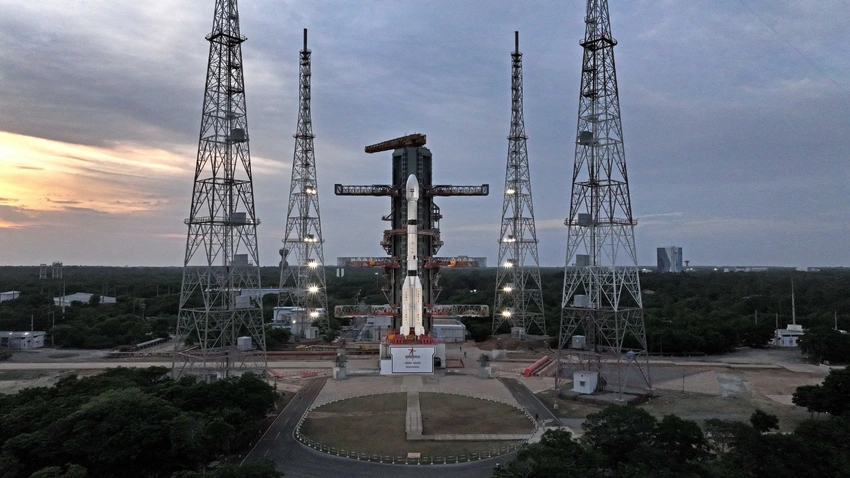
India has achieved a significant milestone in space technology with the successful launch of the Indian Space Research Organisation's (ISRO) EOS-05 satellite. This groundbreaking satellite marks India's first earth-imaging satellite designed for a geosynchronous orbit, a position that allows it to remain "locked-in" to the Earth’s rotation and continuously observe the same location below.
The rocket successfully placed EOS-05 into a transfer orbit, with onboard thrusters set to gradually elevate it to its final operational altitude of approximately 36,000 kilometres above Earth's surface in the coming weeks. From this strategic vantage point, the satellite will provide invaluable data, capable of tracking rapidly evolving events such as floods, cyclones, and forest fires.
It will also diligently monitor crucial aspects like crop health, forest cover, water bodies, and overall land use.
Unlike conventional cameras, EOS-05 employs advanced sensors that analyze how the Earth's surface reflects different wavelengths of light.
This sophisticated technique helps distinguish various elements like vegetation, water, and other land covers with precision.
While its distance from Earth means it won't capture ultra-fine details like some low-orbiting satellites, its primary strength lies in its ability to frequently revisit and image broad areas, offering a continuous and consistent gaze.
This new addition to India's satellite fleet stands apart from previous geostationary weather satellites, such as the INSAT-3D series, and traditional low-orbit imaging satellites that constantly move, taking days to return to the same spot.
EOS-05's continuous monitoring capabilities are particularly timely and critical.
It can play a pivotal role in understanding landform changes, potentially forecasting events like glacier-breaks and avalanches, as tragically seen in recent devastations such as the Bhote Koshi deluge in Nepal. Moreover, it can help assess environmental concerns, like verifying the true status of stubble fires in North India as winter approaches.
ISRO has fittingly described the EOS-05 as a "strategic" satellite, underscoring its wide-ranging applications from national security to comprehensive weather monitoring and disaster management. This new eye in the sky promises to enhance India's observational prowess and contribute significantly to scientific research and public welfare.

Login to comment.
No thots yet. Be the first to share your thoughts!