Neurowellness: Is It Just Old Wisdom with a New Name?

Neurowellness: Is It Just Old Wisdom with a New Name?
Are ancient practices getting a shiny new label? Dive into 'neurowellness' to explore if it's a necessary rebranding for our overloaded brains or just another wellness buzzword.
Decoding Neurowellness: Old Wisdom, New Buzz?
Ever feel like your brain is constantly running, even when your body stops? You're not alone. The wellness industry has a new buzzword making the rounds: 'neurowellness.' While it sounds cutting-edge, is it truly a novel concept, or just a fresh coat of paint on age-old wisdom?
Dr. Munia Bhattacharya, Senior Consultant, Clinical Psychology, describes neurowellness as an “emerging umbrella term” rather than a formally established clinical concept. But she quickly adds, “The term may be new, but the need is not.” At its core, it’s about intentionally caring for your brain as part of overall wellbeing-covering everything from sleep and concentration to emotional regulation and stress recovery.
The Overloaded Modern Brain
We've designed a lifestyle where constant connectivity is the norm. Notifications, emails, social media, work, family-it's a relentless stream of information. Dr. Bhattacharya points out,
We have created a lifestyle where the body can stop, but the mind is rarely allowed to clock out.
This explains why many of us might seem to be functioning perfectly yet feel profoundly depleted mentally.
It's an unspoken epidemic of inner exhaustion.
It's increasingly common to hear people say, “My mind doesn't switch off,” or “I cannot concentrate like I used to,” and even, “I am exhausted even after sleeping.” Perhaps the most telling is the quiet lament: “Nothing is really wrong, but I don't feel like myself.” We've become incredibly adept at functioning while feeling unwell, but a truly healthy brain needs to be able to focus, rest, experience emotions, adapt, and recover from stress.
Old Practices, New Reasons
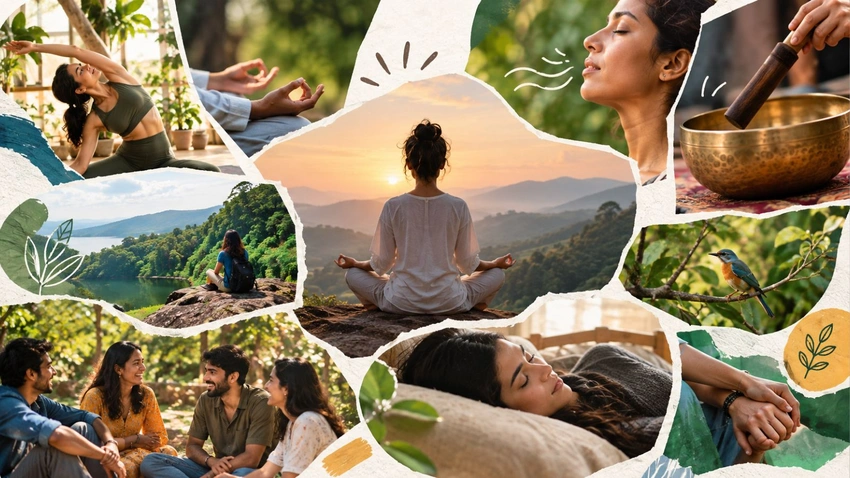
Here's where the 'old wine in new bottles' analogy really comes into play. Neurowellness isn't inventing new practices. It's giving a fresh perspective to familiar ones like meditation, yoga, breathwork, and spending time in nature.
These have been integral to human wellbeing for millennia.
What's genuinely new, however, is why people are seeking them out. Tarun Gulati, Director, Ganga Kinare Resorts and Hotels, notes,
What is new is not necessarily the practices, but what people are looking for from them.
It's no longer just about physical flexibility or spiritual enlightenment. People want to “sleep better, switch off from work, quieten the mind and come back feeling less overwhelmed.”
Shane Gunasekara, Director, Kurundu Wellness, observes a similar shift. Our constant connection to devices, work pressures, and disturbed sleep patterns mean that even when we rest, “our minds are still busy.” Guests aren't just coming for a massage anymore; they understand that beyond muscle relaxation, they need to calm down, unwind, and manage stress.
Kurundu Wellness, for instance, has introduced 'Traditional Himalayan Sound Healing' and 'Sleep Enhancement Rituals' to meet this specific demand.
Beyond the Buzzword: A Timely Shift?
Dr. Chandni Tugnait, Psychotherapist and Healer, highlights another crucial aspect: a language shift. The growing scientific understanding of practices like meditation and breathwork now provides a vocabulary that helps bridge ancient wisdom with modern sensibilities. This makes these practices more relatable and accessible to a generation struggling with unprecedented mental load.
So, is 'neurowellness' just marketing hype? Perhaps in part.
But it also represents a necessary and timely refocus.
By packaging these essential self-care practices under a term that explicitly addresses brain health, it forces us to acknowledge that mental and emotional resilience are not luxuries, but fundamental components of modern survival. It's less about rebranding and more about re-prioritizing the needs of our most vital organ-the mind.
