Optimize AI Object Detection Performance

Optimize AI Object Detection Performance
AI object detection 🔗 will only become more critical across industries—from smart cities to autonomous logistics. But without the right infrastructure, even the best models fall short. That’s where AI hardware accelerators 🔗 come in.
Choosing and optimizing the right hardware isn’t just about raw power. It’s about matching your application’s goals—speed, energy, form factor—with a chip that complements it. With continual innovation in both hardware and model compression techniques, the barrier to deploying powerful object detection is lower than ever.
What Are AI Hardware Accelerators?
AI hardware accelerators are specialized chips or components designed to boost the computational performance of AI workloads. Unlike traditional CPUs, which are general-purpose processors, hardware accelerators are optimized for parallel processing and matrix operations—core requirements in modern AI applications.
These accelerators come in many forms 🔗, including GPUs (Graphics Processing Units), TPUs (Tensor Processing Units), FPGAs (Field Programmable Gate Arrays), and ASICs (Application-Specific Integrated Circuits). Each has its own architecture and performance profile, but all are designed to handle the immense number of calculations required by deep learning models far more efficiently than CPUs.
By offloading compute-heavy tasks, they reduce latency, save power, and significantly speed up inference, especially in real-time scenarios. This is especially important for edge devices where space, power, and cooling are constrained but low-latency decisions are vital.
AI Object Detection and Its Demands
AI object detection involves identifying and classifying multiple objects within images or video frames. While it might seem simple at the surface—label a car, a pedestrian, or a stop sign—what's happening behind the scenes is incredibly complex. Deep learning models like YOLO (You Only Look Once), SSD (Single Shot Multibox Detector), and Faster R-CNN must process pixel data, extract features, and run multi-stage inference pipelines to generate bounding boxes and classifications.
This process involves millions of operations per second. For instance, YOLOv5 can require over 20 billion FLOPs (floating-point operations) per image. Multiply that by 30 frames per second and you quickly realize why dedicated processing power is essential.
To get the most from your object detection models, pair them with suitable AI hardware accelerators that can handle real-time workloads efficiently.

How Hardware Accelerators Improve Detection
Hardware accelerators drastically reduce inference time—the time it takes for a model to process data and produce a result. For object detection, this means frames are analyzed faster, more consistently, and at higher resolution.
Take GPUs, for example. They can process thousands of threads in parallel, making them ideal for deep learning. TPUs take this a step further by focusing specifically on tensor operations. Then there are NPUs (Neural Processing Units) which are emerging in edge devices to deliver fast inference without draining battery life.
Another major benefit is thermal and energy efficiency. Many modern hardware accelerators are optimized for power-sensitive applications like drones or smart cameras. Some, like Hailo’s AI processors, can perform complex object detection with minimal power draw, enabling always-on vision in tiny form factors.
Popular Architectures Supporting AI Object Detection
NVIDIA remains a dominant player with its CUDA-enabled GPUs and TensorRT engine, which helps optimize models for fast inference. Google’s TPUs, often deployed via their cloud platform or on Coral devices, bring acceleration to both cloud and edge AI.
Intel has entered the game with Movidius VPUs (Vision Processing Units), which are designed for ultra-low power edge AI. Apple has its own Neural Engine, embedded in iPhones and iPads, while Qualcomm integrates NPUs into Snapdragon chips for Android devices.
Emerging players like Hailo and Mythic are focusing purely on edge AI acceleration. These platforms often provide full toolkits for converting and optimizing models like YOLO or MobileNet for deployment on their chips.
Explore specialized AI hardware accelerators to bring efficient object detection to compact, real-world applications.
AI on the Edge: Object Detection in Real-Time
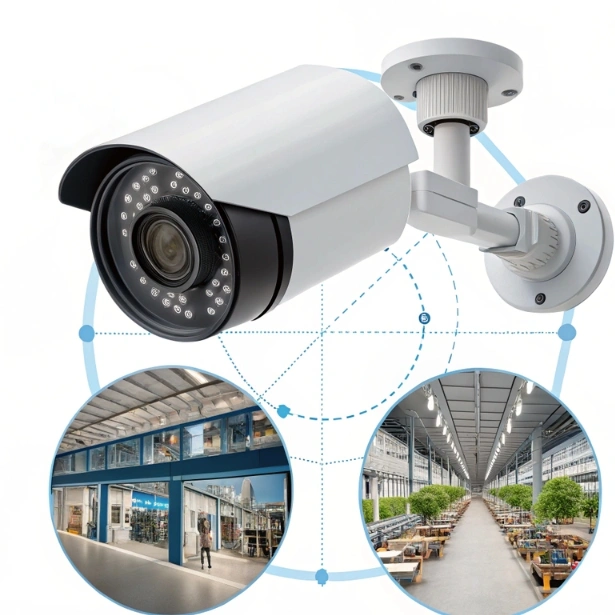
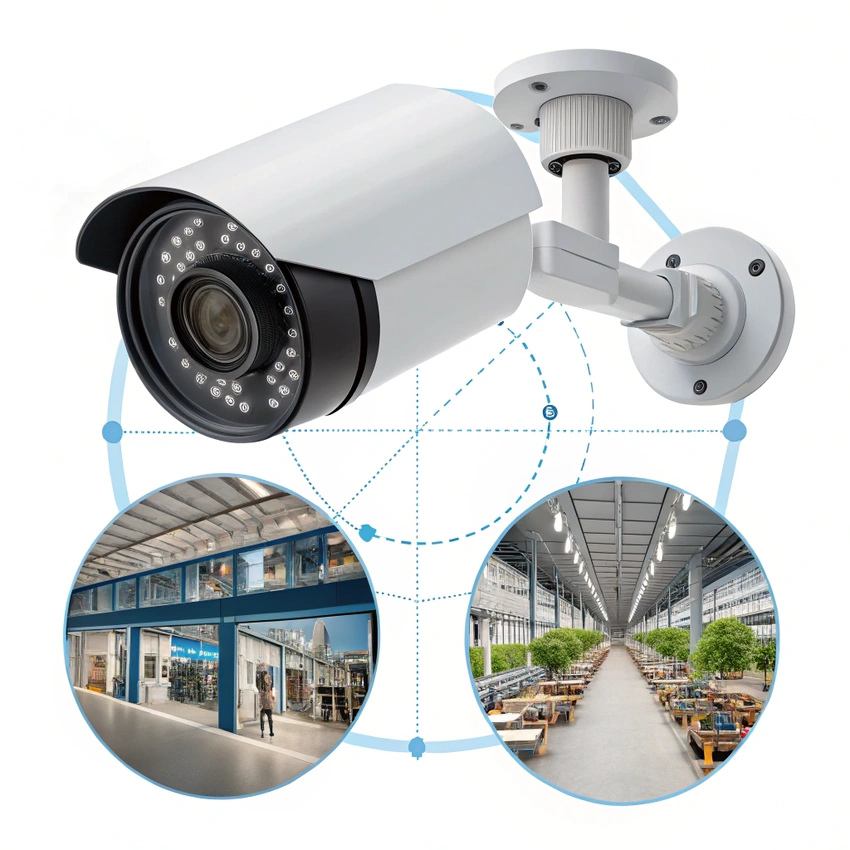
Edge AI is one of the most promising directions for object detection, especially in environments where sending data to the cloud introduces unacceptable delay or privacy risk. Think traffic cameras, factory robots, or drones—these all benefit from local inference.
Hardware accelerators play a key role here. An edge device equipped with an NPU or compact GPU can analyze video streams, make decisions, and even trigger alerts without needing cloud connectivity. This reduces data transfer, shortens response time, and ensures greater reliability in poor connectivity zones.
Some edge gateways also support multiple accelerator cards, enabling hybrid deployment models that balance between cloud training and edge inference. In mission-critical industries like automotive or healthcare, these hybrid approaches ensure safety and efficiency.
Challenges in Pairing AI Models with Hardware
Despite all the benefits, pairing AI models with the right hardware isn't always straightforward. Some models are too large to fit on edge devices. Others rely on specific operations or layers that aren't well-supported by the accelerator you're targeting.
Memory bandwidth can also become a bottleneck. Even if your chip has the raw compute power, lack of fast memory access can choke performance. Similarly, hardware compatibility with toolchains like TensorFlow Lite or ONNX Runtime can limit flexibility.
Heat generation, form factor, and power supply are also important—especially in embedded environments. Choosing the wrong chip could mean needing bulky cooling systems or sacrificing battery life.
Hardware-Aware Model Optimization Techniques
To get the most from AI hardware accelerators, models need to be optimized for them. Techniques like quantization (reducing precision from 32-bit to 8-bit), pruning (removing unnecessary weights), and knowledge distillation (training smaller models to mimic larger ones) help reduce model size without hurting performance.
Frameworks like TensorRT, OpenVINO, and TFLite offer tools to convert and compress models. This process is essential for deploying object detection models on hardware-constrained devices.
Model compilation is also part of the process—turning a generic model into hardware-specific code that can run efficiently on your accelerator. This can dramatically improve inference speed and reduce memory consumption.
Hardware-aware optimization bridges the gap between powerful AI object detection and practical deployment using AI hardware accelerators.
Future Trends: What's Next in AI Acceleration
The future of AI acceleration is moving toward more modular, domain-specific hardware. Instead of one chip to handle all tasks, we’re seeing the rise of dedicated chips for vision, language, or even specific model architectures.
Reconfigurable chips like FPGAs are also gaining traction, allowing developers to update the chip’s behavior without physical changes. Meanwhile, neuromorphic computing—mimicking the brain’s architecture—is on the research horizon, promising even more efficient AI processing.
As the demand for privacy and real-time AI grows, expect to see more low-power accelerators embedded in everyday devices—from home security systems to medical wearables—each one quietly running object detection models optimized for its environment.
Now is the time to align your vision models with purpose-built AI hardware accelerators for efficient and scalable AI object detection.
FAQs: Optimizing AI Object Detection
1. What is an AI hardware accelerator?
An AI hardware accelerator is a specialized chip or component designed to perform AI-related tasks faster and more efficiently than traditional CPUs. These accelerators, such as GPUs, TPUs, and NPUs, are optimized for operations used in AI inference and training.
2. Why are AI hardware accelerators important for object detection?
They significantly improve processing speed and reduce latency, making real-time object detection possible in scenarios like surveillance, robotics, or autonomous driving.
3. Can object detection run efficiently on edge devices?
Yes, when combined with AI hardware accelerators, object detection models can run efficiently on edge devices without relying on cloud processing, offering low-latency performance and better privacy.
4. What types of chips are best for edge AI object detection?
NPUs, VPUs, and specialized low-power GPUs are ideal for edge deployments, as they offer a balance of processing power and energy efficiency.
5. What challenges come with deploying object detection models on hardware?
Common challenges include compatibility issues, limited memory bandwidth, lack of optimization tools, and the need for model compression or quantization.
6. How do you optimize object detection models for hardware?
You can use techniques like quantization, pruning, and model compilation to reduce size and improve compatibility with specific hardware platforms.
7. Are there differences between GPUs and TPUs for object detection?
Yes, GPUs offer general-purpose parallel computing and flexibility, while TPUs are highly optimized for tensor operations and can offer faster inference for supported models.
8. What role does software play in hardware acceleration?
Software frameworks like TensorRT, OpenVINO, and TensorFlow Lite help convert and optimize models to run efficiently on different hardware platforms.
9. What’s the future of AI hardware for object detection?
The future includes more domain-specific accelerators, neuromorphic computing, and AI chips embedded in everyday consumer and industrial devices for continuous, on-device detection.
