When Hip-Hop Became the Most Vital Political Newsroom on Earth

When Hip-Hop Became the Most Vital Political Newsroom on Earth
In the late 80s, N.W.A and Public Enemy didn't just make music; they redefined journalism. Explore how their raw, unflinching raps became urgent dispatches from urban America.
Forget the 6 o'clock news. In the late 1980s, if you wanted the unfiltered truth about America's urban realities, you weren't tuning into network television, you were blasting N.W.A or Public Enemy. They were issuing bulletins, reporting from the front lines, and turning hip-hop into an undeniable force of political journalism.

The Unflinching Lens of Compton
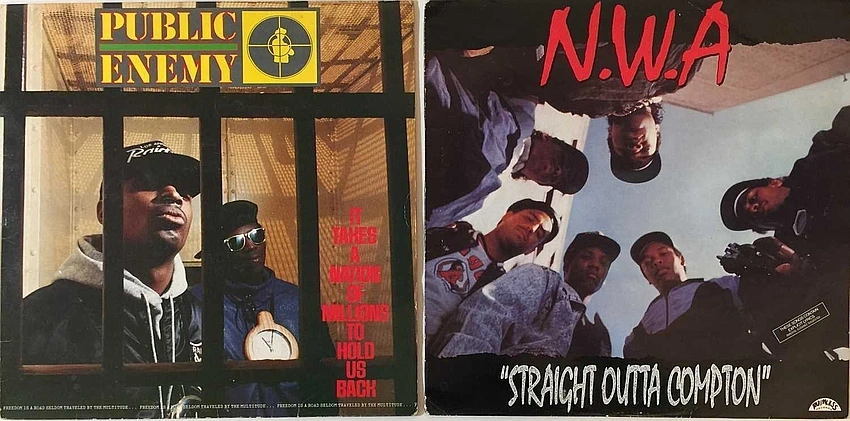
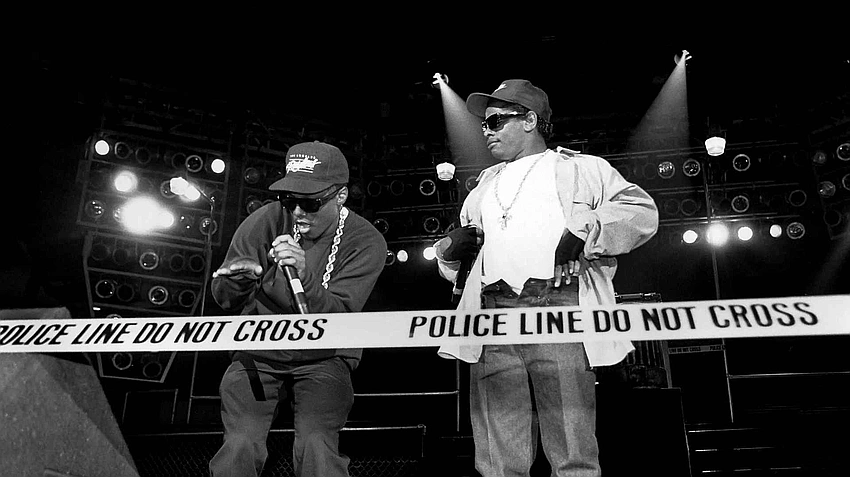
N.W.A, straight outta Compton, burst onto the scene with a sound so raw and a message so unvarnished, it rattled the establishment. Their seminal album, 'Straight Outta Compton,' wasn't just a collection of songs; it was a documentary in audio form. Tracks like 'F*** tha Police' weren't hyperbolic rants; they were visceral accounts of systemic police brutality and racial profiling.
They chronicled life in a way mainstream media often ignored or sanitized.
This was shock journalism, yes, but it was also essential reporting. Eazy-E, Ice Cube, Dr. Dre, MC Ren, and DJ Yella didn't just tell stories; they created a sonic landscape of urgency and defiance.
They brought the stark realities of their community into living rooms across the nation, forcing uncomfortable but necessary conversations.
Public Enemy: The Intellectual Vanguard
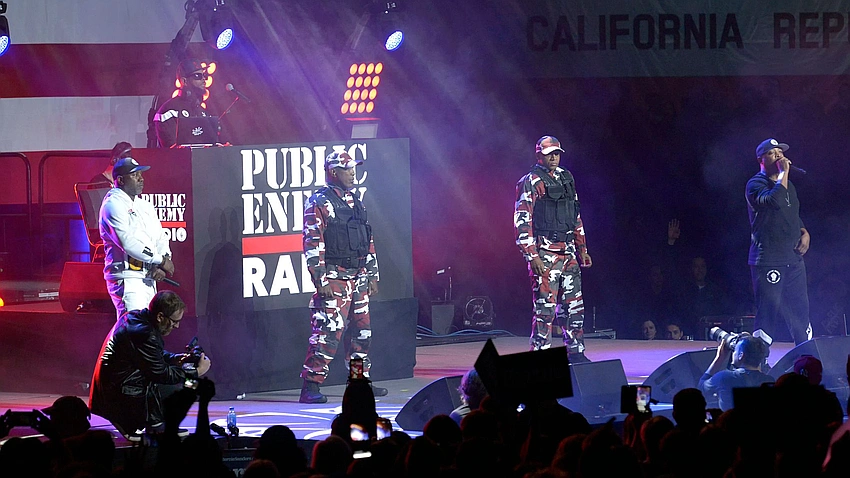
On the other side of the journalistic spectrum, Public Enemy emerged as the intellectual heavyweights of conscious rap. Led by the commanding Chuck D and the electrifying Flavor Flav, with production from the Bomb Squad, Public Enemy operated like a revolutionary news agency. Their music was dense with political theory, social critique, and calls for Black empowerment.
Songs like 'Fight the Power' and 'Don't Believe the Hype' weren't just anthems; they were meticulously crafted manifestos. Chuck D's booming delivery laid out arguments against institutional racism and media manipulation with a precision that rivaled any op-ed. They didn't just report the news; they analyzed it, critiqued the sources, and rallied listeners to question everything.
The Mic as a Megaphone for Truth
Both N.W.A and Public Enemy, despite their stylistic differences, one raw and confrontational, the other intellectual and rallying, shared a common mission: to inform, expose, and provoke. They gave voice to the marginalized, offering perspectives that traditional news outlets either couldn't or wouldn't provide. As Chuck D famously declared,
“Rap is the Black America's CNN.”
It was education. Their records became essential texts, debated in dorm rooms and on street corners. They inspired a generation to look critically at their world and demand accountability from those in power.
Their unflinching honesty ignited cultural shifts and cemented hip-hop's place as a powerful platform for social commentary.
What Can We Still Learn from the Airwaves?
The legacy of N.W.A and Public Enemy reminds us of art's profound capacity to be more than just art. It can be a mirror, a megaphone, and a call to action. Their fearless approach in using music to speak truth to power paved the way for countless artists who followed.
Their beats and rhymes continue to resonate, proving that genuine, impactful journalism can come from the most unexpected places, even a turntable and a microphone.
