The Secret of the Gita: A Philosophical Defence of Counter-Revolution

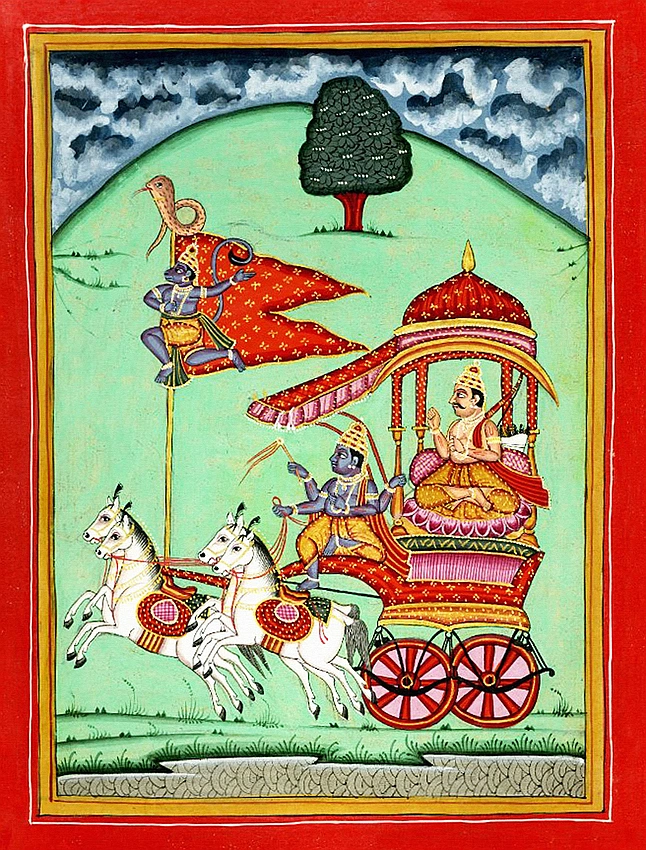
The Secret of the Gita: A Philosophical Defence of Counter-Revolution
By Dr. B.R. Ambedkar, Revolution and Counter-Revolution in Ancient India (Writings and Speeches, Vol. 3)
Dogmas on Philosophic Grounds
The Bhagvat Gita is neither a book of religion nor a treatise on philosophy. What the Gita does is to defend certain dogmas of religion on philosophic grounds. It is a philosophic defence of the counter-revolution.
To fix a date for the composition of the Bhagvat Gita is nothing but the pursuit of a mirage; it is doomed to failure. The reason is that the Bhagvat Gita is not a single book written by a single author. It consists of different parts written at different times by different authors. My reading of the Bhagvat Gita leads me to the conclusion that there have been four separate parts of the Bhagvat Gita. They are so distinct that taking even the present treatise as it stands, they can be easily marked off.
The Four Layers of the Gita
The Original Heroic Ballad
The original Gita was nothing more than a heroic tale told or a ballad recited by the bards of how Arjuna was not prepared to fight and how Krishna forced him to engage in battle, how Arjuna yielded and so on. It may have been a romantic story, but there was nothing religious or philosophical in it.
This original Gita will be found embedded in Chapter I, Chapter II, and Chapter XI (verses 32–33) in which Krishna is reported to have ended the argument: “Be my tool, carry out my will, don't worry about sin and evil resulting from fighting, do as I tell you, don't be impudent.” This is the argument which Krishna used to compel Arjuna to fight. And this argument of coercion and compulsion made Arjuna yield.
The Introduction of Bhakti (Devotion)
The first patch on the original Bhagvat Gita is the part in which Krishna is spoken of as Ishvara, the God of the Bhagvat religion. This part of the Gita is embedded in those verses of the present Bhagvat Gita which are devoted to Bhakti Yoga.
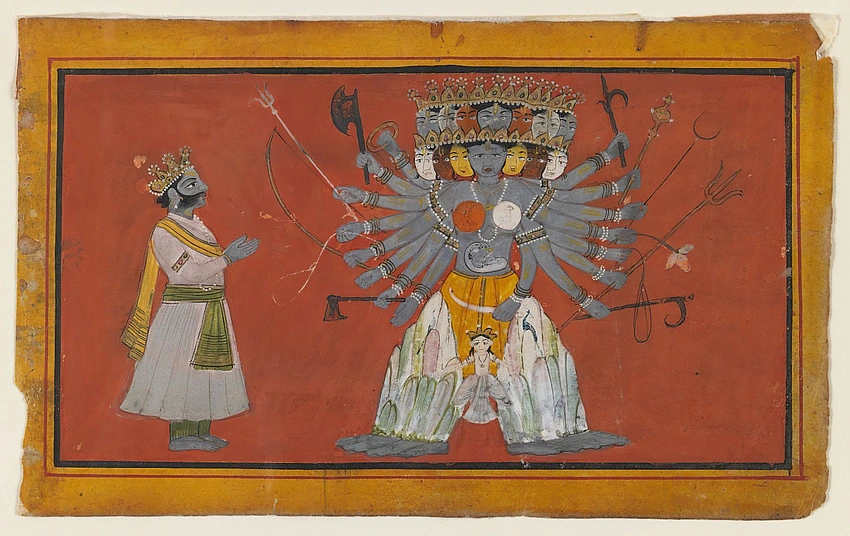
The Synthesis of Competing Ideologies
The Gita later incorporates the doctrines of both Jaimini’s Purvamimamsa (Karma Kanda or the path of ritual work) and Badarayana’s Brahma Sutras (Jnana Kanda or the path of knowledge). The Gita came into being in order to rescue the counter-revolution from the attack of Buddhism. The rise of Buddhism, with its emphasis on morality and reason, condemned the varna system and gave hope to the poor, the exploited, and to women. The Gita tries to renovate and strengthen the dogmas of Brahminism against this attack.
The Philosophical Justification of Chaturvarnya (The Caste System)
Another dogma to which the Bhagvat Gita comes forward to offer a philosophic defence is Chaturvarnya. The Bhagvat Gita, no doubt, mentions that the Chaturvarnya is created by God and therefore sacrosanct. But it does not make its validity dependent on it. It offers a philosophic basis to the theory of Chaturvarnya by linking it to the theory of innate, inborn qualities in men. The fixing of the Varna of man is not an arbitrary act, says the Bhagvat Gita, but it is fixed according to his innate, inborn qualities.
Similarly childish is the defence of the Bhagvat Gita of the dogma of chaturvarnya. Krishna defends it on the basis of the Guna theory of the Samkhya. But Krishna does not seem to have realized what a fool he has made of himself. In the chaturvarnya, there are four Varnas. But the gunas according to the Samkhyas are only three. How can a system of four varnas be defended on the basis of a philosophy which does not recognise more than three varnas?
Conclusion: A Tool for Hegemony
The whole attempt of the Bhagvat Gita to offer a philosophic defence of the dogmas of counter-revolution is childish—and does not deserve a moment's serious thought. The body dies but the soul is invincible. And as the soul is never killed, killing a person can never be a matter of any movement.
The Gita defends the dictum of Karma by removing what may be called its excrescences: blind faith and the motive of selfishness. It introduces Anasakti (performance of karma without any attachment for the fruits of the Karma). By doing this, the Gita provided a powerful ideological and moral support to ensure the longevity of Brahminical domination in India.
In this essay, Dr. Ambedkar aligns his historical timeline with the Buddhist scholar Dharmananda Damodar Kosambi. He treats the Gita as an ideological text composed during a period of socio-political transition to act as a defensive shield for Brahminism against the egalitarian social revolution brought forth by early Buddhism.
