AI in Music: Is It a Cheat Code or the Ultimate Creative Partner?

AI in Music: Is It a Cheat Code or the Ultimate Creative Partner?
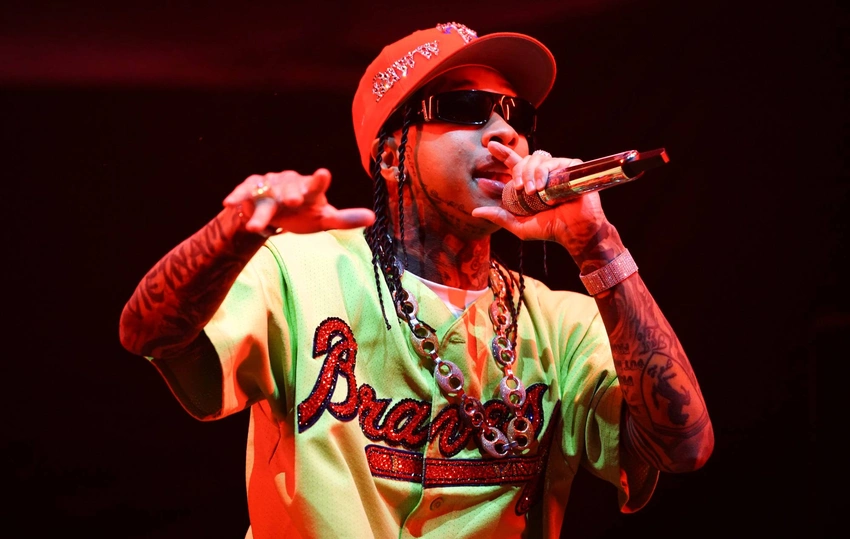
Tyga just revealed he used AI on his new album ‘$tarface’ and honestly, he doesn’t care what you think. This isn't just about one artist; it's a full-blown debate rocking the music world.
The buzz around artificial intelligence in creative fields, particularly music, has reached a fever pitch. On one side, you have purists who view AI as a threat to artistic integrity. On the other, a growing number of artists are embracing it as an indispensable tool, pushing boundaries and challenging traditional notions of creation.
Where do you stand?
Tyga’s Bold Stance: “I Don’t Care”
Tyga, the Californian rapper, just dropped his ninth studio album, '$tarface,' and he's not holding back about his production methods. When rumors started circulating about AI's role in the album's electronic sounds, Tyga confirmed it without batting an eye.
I've never spoken on this with anybody because I always felt like it's similar to a magician explaining how he does his tricks,
he shared.
His unapologetic take is simple: “If you like it, you like it; if you don't, you don't. I don't care. It's supposed to give you an experience and a feeling.”
He sees AI not as a replacement for human artistry, but as an evolution. “But we definitely used AI as a [tool]. And I know people are going to be mad about me saying this, but it's where technology is going. It's no different than when Auto-Tune came out.
Some people were opposed to it, but real artists took it and used it.”
So, how exactly did AI lend a hand on '$tarface'? Tyga clarifies that it was used for specific, task-oriented needs.
Think of it like this: “We were like, you know what?
I need some '80s synths for a certain part of this song. I need a guitar solo done ASAP. It is what it is.” Crucially, he also made it clear that “all the vocals” and the core production were handled without AI.
It's about streamlining the instrumental and atmospheric elements.
The “Just Another Tool” Philosophy
Tyga isn't alone in this perspective. Luke Steele of Empire Of The Sun echoed a similar sentiment recently, stating “of course” he uses AI in his music. For him, AI is “just another tool,” comparable to “a really smart guitar pedal.” This viewpoint positions AI as an extension of the artist's capabilities, not a substitute.
Steele issues a stark warning to those who resist: “I think you've got to be careful, you know? 'Cause it's so powerful that the AI is going to empower artists that know how to use it, and they're going to become unstoppable.
So the artists that are against it: I think you've gotta be careful, you know?
Because it's going to come and s…” His point is clear: adapting to new technology is not just about innovation, it's about staying relevant and competitive.
Artistic Integrity vs. Efficiency: The Ongoing Debate
This raises fundamental questions for the music industry. When AI can generate intricate synth lines, rapid-fire guitar solos, or even entire atmospheric soundscapes in an instant, what does it mean for the human touch? Is the goal still the raw, unfiltered expression of an artist, or is it about delivering the most compelling sonic experience by any means necessary?
Artists like Tyga and Luke Steele argue for efficiency and creative augmentation. They see AI as a means to achieve specific sounds faster, experiment more broadly, and perhaps even overcome creative blocks. For them, the human element remains in the direction and curation of the AI's output, the artist is still the conductor, even if some instruments are played by an algorithm.
But for others, the concern remains: does leaning on AI diminish the soul of the music?
Does it reduce the value of years spent mastering an instrument or honing production skills?
As technology continues to advance, this conversation is only going to get louder.
It's not just about what AI can do, but what artists should do with it.
The future of music is being written right now, one AI-assisted beat at a time.
