One Strait to Ruin Them All? How AI Warfare Exposes Our Energy Fragility

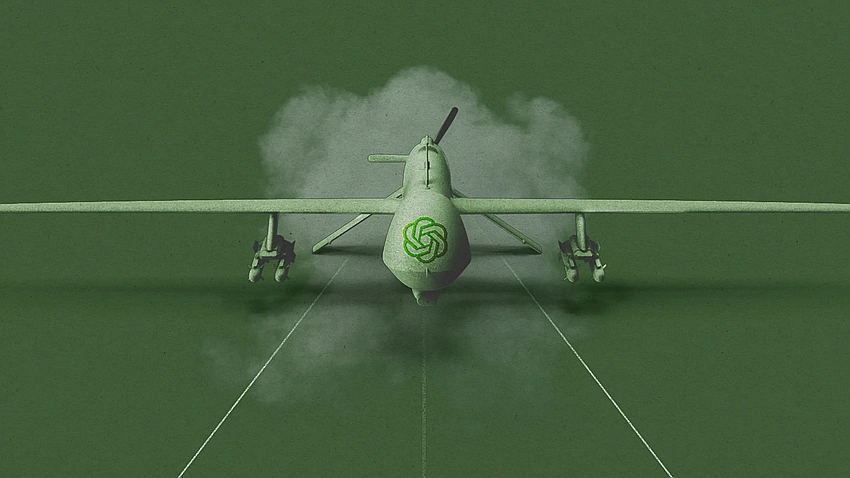
One Strait to Ruin Them All? How AI Warfare Exposes Our Energy Fragility
Oil is up 10%, gas 54%. The Strait of Hormuz is shut. In an era of cheap drones and AI warfare, civilization's energy arteries are more brittle than we dared to imagine.
The 21-Mile Trap: Why Modern Tech Makes Old Chokepoints Deadly
The red lights are flashing on trading floors from London to Singapore. Following aggressive US and Israeli strikes and a swift retaliation from Tehran, the unimaginable has happened. The Strait of Hormuz is closed. Benchmark European gas prices at the Dutch TTF hub exploded by nearly 54 per cent intraday, and oil surged 10 per cent. While the financial panic is immediate, the deeper lesson is far more terrifying. We are witnessing how fragile our civilization remains in the face of geography weaponized by modern technology.
The Anatomy of a Chokepoint
For decades, we have known that the Strait of Hormuz is the jugular vein of the global economy. Roughly 20 per cent of total global LNG trade passes through this narrow stretch of water. It is a choke point in the truest sense. In the past, closing it required a massive naval blockade, a commitment of resources that signaled total war. Today, the equation has changed.
With reports of damage to energy infrastructure in Saudi Arabia and Qatar, we are seeing a new reality. We have entered the era of AI-enabled, asymmetric warfare. You no longer need a destroyer to stop a tanker; you need a swarm of loitering munitions or autonomous drones. These technologies have lowered the barrier to entry for disrupting global trade to dangerously low levels. The closure of the Strait is not just a political maneuver; it is a demonstration of how easy it is to hold the world hostage with 21st-century tech applied to 20th-century shipping lanes.
The LNG Nightmare
Oil markets are volatile, but they are also deep. Nations maintain strategic petroleum reserves for exactly this scenario. Liquefied Natural Gas is a different beast entirely. As analysts have noted, LNG lacks a coordinated global strategic reserve system. You cannot simply stockpile it in salt caverns for a rainy day as easily as crude.
Europe is particularly exposed. Having diversified away from Russian pipeline gas after the Ukraine war, the continent pivoted hard to LNG. That pivot saved them from freezing last winter, but it walked them right into the trap of the Strait of Hormuz. With flows from Qatar threatened, Europe has simply traded one geopolitical risk for another. The 39 per cent close-of-day rise in gas prices is just the initial tremor. If this disruption lasts weeks rather than days, we are looking at a bidding war for energy that will crush industrial output and fuel inflation globally.
Key vulnerabilities exposed today:
- Lack of Redundancy: We have built a global system dependent on efficient flows, with zero margin for error.
- Insurance Costs: Shipping insurance premiums in the Gulf are skyrocketing, which acts as a hidden tax on every good moved.
- Tech Asymmetry: Cheap offensive drones can disable expensive energy infrastructure, making defense cost-prohibitive.
A Warning for India and Asia
While reports suggest India's immediate oil supplies are safe, the price tag will hurt. Asia and Europe are now competing for the same limited pool of flexible cargoes. This competition will drive prices to levels that emerging economies cannot sustain. The closure of the Strait forces us to ask a difficult question: Is it responsible to rely on energy sources that pass through the world's most volatile military theaters?
The Future of Energy Security
The closure of the Strait of Hormuz must be the final wake-up call. We cannot continue to tether the fate of the global economy to a 21-mile wide strip of water that can be shut down by a button press in a drone control room.
Policymakers must realize that energy security in the age of AI warfare is not just about having friendly suppliers; it is about decentralization. Renewables are not just about climate change anymore. Solar panels on a roof in Berlin or Mumbai are immune to a blockade in the Middle East. Wind farms cannot be held hostage by a naval mine or a drone swarm in the Gulf.
Until we decouple our economic survival from these fragile chokepoints, we remain hostages. Today the ransom is 50 euros per megawatt hour. Tomorrow, it could be much higher.

Login to comment.
No thots yet. Be the first to share your thoughts!