Your Wallet Won't Save You: The Elder-Care Delusion Is Real
Your Wallet Won't Save You: The Elder-Care Delusion Is Real
Many Americans assume paid help means no family reliance in old age. Big mistake. Stephanie H. Murray's insights reveal the hidden truth about elder care. We're facing a crisis, and your wallet won't fix it. Get ready fo
Let's be blunt: there's a deeply ingrained delusion many of us harbor about elder care. It's the comforting thought that if we just save enough, if we can afford the best paid help, we'll gracefully navigate our later years without becoming a burden, without truly needing our kin. But here's the stark, uncomfortable truth: you're wrong.
This isn't some alarmist prediction; it's a reality we're already seeing unfold. The idea that financial independence guarantees an independent elder-care journey is a myth. The brilliant insights shared by Stephanie H. Murray, whose work often appears in publications like The Atlantic, cut right to the core of this issue. She points out that while paid care services are crucial, they rarely, if ever, replace the multifaceted role family plays.
The Unseen Labor of Kin
Think about it. Paid caregivers handle scheduled tasks: medication, meals, hygiene, perhaps light housekeeping. But who manages the unexpected hospital visits at 3 AM? Who navigates the complex medical system, advocates for specific treatments, or simply sits for hours providing emotional companionship and the unique comfort only family can offer? Who coordinates the myriad of services, from doctors to therapists to home maintenance? Often, it's kin. It’s the adult children, siblings, or even close friends acting as family, even when professional help is present. This isn't just about love; it's about the deep, untracked, and often exhausting logistical and emotional labor that money simply cannot buy out.
Why We're Unprepared
Our society is hurtling towards an unprecedented demographic shift: a rapidly aging population. We're living longer, but not always healthier. The expectation has been that an industry of professional elder care would rise to meet this need. And while it has, the human element, the 'kin' factor, remains indispensable. The current system, both culturally and structurally, is simply unprepared for the sheer volume of need, especially when it comes to the intimate, non-compensable aspects of care.
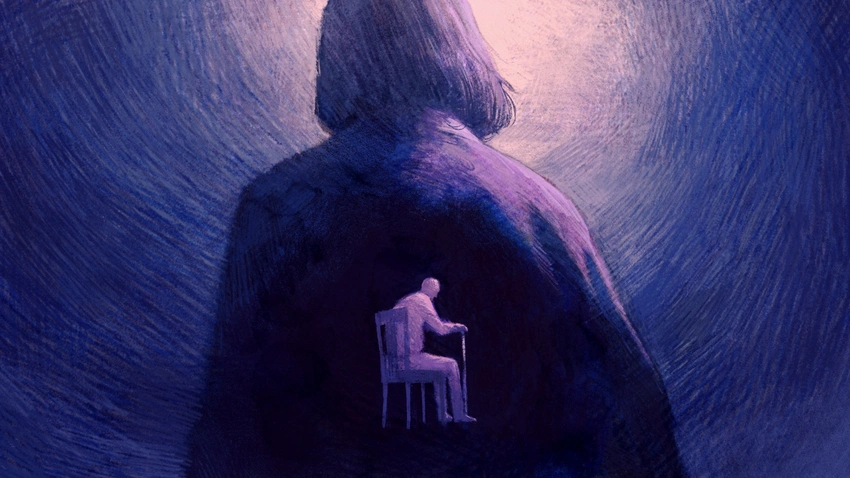
The beautiful yet sobering illustration by Hokyoung Kim often accompanying such discussions visually represents this complex dance between independence and reliance. It's a powerful reminder that our assumptions about aging and care are often too simplistic.
It's More Than Just a Dollar Amount
Even with robust financial planning, the emotional, psychological, and navigational support of family members often becomes the backbone of successful elder care. To assume otherwise is to deny the fundamental human need for connection and the intricate, often messy, reality of navigating serious health challenges. It's a delusion that leaves individuals and families vulnerable, creating unspoken expectations and often leading to burnout among those who find themselves thrust into the role of primary caregiver despite previous assumptions.
So, before you rely solely on your financial plan for the future, take a moment. Understand that the looming crisis of elder care isn't just about beds or nurses; it's about a foundational misunderstanding of what true, holistic care entails. It's about recognizing that the roles of kin are irreplaceable, and preparing for an aging future means rethinking our entire approach, not just our bank accounts.
