Yemen Crisis Deepens: Houthis Accuse Saudi of Deadly Strikes, Thousands Flee

Yemen Crisis Deepens: Houthis Accuse Saudi of Deadly Strikes, Thousands Flee
The conflict in Yemen intensifies as Houthis accuse Saudi Arabia of fatal airstrikes on civilians and a prison. Thousands are displaced amid escalating violence and global concern for shipping lanes. Discover the latest
The ongoing conflict in Yemen has seen a dramatic escalation, with the Iran-backed Houthi movement accusing Saudi Arabia of launching a wave of deadly strikes. These alleged attacks, which the Houthis claim occurred recently, have resulted in numerous civilian casualties and prompted a severe humanitarian crisis.
The Red Sea coast has become a key battleground, with Houthi forces seizing strategic territory, leading to heightened fears over global trade through the vital Bab al-Mandab strait. This escalation is set against the backdrop of a broader West Asia war that reportedly began in February with U.S.-Israeli strikes on Iran, turning the Yemen civil war into its most active front.
The Houthis allege that a Saudi strike on a prison killed nine detainees.
Furthermore, they accuse Saudi forces of killing six civilians, including two children, in the port city of Mocha.
In Al-Jawf province, Houthi media, citing their health ministry, reported the deaths of a mother and child, with her husband and two other children wounded, in strikes attributed to the Saudi enemy.
This violence has forced thousands of families from their homes, many for the second or third time. The United Nations forecasts that the number of displaced individuals could swell from over 130,000 to more than 230,000 in the coming months, highlighting the dire humanitarian situation on the ground.
A mother of four, identified as Arwa, expressed the profound distress of displaced families, stating, “I hope I can find a house to live in with my children.
We're exhausted by the heat, the dust and the humiliation.”
The Houthi advance, particularly their takeover of Yemen's Red Sea coast, has geopolitical implications, solidifying the hold of Iran and its regional allies over the crucial Bab al-Mandab and Hormuz straits, major shipping arteries for global energy flows. In response, Saudi Arabia, which supports Yemen's internationally-recognised government, has intensified its airstrikes.
The Houthis have retaliated by launching attacks on Saudi territory, including a strike on the capital Riyadh for the first time in years.
Days prior, Saudi Arabia had accused the Houthis of targeting the holy city of Mecca, an accusation the fighters denied.
Saudi King Salman praised his armed forces for defending the country and condemned the alleged attempt on Mecca, labeling it “a provocation to Muslims around the world” and calling the Houthis a “terrorist militia.”
International bodies and regional powers have reacted to the escalating violence. G7 leaders from Canada, France, Germany, Italy, Japan, the United Kingdom, and the United States have called on the Houthis to immediately cease all military actions and threats against civilian shipping, urging them to return to the political process. They also pressed Tehran to end its support for the Houthi movement.
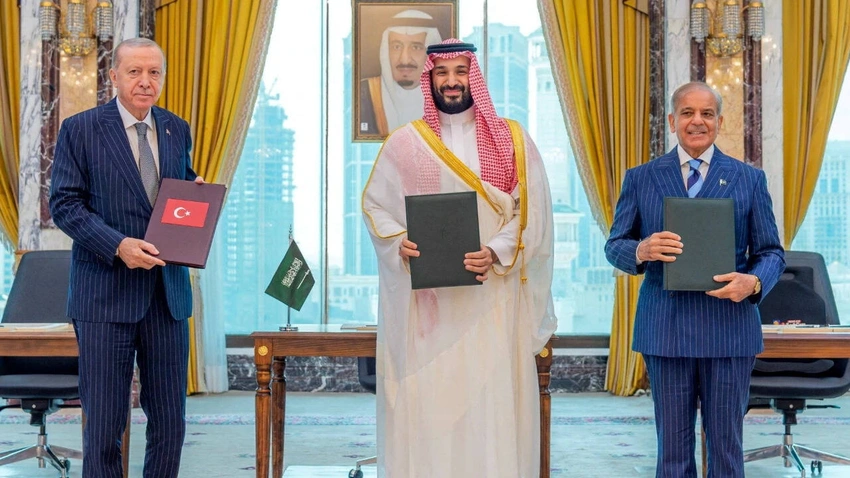
Individually, Britain has agreed to provide military support to Saudi Arabia, and France has pledged to help secure Saudi energy infrastructure, though neither explicitly committed to direct military involvement. Regional allies, including Turkey, Egypt, and Pakistan, have also affirmed Saudi Arabia's right to self-defense, stressing the importance of maintaining safe navigation in the region and advocating for dialogue and diplomacy.
Amidst these developments, a former US official noted that Saudi Crown Prince Mohammed bin Salman (MBS) “won't forget” the Trump administration's decision not to provide substantial help to Saudi Arabia against the Houthis, indicating potential fresh tensions between Washington and Riyadh. The conflict remains volatile, with military sources reporting 154 people killed in the past two days alone, comprising 118 Houthi fighters and 36 government-backed forces.
A recent warning from Saudi Arabia's civil defense agency for its southern border near Yemen, though lifted shortly after, underscores the persistent threat within Saudi territory.
