Masters of the Universe: When He-Man Has to Become More Than a Toy

Masters of the Universe: When He-Man Has to Become More Than a Toy
Masters of the Universe: When He-Man Has to Become More Than a Toy
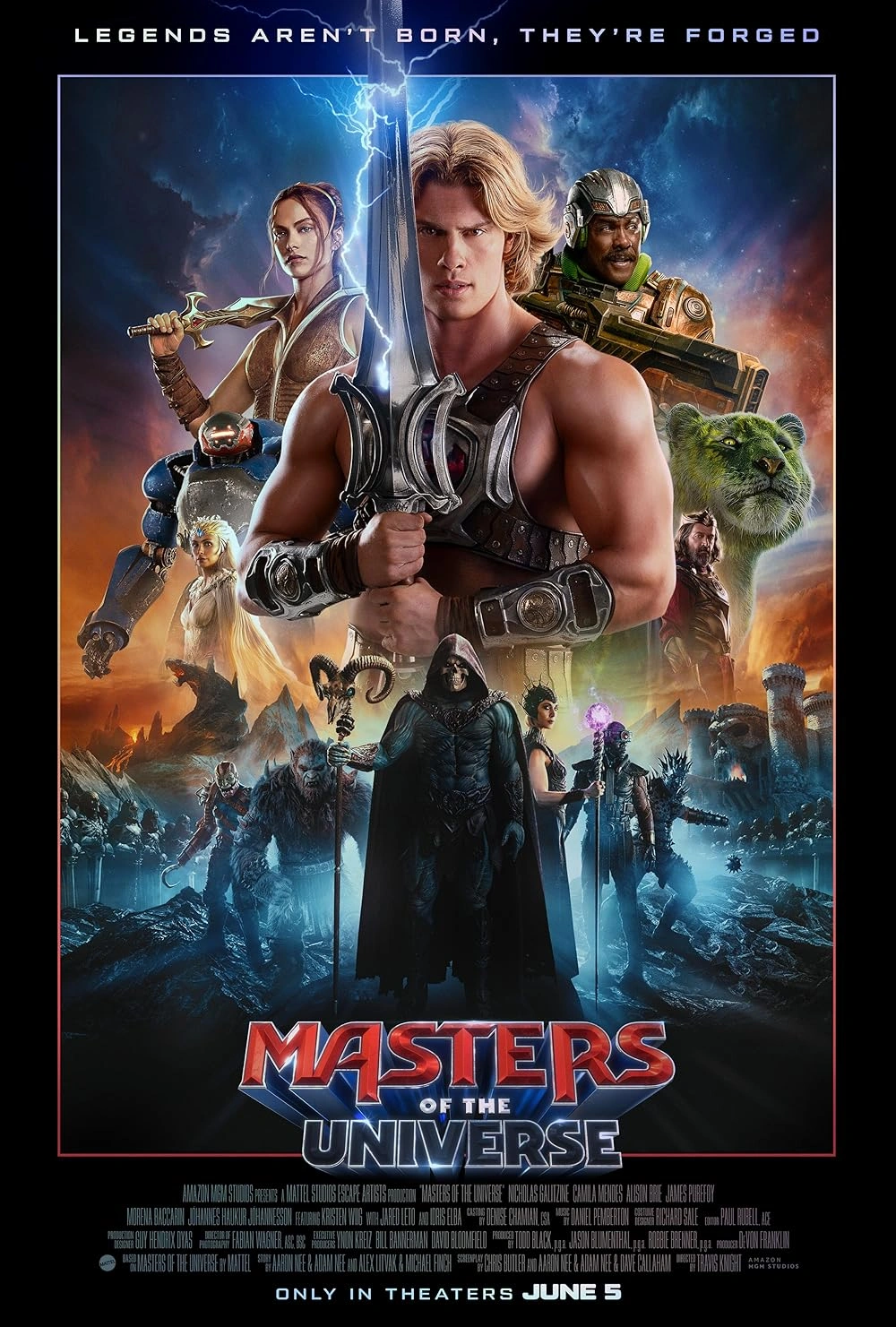
Nicholas Galitzine leads Masters of the Universe as He-Man returns to theaters in 2026. Can a toy-born hero carry a modern fantasy film without losing his identity?
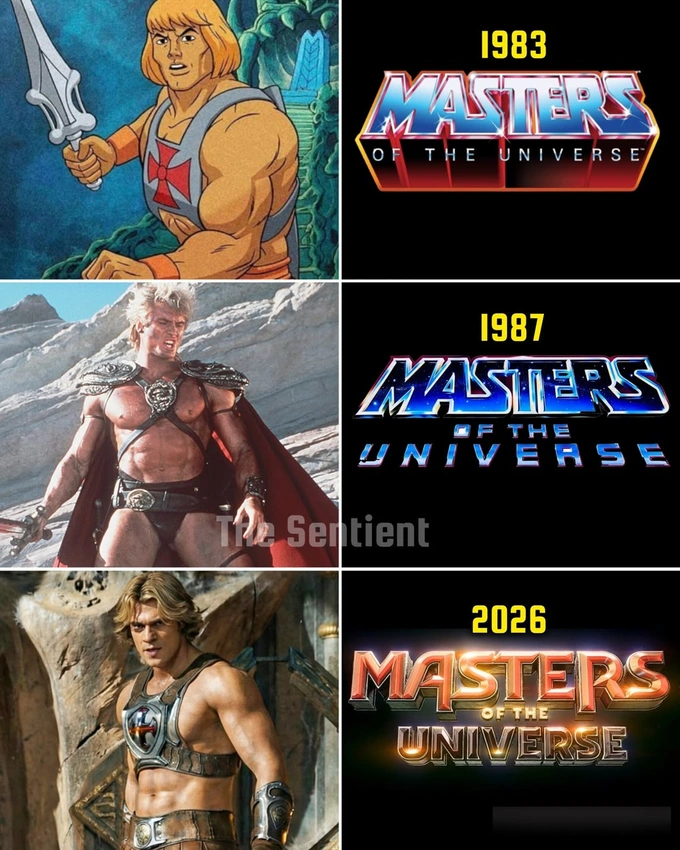
There is something inherently strange about watching Masters of the Universe in 2026. He-Man began as a Mattel action-figure line in 1982 before becoming a television phenomenon with He-Man and the Masters of the Universe in 1983. More than four decades later, the character arrives in a period when Hollywood has become increasingly interested in turning childhood objects into cinematic worlds. The question is therefore less whether He-Man can be brought back and more whether a figure born from the logic of merchandising can still carry the weight of a contemporary fantasy film.
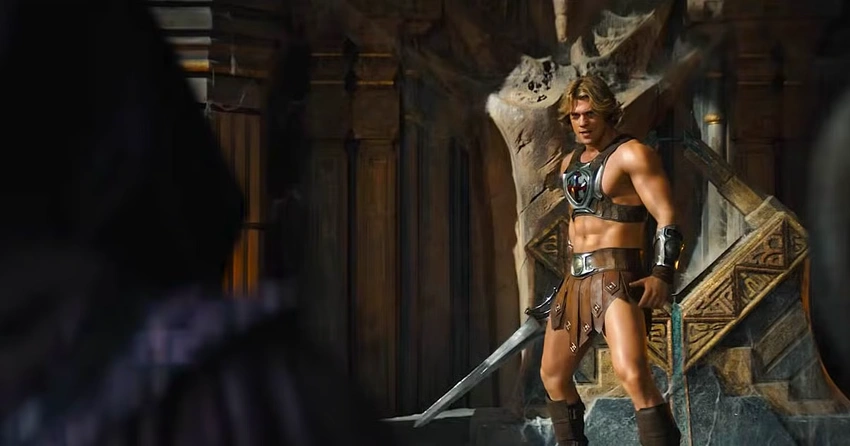
Directed by Travis Knight, the new live-action film stars Nicholas Galitzine as Prince Adam, with Camila Mendes as Teela, Idris Elba as Man-At-Arms and Jared Leto as Skeletor. The film was released theatrically on 5 June 2026 before arriving on Prime Video in July.
The premise gives the familiar mythology a slightly different temporal shape. Adam is separated from Eternia as a child and returns fifteen years later, following the Sword of Power, to discover his home under Skeletor's control. His journey towards becoming He-Man consequently becomes a story about recovering a lost inheritance.
The mythology of becoming
The most interesting thing about Masters of the Universe is the fact that He-Man has always been a character defined by transformation. Prince Adam and He-Man are physically the same person, yet culturally they represent two different versions of masculinity, authority and selfhood.
That makes the familiar invocation of the Power Sword more significant than its status as an iconic piece of fantasy equipment might suggest. The sword does not simply give Adam strength. It gives form to an identity that already exists within him. The transformation is therefore almost literary in its construction. Adam has to become the protagonist of his own mythology before he can become the hero of Eternia.
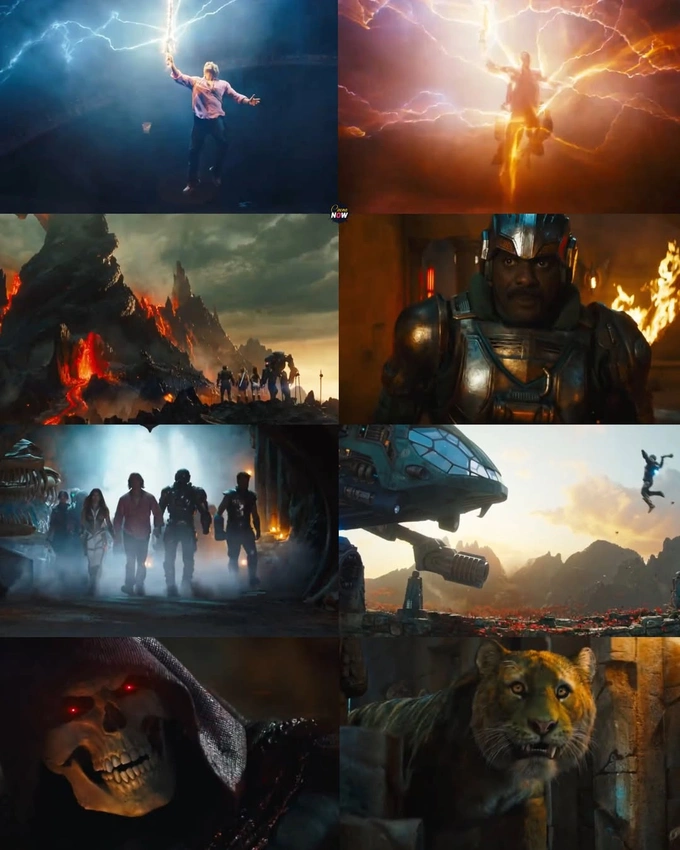
The film's emphasis on Adam's separation from his home reinforces this idea. He-Man is not simply rediscovering a kingdom. He is attempting to understand where he belongs within it. The fantasy quest consequently becomes a coming-of-age narrative, with the spectacular mythology functioning as an external expression of an internal crisis.
Camp, sincerity and the problem of adaptation
A character as visually excessive as He-Man presents an unusual challenge for modern cinema. The costume, muscles, magical sword and enormous fantasy vocabulary can easily tip into parody. The new film appears to understand that the only way to make the mythology work is to approach its absurdity with sincerity.
That balance matters because Masters of the Universe has always occupied an unstable position between children's fantasy, toy culture and sword-and-sorcery adventure. Its very excess is part of its identity. The film therefore cannot completely rationalise the strange world it inherits without losing something essential.
Nicholas Galitzine's performance becomes important here. He has to accommodate both Adam's vulnerability and He-Man's deliberately heightened heroic persona. Even Noah Centineo, who was originally attached to the role years earlier, recently praised Galitzine's performance and acknowledged how difficult it is to approach such an iconic character without losing the element of camp.
Nostalgia is doing a lot of work
The film also arrives during an interesting moment for nostalgia. Contemporary cinema has become increasingly comfortable treating childhood culture as source material, but nostalgia alone cannot create meaning. Masters of the Universe has to negotiate between what the franchise was and what audiences now expect a major fantasy blockbuster to be.
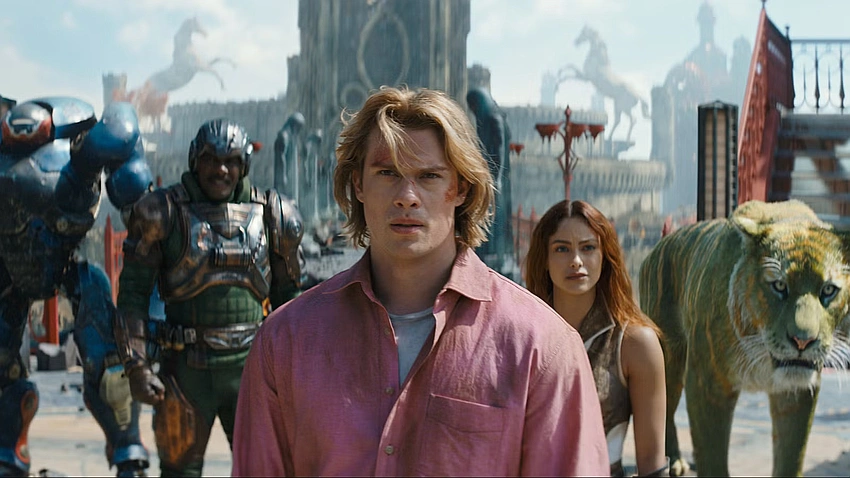
The result is inevitably larger than the simple act of remaking an old cartoon. Eternia becomes a cinematic space, while familiar figures such as Teela, Evil-Lyn and Man-At-Arms are repositioned within a contemporary blockbuster framework. The scale is part of the appeal, but it also creates the central tension of the film: how much can be expanded before the original simplicity disappears?
What survives after the nostalgia fades
Perhaps the most revealing aspect of Masters of the Universe is that its central idea remains remarkably simple. Power is not particularly interesting until it becomes responsibility. Adam can possess the Power Sword, but becoming He-Man requires him to understand what that power is for.
That is an old-fashioned heroic structure, but something is refreshing about its straightforwardness. In an era of increasingly complicated cinematic universes, Masters of the Universe returns to a mythology built around a sword, a castle, a villain and a hero trying to understand himself.
Whether that simplicity feels charming or overly familiar depends largely on how much one wants from a He-Man film. For some viewers, the spectacle and nostalgia will be enough. For others, the film's greatest limitation may be that it is still carrying the weight of a toy line that has spent forty years becoming something more.
Perhaps that is the real challenge of bringing He-Man back. The character has already survived cartoons, comics, toys and one famously unsuccessful live-action adaptation. In 2026, the question is whether he can survive nostalgia itself.
#MastersOfTheUniverse #HeMan #MovieReview #FantasyFilms #PrimeVideo
