Math Made Fun on National Mathematics Day: Insights from Rajala Srivastava

Math Made Fun on National Mathematics Day: Insights from Rajala Srivastava
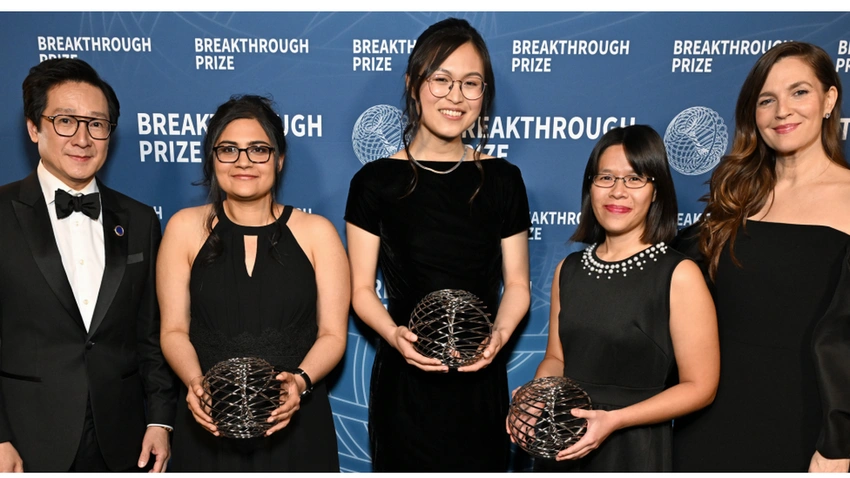
On National Mathematics Day, award-winning mathematician Rajala Srivastava shares tips to love maths and explains her award-winning work in harmonic analysis.
National Mathematics Day is more than a celebration—it’s a moment to rethink how we teach and learn numbers. In a special discussion ahead of the day, Rajala Srivastava, winner of the Maryam Mirzakhani New Frontiers Prize 2025, outlines her research in harmonic analysis and explains why maths can feel intimidating for many students. She emphasizes that loving math starts with curiosity, not memorization, and that the right teaching approach can unlock confidence for learners of all ages.
Srivastava’s journey spans universities in India, the United States, and Europe, and she is currently an assistant professor at the University of Wisconsin–Madison. Her award-winning work in harmonic analysis and analytic number theory explores patterns and symmetries in numbers, but she says the real impact is in the classroom. Maths, she argues, isn’t about endless rules; it’s about patterns you can recognize and use to solve real problems.
To keep students engaged, she promotes teaching methods that blend visuals, collaborative problem solving, and concrete examples from daily life. Rather than drilling formulas in isolation, she suggests connecting ideas to curiosity, telling stories about famous problems, and small-group explorations that invite students to explain their thinking aloud. Such approaches, she notes, reduce fear and help students see math as a toolkit for understanding the world.
National Mathematics Day offers a chance to highlight Ramanujan’s legacy and celebrate teachers who spark enthusiasm in the next generation. As schools across the country mark the day, educators and students can borrow from Srivastava’s philosophy: celebrate progress, embrace a growth mindset, and show that math has a place in every curriculum.
