SpaceX Blasts Off! Four Astronauts Head to ISS for 6-Month Mission

SpaceX Blasts Off! Four Astronauts Head to ISS for 6-Month Mission
SpaceX's Crew-13 mission successfully launched four international astronauts to the ISS for a crucial six-month stay. Discover their groundbreaking research for future Moon and Mars exploration!
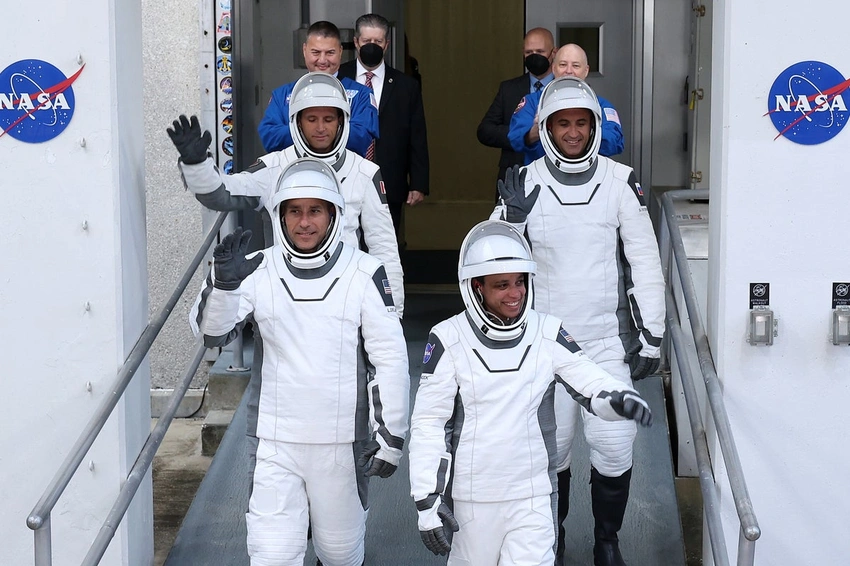
A SpaceX Falcon 9 rocket successfully launched a four-person crew into orbit on Thursday, beginning their six-month stay aboard the International Space Station (ISS). The Crew-13 mission, carrying astronauts from NASA, the Canadian Space Agency (CSA), and Roscosmos, lifted off from Space Launch Complex 40 at Cape Canaveral Space Force Station in Florida.
The crew consists of NASA astronauts Jessica Watkins and Luke Delaney, CSA astronaut Joshua Kutryk, and Roscosmos cosmonaut Sergey Teteryatnikov. The launch, originally slated for last month, was delayed due to a leak on SpaceX's Dragon spacecraft, but proceeded smoothly on its rescheduled date.
Joshua Kutryk, the Canadian astronaut, shared his excitement, stating, "We feel like some of the luckiest people in the world." He is also set to become the fourth man to become a father while in orbit, with his wife expecting next month.
NASA manager Dana Weigel assured that Kutryk would be kept informed about his family while aboard the ISS.
During their extensive six-month mission, the Crew-13 will conduct a variety of crucial science experiments. These investigations are aimed at advancing research and technology that will prepare humanity for future deep-space exploration, including missions to the Moon and Mars, while also delivering benefits back on Earth.
This collaboration with the private sector, as highlighted by NASA, expands access to low-Earth orbit and the space station for more individuals, more scientific endeavors, and increased commercial opportunities.
This launch was part of a busy day for SpaceX, with two other Falcon 9 rockets scheduled for liftoff within a 13-hour window.
The docking of the Crew-13 mission with the ISS is scheduled to be broadcast live on NASA’s website.
