Bad Bunny's Super Bowl Show Redefines Halftime Show

Bad Bunny's Super Bowl Show Redefines Halftime Show
Bad Bunny's Super Bowl Show Redefines Halftime Show
Bad Bunny headlined Super Bowl LX in Spanish, turning the halftime show into a global cultural moment that blends heritage with contemporary pop, and rethinks visibility on broadcast stages.
There are few stages in contemporary global culture that rival the Super Bowl halftime show for sheer ritualistic investment as a shared spectacle that temporarily suspends the algorithmic churn of streaming platforms and political headlines alike. This year, Bad Bunny, the Puerto Rican singer-rapper and reggaetón colossus, took centre stage at Super Bowl LX as a cultural event that reverberated far beyond Levi’s Stadium in Santa Clara, California.
The significance of this event was multilayered: it was a claim on visibility, a reframing of language on a global broadcast, and a spectacle that fused commercial and cultural modernity with heritage and identity.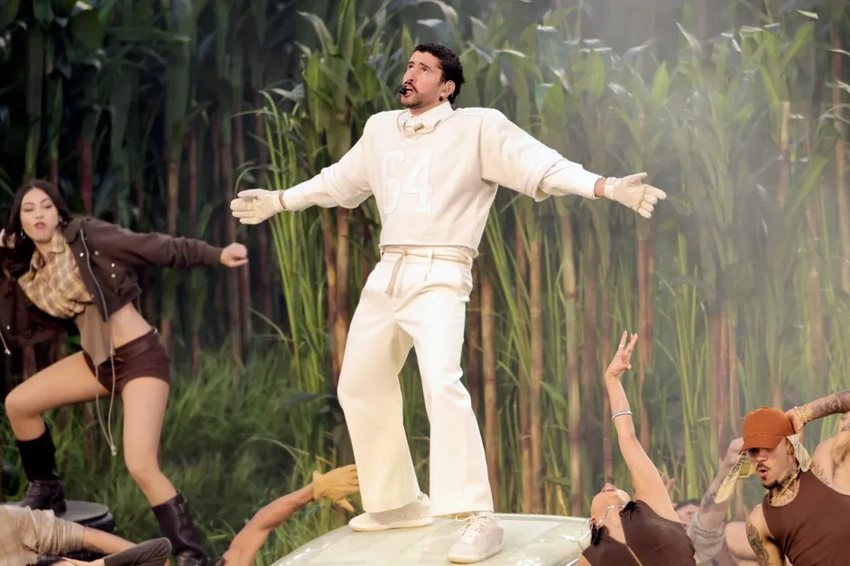
A Stage That Speaks Spanish
Perhaps the most striking fact of the performance was that it marked the first time a Super Bowl headline act performed almost entirely in Spanish. In the context of an event watched by over 128.2 million viewers, one of the most-watched halftime shows in history, such a choice is extraordinary. American football’s grandest stage, traditionally a showcase for familiar pop and rock anthems, became a space where reggaetón rhythms and Spanish lyrics held court. In doing so, Bad Bunny did more than entertain: he reframed what we understand by mainstream in the context of American popular culture.
From the first beat of “Tití Me Preguntó” to the chant of “God Bless America!” paired with an enumeration of nations from across the Americas, his set invited a broader understanding of America itself that stretches linguistically and geographically beyond the continental U.S. context.
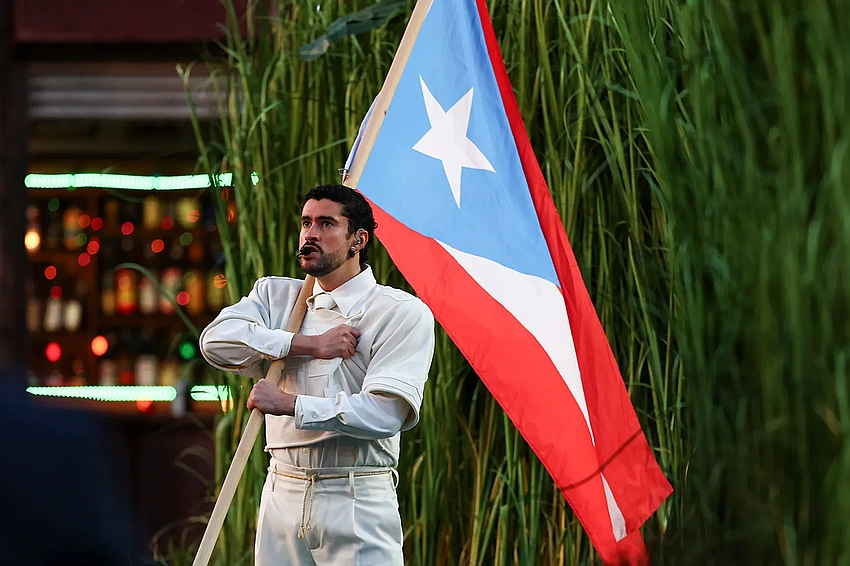
This reframing resonates with cultural performance and identity: it underscores how artistic practices can destabilise rigid categories when they enter mainstream visibility. The halftime show was not merely a performance in Spanish, but a potent reminder that language and sound carry histories and attachments. They are not neutral.
A Carnival of Heritage and Surprise
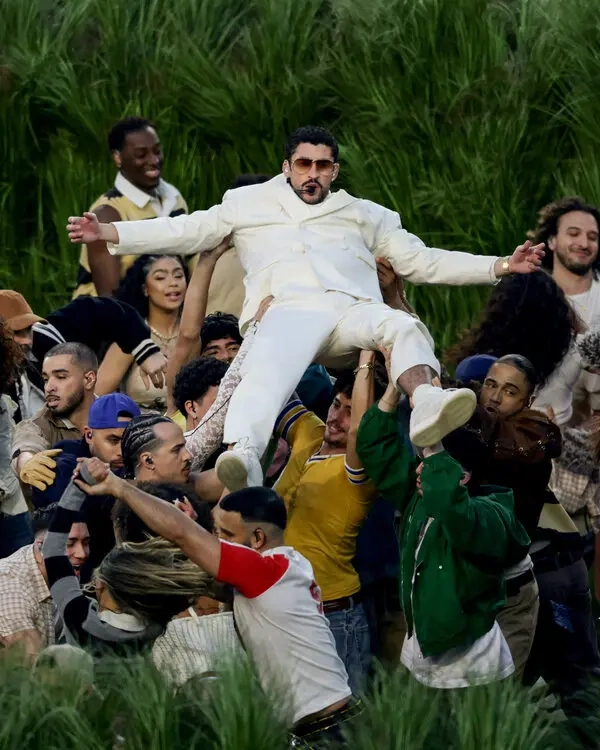
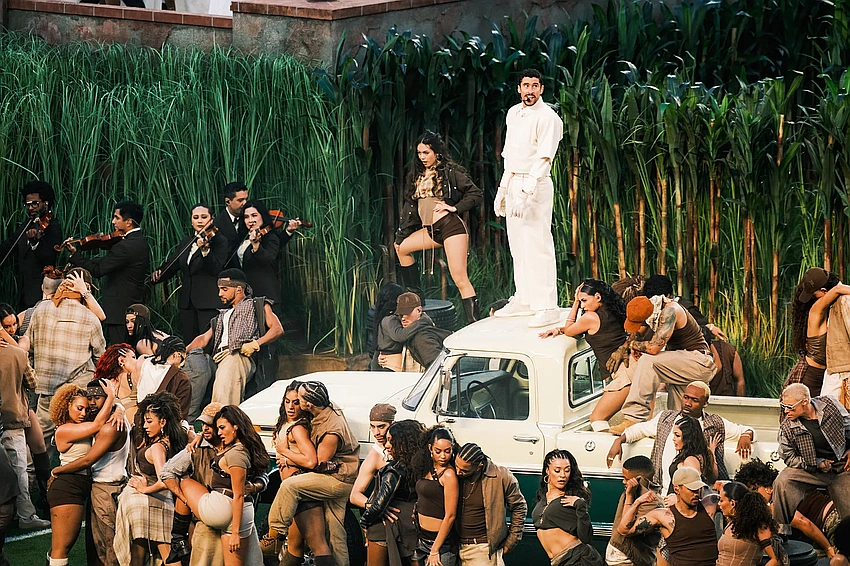
Bad Bunny’s set was not a simple retread of greatest hits. It was theatrical, vibrant and meticulously staged: the field became, at various moments, a sugarcane plantation, a street festival, a market stall; spaces that conjure images of everyday life in Puerto Rican and broader Latin American culture.
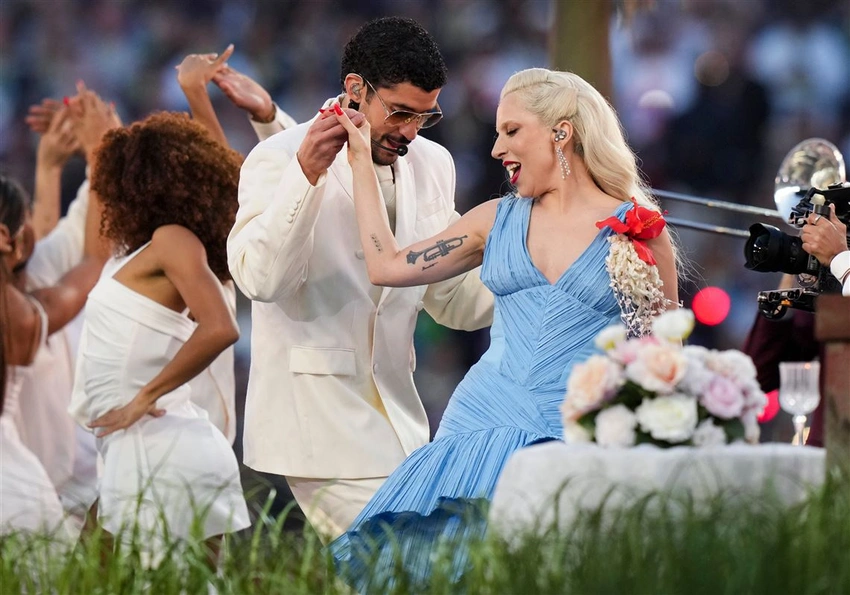
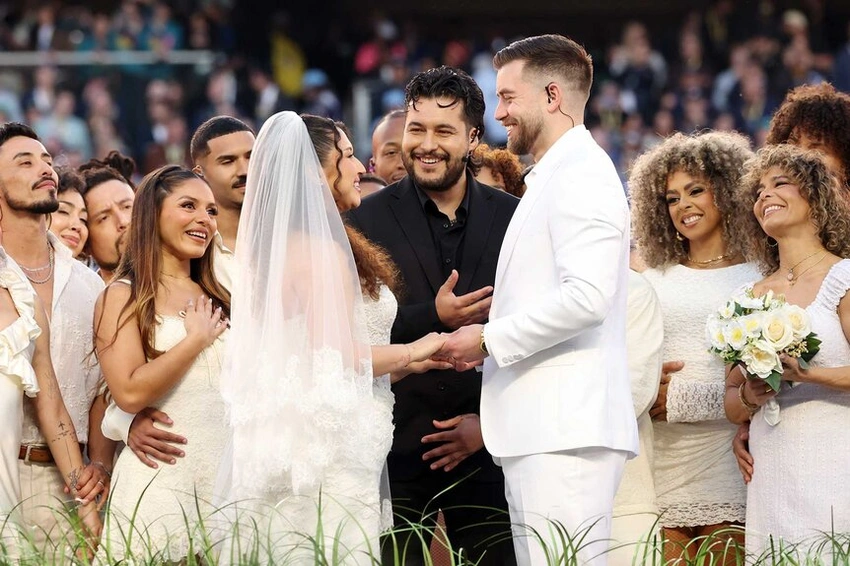
Special guests added texture to the narrative: Lady Gaga’s salsa-tinged duet, Ricky Martin stepping into an homage to Latin pop heritage, and cameos by figures as varied as Cardi B and actor Pedro Pascal lent the show a feeling of convivial celebration as much as musical collaboration. In a particularly poetic moment, a couple was married on stage, a wedding woven into the spectacle’s larger tapestry of communal joy and ritual.
Seen through a literary lens, this was carnival writ large: an inversion of the everyday where spectacle and community coalesce.
Cultural Reckoning and Controversy
No cultural performance of this scale exists in a vacuum, and Bad Bunny’s half-time show quickly became a flashpoint in wider debates about identity, nationalism and cultural representation in the United States.
On one side were right-wing critics who, having watched the broadcast’s heavy Spanish content and Latin imagery, framed it as an affront to “American culture”. Former U.S. president Donald Trump publicly denounced the show, and conservative commentators called for inquiries into its appropriateness for network television.
On the other side were voices that saw the performance as a necessary correction; a celebration of communities long marginalised or sidelined in mainstream media. For many, the show served as a vital cultural affirmation in a moment marked by rhetoric around immigration and identity politics.
That such a musical performance should be variously hailed as joyous and critiqued as divisive tells us much about the cultural moment we inhabit. Pop culture no longer floats serenely above politics; it crashes into it with full force.
What It All Means
For me, watching Bad Bunny’s Super Bowl performance was both exhilarating and intellectually provocative. This was not a spectacle limited to fandom or chart performance though its viewership numbers alone would secure its place in broadcasting history. It was a declaration about who gets to occupy symbolic space in our shared cultural consciousness, and on what terms.
By foregrounding Spanish language, reggaetón rhythms, and narratives drawn from everyday life in Latin America and the Caribbean, Bad Bunny’s performance destabilised assumptions about the centre and periphery in pop culture. It reminded us that identity is not a monolith, that mainstream can be polyphonic, and that cultural celebration can simultaneously be joyous and deeply political.
Looking back, I see this show not just as a moment in music history, but as a case study in how pop culture carries meaning far beyond the immediate thrill of performance into questions of community, belonging, and the politics of representation. In an era where global audiences watch through multiple lenses this was, unquestionably, a halftime show that spoke to the whole of our hemisphere’s imagination.
#BadBunny #SuperBowlLX #SBLX #SpanishPerformance #CulturalMoment
