TikTok Textbooks: Education's Future or a Dumbed-Down Disaster?

TikTok Textbooks: Education's Future or a Dumbed-Down Disaster?
ScrollEd is turning textbooks into TikTok-style feeds. Is this the innovation Gen Z needs to learn, or are we sacrificing depth for viral appeal? Let's unpack the pros and cons of scrollable education.
Society often laments our dwindling attention spans, blaming the relentless scroll for our inability to focus on deeper learning. Yet, what if the solution isn't to fight the scroll, but to redefine what we're scrolling through? This is the provocative bet being made by ScrollEd, a Palo Alto startup shaking up the education technology scene.
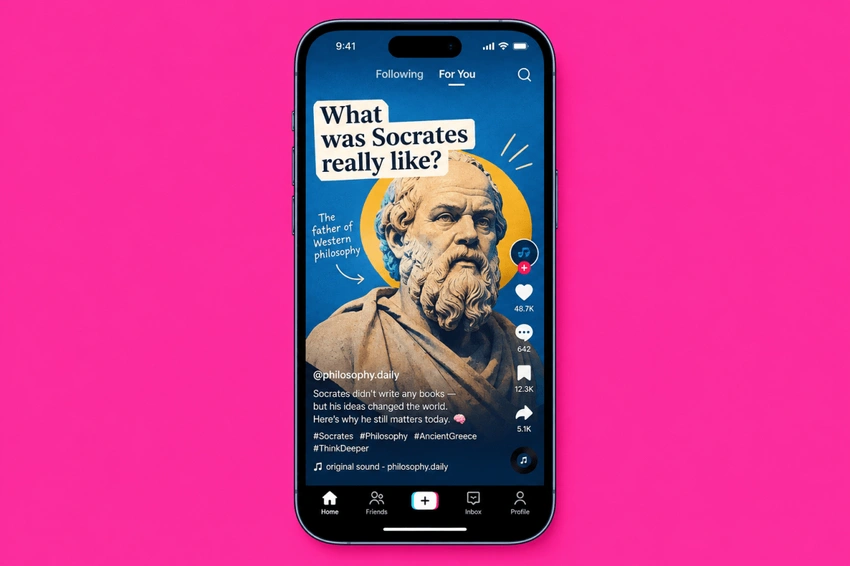
Imagine transforming dense PDFs or textbooks into a dynamic feed, strikingly similar to Instagram Reels or TikTok. ScrollEd's app does just that, presenting content as AI-generated video, audio, text, or even interactive quizzes. A swipe up introduces a new topic, while a sideways swipe allows for a deeper dive into the current one, culminating in a quiz.
It's a radical departure from traditional learning, directly addressing how a new generation consumes information.
But the question on everyone’s mind is: Are TikTok-style textbooks the key to engaging Gen Z, or a dangerous dumbing down of education?
The argument for engagement is compelling. As ScrollEd co-founder Utsav Gupta points out,
The younger generation is increasingly going short form, vertical feed only… We want to meet them where they are.
This isn't about shying away from depth, but making the path to depth more accessible. A short, engaging video might spark curiosity, making the learner want to explore further.
ScrollEd's mechanism for swiping sideways to delve deeper, with a quiz at the end, is specifically designed to facilitate this journey beyond surface-level consumption.
However, concerns about 'dumbing down' are valid. Can the nuance of complex subjects truly be conveyed and understood through snippets and quick interactions?
Does the rapid-fire format encourage a superficial engagement rather than critical thought and sustained concentration?
There's a fine line between making learning accessible and inadvertently training minds for constant distraction.
ScrollEd’s founders, Utsav Gupta and Rebecca Neff, are themselves students, bringing an authentic understanding of Gen Z's learning habits. Their vision extends beyond mere engagement; they aim to build a “social network that’s better for you.” Their freemium model targets individual learners, while institutional licenses provide schools and corporations with valuable data on engagement and progress—a powerful tool for educators seeking to adapt to student needs.
The real genius of ScrollEd might lie in its intentional design. Gupta emphasizes,
We just have to be deliberate about how we use it and choose not to maximize engagement on the platform.
This statement is key. If the platform is engineered to draw students into deeper understanding rather than just endless scrolling, it could be transformative.
The future infrastructure plans to allow educators to assess and adapt to individual needs further strengthen this claim.
Ultimately, the success of TikTok-style textbooks like ScrollEd will hinge on execution and philosophy. If they truly facilitate deeper learning and critical thinking, rather than just provide quick hits of information, they could indeed be the key to unlocking engagement for Gen Z. The challenge is to prove that brevity can lead to profound understanding, not just fleeting attention.
