Personal AI: Superintelligence's Dawn or a Privacy Doom?

Personal AI: Superintelligence's Dawn or a Privacy Doom?
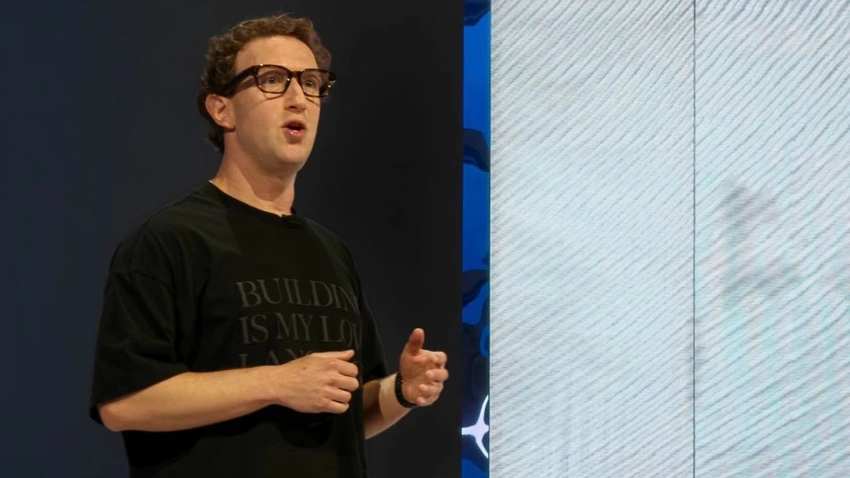
Mark Zuckerberg's vision for personal superintelligence and new AI keychain devices sparks a vital debate. Are we on the cusp of an amazing AI future, or heading for a data privacy disaster? Let's break it down.
Your Pocket Superintelligence: A Double-Edged Sword?
The tech world is buzzing, and for good reason. The notion of a personal superintelligence, a truly bespoke AI assistant integrated into our daily lives, is no longer the stuff of science fiction. Mark Zuckerberg's recent unveiling of a path to such a future, complete with the suggestion of a discrete 'keychain device,' ignites a crucial conversation about where we're headed.
Imagine a 'Muse' in your pocket-one that anticipates your needs, optimizes your schedule, aids your creativity, and even learns your deepest cognitive patterns. It's about a symbiotic relationship where AI acts as an extension of your own intellect, enhancing capabilities you never knew you had. The promise is profound: unprecedented personal efficiency, instant access to tailored knowledge, and a constant, intelligent companion.
This could fundamentally reshape how we work, learn, and interact with the world.
The Unseen Price of Infinite Personalization
However, with such immense power comes equally immense questions. A truly personalized superintelligence necessitates an unparalleled level of access to our lives. It would process our conversations, track our locations, analyze our physiological data, and understand our preferences with granular detail.
We're talking about a digital shadow that knows us better than we know ourselves.
“The concern isn't if your data will be collected, but how it will be protected, who will access it, and what it could be used for beyond your explicit consent.”
This level of intimacy with an AI raises immediate red flags regarding privacy. Could this data be monetized? Could it be vulnerable to breaches?
What about the potential for manipulation, where an AI subtly nudges our decisions based on algorithmic interests rather than our own? The 'keychain device,' while convenient, could become a digital tether, constantly feeding information into a vast, opaque network.
Navigating the Ethical Labyrinth
The trajectory towards personal superintelligence is undeniable. The challenge before us is not to halt innovation, but to shape it responsibly.
This means developing robust, transparent ethical frameworks and ironclad data privacy regulations before these devices become ubiquitous.
We need clear user controls, audited algorithms, and a commitment from developers to prioritize individual autonomy over data extraction.
The future of personal AI doesn't have to be a binary choice between utopian efficiency and dystopian surveillance. It can be a future where technology empowers us, but only if we demand - and build - the necessary safeguards. The conversation starts now: what kind of relationship do we want with our super-smart companions, and how much of ourselves are we willing to give away for the promise of a smarter life?
