Tariff turbulence ahead: Global trade in 2026 faces new headwinds

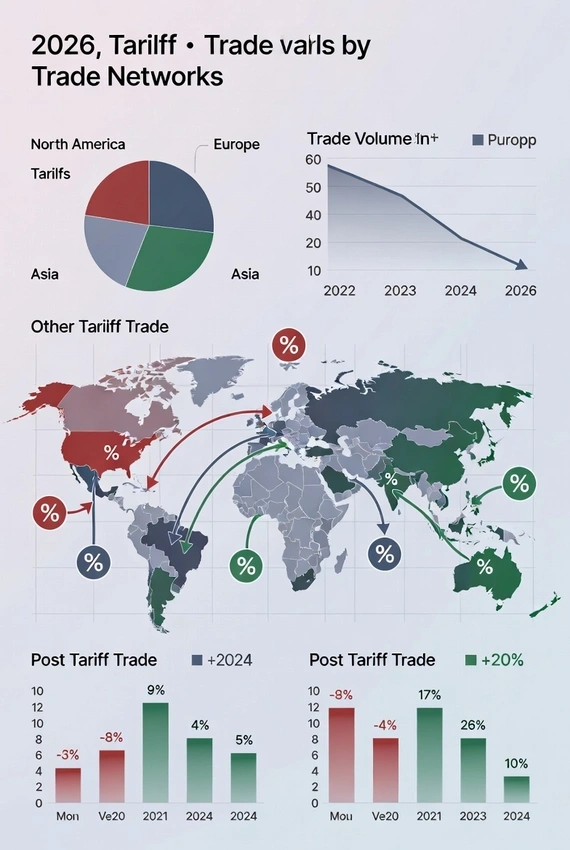
Tariff turbulence ahead: Global trade in 2026 faces new headwinds
As US tariffs reshape flows and Red Sea routes reopen, 2026 is shaping up as a bumpy year for global trade and new agreements.
Global trade is bracing for a turbulent 2026, with US tariffs reshaping the way goods move and where they come from. American imports are expected to take hits in some sectors while others overseas may benefit, as flows adjust to higher duties and shifting competitiveness. The USMCA faces review, signaling policy recalibration that could ripple through supply chains and business planning. At the same time, shipping could experience disruption from the Red Sea route reopening, adding another layer of complexity to already stretched logistics networks. An accelerating US economy is also on the radar, potentially lifting demand and influencing price dynamics on a global scale.
Analysts note that tariff changes tend to redirect trade patterns, creating winners and losers across regions while pressuring producers to rethink sourcing and inventory strategies. Yet, even as new trade deals are pursued, the lack of strong enforcement raises questions about their durability in the face of international objections and shifting political winds. Businesses, policymakers, and workers may all feel the impact as markets adjust to the evolving tariff landscape in 2026.
Looking ahead, observers say the coming year will hinge on policy moves—how aggressively tariffs are used, how strictly trade agreements are implemented, and how shipping routes adapt to geopolitical realities. The outcome could influence growth, inflation, and globalization narratives, underscoring the need for agile strategies in a world where tariff momentum and route resiliency will shape the balance of trade.
