Bentley's First Electric SUV Roars (Literally!) with Fake Sounds

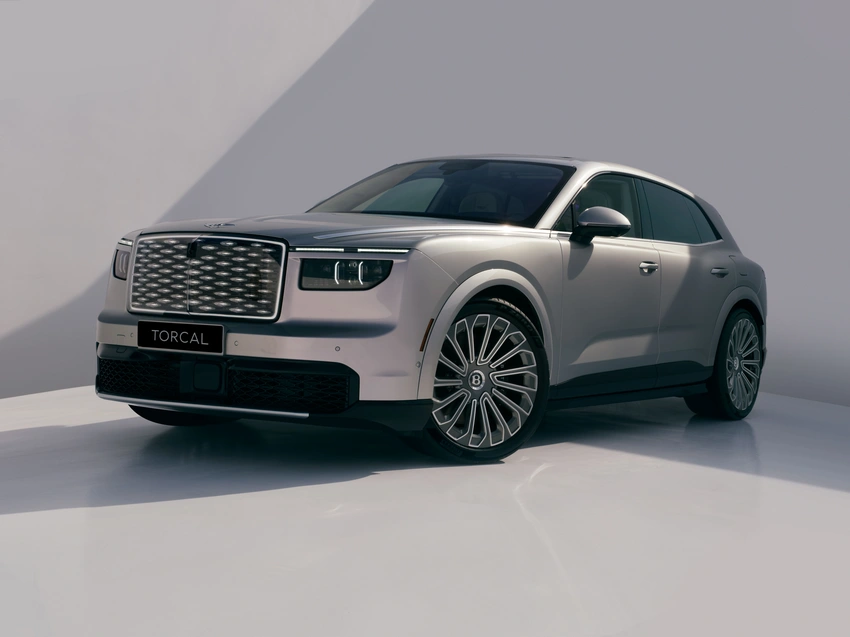
Bentley's First Electric SUV Roars (Literally!) with Fake Sounds
Bentley introduces its groundbreaking electric Torcal SUV, backed by a £350M investment. This luxury EV promises a 375-mile range and a unique 'drum soundtrack' to replace the traditional engine growl, aiming to captivat
Bentley has officially unveiled its very first fully electric vehicle, the Torcal SUV, marking a significant stride into the EV market. It also features a rather unique solution to the silent nature of electric cars: a synthetic engine noise built from drum recordings, designed to mimic the classic growl of its eight-cylinder predecessors.
The Torcal SUV, set to be built at Bentley's factory in Crewe, United Kingdom, is part of a substantial £350 million investment in the VW-owned carmaker's UK operations. This investment is crucial not only for product development but also for securing the jobs of 4,000 workers at the Crewe facility.
With a starting price of £173,000, the Torcal aims to attract a younger clientele and those who might have been hesitant to switch to electric vehicles. Bentley's chief executive, Frank-Steffen Walliser, highlighted that the feature is designed to give "emotion to the car" and "bridge the gap" to new buyers, offering "easier access" to the brand.
Boasting an impressive range of up to 375 miles on a single charge, the Torcal enters a relatively thin market for fully electric luxury SUVs. Its rivals include Rolls-Royce's two-door Spectre coupe, starting at around £330,000, and the premium-segment Range Rover Electric, which begins retailing at £154,070.
Bentley's entry into the EV market has been more cautious than initially predicted; the company had to abandon plans to launch new electric cars annually from 2025 to 2030 due to weaker-than-expected demand. Walliser admitted to uncertainty regarding future demand, despite early indications of strong interest in the UK, Europe, and the Middle East.
He noted that there are "no plans at the moment" for a second EV launch, reflecting a pragmatic approach after revising numerous long-term plans.
This cautious stance comes amidst a dynamic period for the broader UK automotive sector.
Recent weeks have seen other major funding announcements, including Nissan's £170 million investment in its Sunderland factory and McLaren's £500 million for a new factory and its first SUV.
Despite these investments, carmakers in the UK face significant headwinds, including US tariffs, fierce competition from Chinese rivals, and high industrial energy costs. Other manufacturers, such as Jaguar Land Rover, have announced substantial job cuts, citing "intense competition and ongoing geopolitical uncertainty," while Bentley's parent company, Volkswagen, plans to cut 100,000 jobs by 2030.
While Walliser believes Bentley's success within VW offers some protection, the company itself cut 245 jobs in Crewe earlier this year to manage costs, and sales have declined by a third since their 2022 peak. Walliser clarified that the new investment, while significant for the UK, will not lead to an increase in headcount in Crewe but will ensure profitability and support a new assembly line, reinforcing confidence in Britain's automotive industry from figures like Business Secretary Jonathan Reynolds.
