SpaceX Starship Blasts Off to Orbit: A Giant Leap for Moon & Mars!

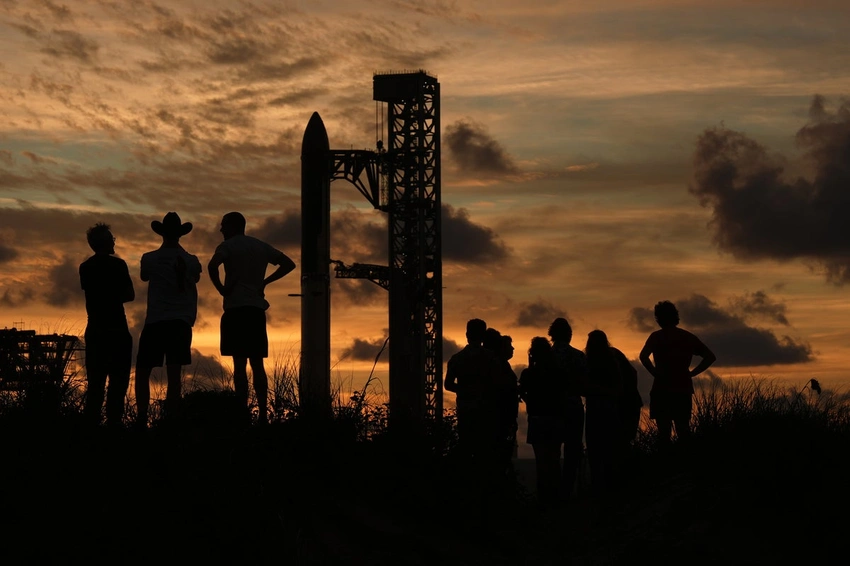
SpaceX Starship Blasts Off to Orbit: A Giant Leap for Moon & Mars!
SpaceX's mighty Starship rocket has finally reached orbit, marking a monumental step toward sending humans to the Moon and Mars! Discover why this achievement is a game-changer for space travel.
After years of ambitious promises and several dramatic attempts, SpaceX's colossal Starship rocket has successfully achieved orbital insertion for the first time. This morning, on its 14th launch, the towering stainless steel machine made good on its long-held goal, blasting off from Starbase, Texas, and reaching a circular orbit 170 miles high in just 25 minutes and 17 seconds. This landmark achievement cannot be overstated.
Starship is not just another rocket; it is pivotal to humanity's long-term aspirations of reaching the Moon and Mars. SpaceX envisions it as the ultimate replacement for its Falcon 9 rocket, which currently handles a significant portion of global commercial launches.
With Starship's far larger payload bay, capable of carrying the equivalent cargo of nearly five Falcon 9s, the company anticipates consolidating launches and drastically cutting costs for space missions. Standing at an imposing 407 feet, Starship is the most powerful rocket ever successfully launched.
Its first stage alone is equipped with 33 engines, generating an astounding 16.7 million pounds of thrust, easily eclipsing NASA's Space Launch System (SLS). The upper stage, also dubbed Starship, is a 171-foot, six-engine spacecraft designed for satellite deployment and crew travel.
NASA recognized Starship's potential early on, selecting it in 2021 as one of two spacecraft for landing astronauts on the Moon as early as 2028, with a crewed test in Earth orbit planned for 2027 as part of the Artemis III mission. NASA Administrator Jared Isaacman commended SpaceX on X, stating,
Gorgeous launch, getting Ship to orbit and managing every step in a safe, responsible, and especially inspirational way.
.
The road to orbit has been anything but smooth. Early launches, including the inaugural flight in April 2023, ended spectacularly in explosions, leading to environmental concerns and legal challenges. However, SpaceX pushed forward, conducting flights every three months, each one building toward this successful orbital insertion.
Even this historic launch had its imperfections.
One of Starship's six engines failed to fire properly during ascent, requiring the remaining engines to compensate for the lost thrust. Furthermore, to simplify flight objectives for this mission, the famous 'chopstick recovery' for the first stage was foregone.
Instead, the booster executed a soft, engine-assisted splashdown in the Gulf of Mexico, rather than returning to the launch tower. The Starship spacecraft itself was planned for a six-orbit, 10-hour mission, further testing its capabilities in space. This success marks a new era for space exploration, bringing the dreams of lunar outposts and Martian settlements closer to reality.
